Last updated: March 26, 2025
Cell phone, texting legislation news: Rep. Frank Iler says drivers’ attention to their pets presents a danger on state roadways. He’s filed House Bill 394, which would clamp down on the distractions of having animals being held or sitting in the driver’s lap. Fines at $100 plus costs.
 State voters overwhelming support a ban on holding of electronic devices by drivers, polling suggests. A Meredith College poll of almost 700 voters found that more than 80 percent supported the ban. The results were about the same as when the question was asked about distracted driving in 2018. “Citizens see the negative effects of using a mobile device while driving and strongly support legislation banning such behavior,” the poll’s director said in mid-April 2021.
Current prohibitions:
- Text messaging prohibited for all drivers. Also outlawed: Email. $100, no points.
- Drivers under the age of 18 with provisional licenses are prohibited from using cell phones while driving, unless calling parents. Fine: $25.
- School bus operators prohibited from using cell phones while driving. $100, no points.
Read the North Carolina texting & driving law | teen cell phone law | school bus driver cell phone law
Distracted driving legislation (2025-26):
House Bill 394: Would prohibit holding an animal or allowing the animal to sit in a driver’s lap. Also targets dangerous interactions with children while driving. Fine: $100 plus court costs. OK’d by the House Transportation Committee on March 26, 2025. (Iler)
Distracted driving news (2025-26):
State Rep. Stephen Ross supports House Bill 394, telling of a dangerous weaving vehicle he saw on the interstate. “I couldn’t tell if the dog was driving the car or the driver was driving the car.”
Read more at: https://www.newsobserver.com/news/politics-government/article302839369.html#storylink=cpy
(text continues)
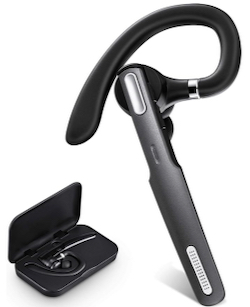
Recommended Gear: Prevent distracted driving
Universal Dashboard Windshield Suction Cup Holder for Smartphones
Wireless Bluetooth Earpiece V5.0 Hands-Free Earphones
Bluetooth Headset Wireless with Battery Display Charging Case
“A Deadly Wandering” Distracted Driving Book
(Amazon affiliate links/ads)
2024 distracted driving news:
Distracted driving was cited in about 1 in 6 crashes in North Carolina, more than speed and alcohol combined, state officials say. The unsafe driving practice was linked to about 9,000 crashes in 2022, the most recent year for which there are numbers.
North Carolina’s insurance commissioner says distracted driving is a primary factor in rising auto coverage rates. “The number one factor is distracted driving … they’re either talking on the phone or they’re trying to text and drive,” Mike Causey told “Carolina Newsmakers” in late March.
2023-24 distracted driving news:
A hands-free bill that failed to become law in the 2021-22 session is back before the Senate. State Sen. Jim Burgin’s 2023-24 plan again calls for fines ranging from $100 to $200, with points vs. the license for serial offenders. “Using a wireless communication device not only affects you, but a lot of other people when you are distracted while driving,” he has said. A similar bill also expired in the Senate in 2019. A “disappointed” Burgin said he would try again.
2023-24 distracted driving legislation:
Senate Bill 15: Seeks to ban use of handheld communications devices while driving. Also viewing of videos. Fines: $100, then $150 plus point vs. license, then $200 plus points. (Burgin, Corbin)
2022 distracted driving news:
North Carolina suffered a record number of traffic deaths in 2021. Safety officials reported 1,755 deaths. An increased number of fatalities came from distracted driving, non-use of seat belts and speeding.
2021-22 distracted driving legislation:
Senate Bill 20: Would outlaw use of handheld communications devices while driving. Also viewing of videos. Fines: $100, then $150 plus point vs. license, then $200 plus points. Dead. (Burgin, Corbin)
2021 distracted driving news:
Democratic state Sen. Michael Garrett said of SB 20: “I think it’s unlikely that the Senate will take action on it, especially in its current form.” He said Republicans continue to oppose cell phone laws on “personal freedom” grounds. Republican Sen. Kevin Corbin, a sponsor of the bill, said: “It’s just a matter of time,” citing public opinion polls.
2020 distracted driving news:
A House bill that would have outlawed handheld cell phone use by drivers in North Carolina expired in the Senate in 2019. The bill, which would have barred drivers from using their hands while exhibiting “distracted behavior,” cleared the House and was up for review in the Senate. It started life as a straightforward ban but was rewritten by the Judiciary Committee in early May to bar using “hands to engage in distracted behavior.” A trio of state senators sought to amend the watered-down bill in the Commerce and Insurance Committee, but the measure ran out of time. Backers plan to try again in 2020.
A North Carolina insurance group has rented 10 billboards along the interstate to urge lawmakers to pass the hands-free cell phone bill. The Independent Insurance Agents of N.C in mid-May leased billboards along Interstate 40, with locations in Winston-Salem and Greensboro. The signs are in support of HB 144, below.
2019-20 distracted driving legislation:
House Bill 144: Would outlaw holding of wireless communications devices while driving. Also watching videos. Single-touch operation of mounted cell phones OK for drivers over age 18. Fines: $100, then $150 plus 1 point vs. license, then $250 plus 2 points. Reporting to insurance. Six-month warning period. Amended and approved by the Transportation Committee on March 12. Judiciary Committee substitute offered — prohibiting using “hands to engage in distracted behavior” — May 3. Fine: $100 plus costs. Approved by the full House in a 92-23 vote of May 7. To the Senate. (Corbin)
2019 distracted driving news:
Three GOP senators seek to return Rep. Kevin Corbin’s House Bill 144 to its original wording. They are Sens. Jim Burgin, Todd Johnson and Vickie Sawyer. They announced their intentions at a June 11 press conference.
2017-2018 distracted driving legislation:
Senate Bill 364: Would prohibit drivers from use of handheld communications devices while driving. Hands-free OK. Fine: $200. No points. aka Brian Garlock Act. (Tarte)
2018 distracted driving news:
Distracted driving activist state Sen. Jeff Tarte lost his seat in the 2018 election. He made several unsuccessful attempts to push through bans on driving while using handheld communications devices. He said the success of Georgia’s hands-free law should clear the path for similar plans. If lawmakers fail to act, “People will die needlessly,” he predicted. Tarte called North Carolina’s texting & driving law “totally unenforceable.”
State Sen. Jeff Tarte’s handheld cell phone ban didn’t make it out of committee in 2017-18. He says he’ll be back next session with yet another bid to do something about North Carolina’s outdated distracted driving laws. Tarte says he’s optimistic, but if his plan fails again, “We will lose (more) lives,” he told WSOC-TV.
Tarte’s legislation was named after Brian Garlock, a Charlotte teen who died in a head-on collision in 2008 while trying to phone his girlfriend. Tarte’s own mother died in a crash linked to distracted driving.
2015-2016 distracted driving legislation:
Senate Bill 393: Would bar use of handheld mobile devices such as cell phones. Hands-free OK. Smartwatch use barred. Fine: $100. One points vs. license for repeat offenses. aka Brian Garlock Act. Dead. (Tarte, Bingham)
2016 distracted driving news:
North Carolina saw 2,925 people charged with texting & driving in 2016, a total that’s down from both of the previous two years. The conviction rate was less than half, state records show. The use of cell phones was linked to 1,264 crashes in North Carolina during 2015, with 13 fatalities resulting.
Legislation that would outlaw driving while holding a handheld wireless communications device such as a cell phone failed to advance during the 2015-16 session. The plan also would have barred use of communications functions of smartwatches. The distracted driving measure, from State Sen. Jeff Tarte, was named after Brian Garlock, a Charlotte teen who died behind the wheel in 2008 while trying to phone his girlfriend.
Fines under the Garlock plan would be $100, the same as currently for texting & driving. One demerit point vs. the driver’s license in cases of repeat offenses. A legislative assistant for Tarte said the senator and governor discussed the measure, and the plan was coordinated with a task force that includes law officers and lawmakers from both sides of the aisle. State Sen. Stan Bingham, father of the state’s texting & driving law, also is listed as a sponsor.
Distracted driving news (2015):
A record high 3,225 drivers were charged with texting & driving in 2015. That’s up from the previous high of 3,025 in 2014. Just under half of those charged were convicted.
Distracted driving news (2014):
Troopers have been busting distracted drivers by using spotters in Department of Transportation trucks. Plain-clothes officers notify troopers in unmarked cars, who write the texting & driving tickets. “We’re thinking outside the box and stepping up our game on the highways,” Sgt. Brett Snotherly told the Courier-Tribune of Asheboro in December.
State Sen. Stan Bingham, who sponsored the state’s texting & driving law, says the ban isn’t effective in today’s era of smartphones. “The best thing would be to ban it all,” he told WGHP, referring to smartphone use. Drivers are barred from texting, but not using smartphone apps or accessing the Internet. Under the current law’s wording, drivers can view their Facebook or Twitter pages, for example, provided they don’t type in information.
Gov. Pat McCrory has charged an impaired driving task force with doing something about North Carolina’s distracted driving problem. Texting & driving is “as deadly as drunk driving,” he told the group of law enforcement officers and safety experts in late May. “I’m convinced of that more than ever.” The panel’s report is due in July.
Last session’s distracted driving bill, which would have banned use of handheld cell phones by all drivers, was pulled from consideration by its sponsor following a negative reception in a subcommittee. Key opposition came from state Senate President Pro Tem Phil Berger. Only one distracted driving bill was before the 2013-14 legislature, a plan to double texting fines.
Drivers in Guilford, Wake and Mecklenburg counties commit the most distracted driving offenses, troopers reported.
Distracted driving legislation author state Sen. Jeff Tarte is allied with the family of Brian Garlock, a teen who died in a cell phone-related wreck. “It puts a real face on the legislation, which candidly makes it hopefully harder for anyone to be against the bill,” Tarte told WSOC TV in early March. The bill will have “language that everybody’s comfortable with,” Tarte said. The plan is to introduce the bill in the long session of 2015 in late January, his office said in late May.
Distracted driving legislation (2013-2014):
House Bill 44: Would increase text messaging fines to $200. Dead. (Pierce)
Distracted driving news (2012-2013):
Chapel Hill council member Ed Harrison said of the town’s attention-getting ban on all cell phone use while driving: “This isn’t really banning talking on cell phones, it’s banning talking on a cell phone if you’ve done something noticeably bad with your vehicle.” The ordinance calls for secondary enforcement.
Chapel Hill banned the use of all cell phones while driving, including those with hands-free and voice-activated features. The total ban on cell phoning while driving appears to be the first in the nation, although Evanston, Ill., is headed in that direction. “It doesn’t seem like the state is going to do it at this point,” council member Donna Bel said. “I wish this was broader.”
Chapel Hill’s ban on cell phone use cleared the City Council via a 5-4 vote March 26, 2012. It went into effect June 1. Violators will be fined $25 with no points or court costs. There is a sizeable loophole, however, as the ordinance allows for conversations with parents, legal guardians, children and spouses. And enforcement is secondary, meaning police will need to witness another infraction before stopping and citing an offender.
The state Highway Patrol’s distracted driving campaign targeted Interstate 95 on Feb. 1 and 2. Also set for extra enforcement were I-85 and I-40. Affected counties included Johnston and Durham.
2011 distracted driving notes:
Chapel Hill’s Town Council voted to draw up an ordinance that would ban cell phone use by all drivers in city limits. No state law prohibits adult drivers from talking on cell phones. “I think it’s an important way to spur the state legislature to do something about this,” one councilman said. The Sept. 12 vote was 6-2 in favor of creating a proposed ordinance for the council’s approval.
Looks like state Senate President Pro Tem Phil Berger put the dagger in the cell phone ban proposed by Rep. Garland Pierce, D-Scotland, “The handwriting (was) on the wall” after Berger made negative comments about such a law, Pierce said in early July. House Speaker Thom Tillis was an active supporter of HB 44. Pierce is the author of North Carolina’s texting law.
The General Assembly considered a trio of distracted driving laws in 2011 that would extend the existing cell phone restrictions on teenage drivers to adults. Two would have banned use of handheld cell phones and one would have allowed use of hands-free devices. The state already prohibits all text messaging by drivers.
Paul Woolverton of the Fayetteville Observer clarified some dynamics of the Pierce legislation failure for HandsFreeInfo.com: “Rep. Pierce pulled the bill because he had informally polled legislators in the committee and discovered he didn’t have enough support for it to pass. Lawmakers often do this in order to avoid the embarrassment of a defeat and also to keep a bill alive (albiet on life support) for possible consideration later. If your bill is defeated by a vote in committee, it is much harder to bring it back to life. Ultimately, the bill did not make it past the House and Senate “crossover deadline,” so it will be hard for it to be considered again in the 2011-12 biennium (though there are ways to get around the rules and deadlines).” Thanks, Paul.
In an editorial titled: “Cellphone bill alive, barely,” the News & Record expressed serious doubts that Rep. Pierce’s cell phone legislation will become law: “Similar legislation has been floated unsuccessfully since 2005 and this bill faces the same bleak future,” the Greensboro newspaper wrote April 1. “Driver inattention has no age limits,” the paper said in support of extending the current ban on teenage use of handheld cell phones to adults.
Most of the drivers cited under North Carolina’s texting ban are over the age of 25, the Associated Press reports. One offender was 67 years old.
More than 1,200 drivers have been ticketed for text messaging since North Carolina’s ban went into effect in December 2009, according to a January 2011 AP report.
2011-12 distracted driving legislation (dead):
House Bill 44: Would ban use of handheld cell phones by all drivers. Hands-free OK. Includes related devices. Withdrawn by sponsor after a poor reception in the Commerce and Job Development Subcommittee on Science and Technology. (Pierce)
HB 31: Would ban use of cell phones by all drivers. No hands-free exemption. Cites “cameras, music, the Internet and games.” Fine: $100. Infraction with no points but violations by school bus drivers would be Class 2 misdemeanors. Withdrawn by sponsor early in the session. (Pierce)
Senate Bill 36: Seeks to outlaw use of cell phones (hands-free included) and related devices by all drivers. Similar to HB 31, above. (Dannelly)
2010 legislative session notes:
Over the past four years, almost 5,000 crashes in North Carolina were blamed on distracted driving.
North Carolina residents are overwhelmingly in favor of adopting a ban on cell phone use while driving, according to a statewide poll sponsored by the Charlotte Observer. Almost half of the poll respondents (47%) supported a total ban on cell phone use, while 40 percent wanted a ban on handheld cell phones that exempts users of hands-free attachments. The numbers are similar to those found in a 2009 poll (below).
AAA says almost 40 percent of N.C. drivers admit to texting while behind the wheel.
2009 cell phone legislation:
HB 9: Prohibits all drivers from text messaging and emailing. Ratified and sent to Gov. Beverly Perdue, who signed the texting ban on June 19. The law calls for a $100 fine plus court costs, but no points for the infractions. Violations by school bus drivers will be treated as misdemeanors with fines “no less than” $100. The law went into effect Dec. 1. (Same as SB 96)
SB 22: Would prohibit use of cell phones while driving unless a hands-free device is employed. Approved by the Senate Judiciary II Committee on March 31 and sent to the appropriations committee.
SB 12: Would prohibit use of cell phones while driving unless a hands-free device is employed. Bill withheld by sponsor was expected to return before the May 14 cutoff date for new laws.
SB 19: Would ban text messaging for all drivers. Held.
HB 68: Seeks to outlaw use of electronic devices while driving. Allows for hands-free cell phone operation. Poor reception in the House Transportation Committee on March 31; sent to subcommittee for “further study.” (Cole)
HB 1320: Would add mobile phone use as an “aggravating factor” in traffic violations. Additional fine of $100. (Starnes)
Legislation notes:
The 2010 “short session” of the 2009 General Assembly begins May 12, 2010. Not all 2009 bills eligible for consideration in this session.
The bill that banned text messaging while driving on North Carolina roads (H9) was OK’d by the House on April 16, in a 104-5 vote. Previously approved by the House Judiciary Committee (April 14) and the House Ways and Means and Broadband Connectivity Committee (April 1). Sent to the Senate (April 16) and approved there on a 30-18 vote (June 9). Signed by Gov. Bev Perdue (June 19).
Rep. Nelson Cole of Reidsville, sponsor of the cell phone legislation HB 68, said of dubious committee members: “At some point in time, when one of them gets hit by somebody, then they’ll understand.” Cole told the Fayetteville Observer that he asked for the cell phone legislation to be sent to subcommittee and wasn’t worried about the move.
AT&T, AAA Carolinas and North Carolina’s insurance commissioner Wayne Goodwin held a press conference in support of the anti-text-messaging legislation HB 9 on Feb. 10.
About two-thirds of North Carolina adults approve of bans on use of cell phones while driving, according to a study done by Elon University. More than half of those polled said they talked on mobile phones while operating motor vehicles. The poll of 758 people was conducted in late February 2009.
The Senate Commerce Committee gave a “lukewarm” reception to Sen. Charlie Dannelly’s S 12 cell phone legislation on Feb. 17, the AP reported. The committee reduced the bill’s penalty from $100 to $25 and deleted the obligation to pay court costs. The bill then was withdrawn, but Dannelly says he’ll revive the cell phone legislation in early May.
Dannelly told the Fayetteville Observer: “I want to get notable organizations and people who know what they’re talking about to persuade some of my fellow senators that it’s not a good thing to multitask” while behind the wheel.
Rep. Garland Pierce, author of HB 9, did a Q&A interview on the North Carolina texting legislation. Of the persistent arguments that the laws are difficult to enforce, he said: “I feel that’s true. But the point we were trying to make: If law-abiding citizens understand the importance of having safe highways, we would hope that they would respect the law and do the right thing.”
HB 9 co-sponsor Rep. Carolyn Justice, R-Pender, expected the legislation would pass. She called the North Carolina texting ban a “no brainer.” “How can you look down at something to write something and drive?” she said.
The News and Record editorialized that enforcing a North Carolina ban on text messaging while driving “would be next to impossible.” The paper cites text messaging as a danger, but, in an unusual argument, notes that texting “in standstill traffic would be harmless.”
Rep. Davis Lewis said North Carolina text messaging legislation “is ridiculous because it cannot be enforced.”
Cell phone driving bills that died during the 2007-08 session: SB 1139 and HB 527: Would have prohibited drivers’ use of mobile phones without hands-free devices.
The ban on cell phone use by school bus drivers was approved and signed by the governor in July 2007.
In 2007, the Highway Patrol wrote only 35 tickets for cell phone infractions, MSN Money reported.
Teen drivers can see their progress toward a full license delayed by six months … if a ticket were actually issued. A 2008 study by the nonprofit Insurance Institute for Highway Safety found that North Carolina students were largely ignoring the law.
North Carolina is another state distracted by false email claims that new cell phones laws are in effect for all drivers. Florida cell phones drivers, as well as those in Texas, were confused by similar hoaxes.
David Kaber, an associate professor of engineering at North Carolina State University, studied the use of cell phones with “adaptive” cruise control — which automatically keeps a safe distance from vehicles ahead.
“The important thing is cell phone use negatively impacts situational awareness, and situational awareness has been linked to effective decision-making and performance,” Kaber said. “People may say ‘I’m using my cell phone, and I can brake in time’ or ‘I can keep my car in the lane’ or ‘I can maintain my speed,’ but the problem is that it is having an impact on their attentional resources. It compromises their overall awareness of the driving environment, and when a critical condition develops, they may not be prepared to deal with it.”
Other NC State researchers looked at cell-phoning drivers’ attitudes toward legislation. They found that most of the cell phone users felt they were better able to handle driving and phoning than other drivers.
“Cell phone users believe that they are better than other people in using their cell phone safely while driving,” said Michael Wogalter, a psychology professor. “They believe that other drivers are more dangerous using a cell phone than themselves.”


When I was in high school in the 1960’s I was told we would never be defeated by any outside power. However we would gradually lose our freedoms from within. I did not thoroughly understand this at the time, but as I reflect over the last 50 years it has come quiet clear. The motorcycle helmet, the seat belt, ATV helmet, age restrictions for ATV use, texting while driving are just a few of our liberties that have been stripped just because a few have made bad choices. Give the citizens of NC back our freedoms. Let the few that make bad decisions live with the consequences that follows.
I ask you to encourage our law makers to think long and hard before they write another law that restricts our freedoms such as Senate Bill 393 that makes illegal to touch a hand held communication device while driving.
Texting while driving is by far worse with 10 times the number of people texting vs drunk driving. North Carolina penalties are so minuet that no-one truly cares. North Carolina should be the leader to help get Federal Laws changed. First off the laws should read Hands Free Period. Then the penalties should be changed to the following. First Offense, 3 points on license, $100.00 fine, 2 day mandatory drivers training, and for those under 18 loss of driver’s license until they are 19. Second Offense, license suspended automatically for 30 days, $400.00 fine 6 points on license. Third Offense, license suspended automatically for 1 year, $1000.00 fine, must attend 2 day drivers training in order to receive license back, 72 hrs of High School, Community Service discussing why you should not text and drive.
I don’t care what burdens this puts on parents or husbands and wives. No exception for driver’s license between certain hours to get to and from work. Individuals should have thought about that before they got behind the wheel and picked up a telephone. Bluetooth wireless devices are readily available that would allow one to answer a phone call … No excuses.
Better yet, force all phone manufactures to have programs that will disable the text function if the phone senses it is in motion. Passengers can call vs texting.
Until States and the Federal Government come together with tough laws, texting will continue to kill those texting and the innocent people they hit while texting.
I believe in liberty and freedom but passing a distracted driver law protects you from others who WILL needlessly endanger your life. My brother in law was killed by a driver who ran a red light because he was using his phone as a gps. This type of tragedy is increasingly common. If this were a disease with a known cure it would be eliminated. We need a distracted driver law to protect us all from the habitual behavior of using cell phones while driving
This has nothing to do with safety, its just government wanting to regulate your life and fine you more money. Remember seat belts, they said we’ll never give a ticket for just a seat belt, only if there is another infraction. That lasted only a short time, now they do road blocks to catch people. Let people be responsible for themselves, their children and their actions. You people have no idea the freedoms we’ve lost.
You’re 100% wrong … It is not your right nor freedom to endanger the public. These laws do not infringe upon privacy, civil liberties nor freedom. If you want to drive on public roads/highways, etc. THEN YOU ABIDE by laws and regulation that ensure the safety of the public. Its not a few that has made bad choices. Don’t mistake freedom with laws that protect the public’s safety and health.
You are 110% WRONG. What gives an individual the write to endanger myself or my family by their texting. Penalties should and must be change as to where they are much stiffer. Third Offense should be automatically driver’s license suspended for a min of one year. I don’t really think you understand how serious this is now days. This is by far worse than drunk drivers. Estimates by AAA believe there are at least 10 times the drivers texting on the highway vs drunk drivers …
The comments on here are moronic. How many people do you see swerving, going 15 miles under the speed limit, or over – just not paying attention to the signs at all, swerving, going through red lights, pulling RIGHT out in front of you when they have other people in the car or the radio on COMPARED to how many people do this on a cell phone?? It’s obvious to most people that talking / texting on a cell phone is extremely distracting & there have even been studies on the fact that it is more distracting than radios. Wake up please. Let’s ban driving a 2,000 pound weapon while fooling around on the cell phone. by the way that $25 fine is rubbish. Bermuda has a $1,000 fine for first offense. I have a friend who is slowly being paralyzed on his WHOLE left side over a period of a few years because of a stupid little girl using her cell phone ran a red light and slammed into the passenger side of the truck he was riding in. WAS THAT CALL WORTH DESTROYING A LIFE?
Amanda, please read my post of March 28. It may convince you that there is no difference between hand-held and hands-free. They are both equally dangerous.
Next time you walk down the street. take a good look at the person talking on the phone. They won’t even be aware of your presence. They will be “looking” at the person in the phone. That’s the way it is. Just because your eyes are open doesn’t mean you’re seeing what you should see. It’s the brain that controls everything, and if the brain is occupied with a phone conversation, then most everything else gets unnoticed.
My family and I was driving down Old Hollow rd today, when a silver car was coming towards us head on, we had to slam on the brakes, the car behind us almost tailgated us because of the lady texting and driving in the wrong lane thank god she looked up in time to see us she swerved back into her lane. Just to think I had my 3 year old son and 2 year old daughter in the back, everyone would’ve been seriously hurt especially the lady texting in her silver sedan while we were driving a silverado truck, someone could’ve lost their life over texting and hurting innocent bystanders. I am for the ban and anyone who isn’t is crazy. My children could’ve been really hurt of an idiot texting and driving in the wrong lane because they are not paying attention. Now hands free I’m okay with because it is like speaking to someone who is in the passenger seat all i want is both hands on the wheel!
Stacy, if you want to gain some sanity maybe you should look at the research that shows there is no difference between using a hand-held or hands-free phone. The reason being that the conversation is the distraction, not the mere holding of the phone. That’s why the NTSB, in its wisdom, recommends banning all types of phones. So, if you want to keep deluding yourself, go right ahead. I just hope you don’ t have to learn the hard way.
I think not allowing you to use your phone in your car with a Bluetooth or headset is insane. I am from New York they banned handheld cellphones years ago, you still are able to use it with Bluetooth, headset, speaker. I use Google maps to get everywhere.
What’s next are they going to ban GPS navigation systems? I never look at my phone while I’m driving.
In response to Robin: Since cell phone laws can’t be totally enforced, maybe we should stop issuing speeding tickets. For every one who gets a ticket for speeding there must be thousands who get away with it. Your argument is absurd.
In response to Larry: So the State shouldn’t tell you “what to do.” Interesting comment. I guess the State shouldn’t be able to tell you to stop for red lights or stop signs either. When you drive you’re using public roadways and agree to be regulated. Getting a license doesn’t give you the right to drive any way you want, especially if it endangers other users on the road. If you can’t accept that responsibility, then don’t drive.
Can’t agree with you more, Larry … People are too eager to jump with cell phones, but the reason for the distraction campaign is that there are so many other distractors while driving. Research has proven over and over that all these new fangled gizmos in our vehicles are not helping but hindering. As a paramedic I see the end result.
BTW the leading group of distraction fatalities – try the 30-49 age grou
I have sat here reading all the post, I don’t agree with banning hands free because I use mine GPS on my phone which gives me direction in my head set so I don’t have to look at a screen. I can tell you I get just as upset with people whom are not watching when there driving. Yet this is not limited to just phones, let’s talk about you women that are putting on their makeup in the morning, I have first hand knowledge of this because I have been hit 2x while setting at a red light.
Let’s talk about the loud music someone on here said that you can tune it out, not if you’re shaking the windows lose. Oh yes that the person that brought MADD well there are people still getting 3 and 4 or more DUI’s and driving and killing people. Get over yourselves and drive if you don’t need to use the phone but don’t tell me what to do.
@ Judy Griffin, NHTSA’s latest statistics actually show that cell phone fatalities only account for 5% of traffic deaths. I am in definite agreement that a law regarding cell phone use while driving is needed. There is no reason, why anyone needs to be on the phone while driving,
Banning cell phone use is a good idea. HOWEVER, the enforcement is almost impossible to enforce. For every one driver pulled over, there would be at least 60 if not more that would get away on a busy highway.
Statistics show that all distractions including talking to the person next to you are impairing the drivers ability to focus.
NC still does not have effective DUI laws and the Chapel Hill cell phone ban is not a ban at all.
In response to Brenda Enders. The problem with your whole argument is that drivers have no common sense. That’s why we need speed bumps, red light cameras, school crossing guards and even a gate when a train is coming through.
Not good enough. Must ban cellphone use — head-set cell, voice-activated, headset, etc. with no loopholes in the state of NC. Stop procrastinating — people are dying. Distracted drivers kill more people than drunk drivers. Cell phone users should receive the same penalty as drunk drivers. Traffic cameras catch speeders — they can catch cell phone users.
Sick of hearing about fatalities from cell phone users distraction. Want to vote out congressman who does not fight for this.
In response to Shmedley who asks, “What’s the difference between talking on a cell phone and talking to a passenger.” The difference is huge.
When talking to passengers they would understand if you do not respond because you’re dealing with a traffic situation. They SEE what you’re dealing with. The same is true about listening to the radio. Even though its still playing you can “tune it out” when concentrating on the traffic situation.
The person on the phone, however, may not even know you’re driving and would expect you to keep up your end of the conversation. To do otherwise would be rude and impolite. So, the hell with the traffic situation; just keep listening and responding. And that’s why phone conversations should be banned, not just holding the phone.
How many more people have to die in North Carolina because of not banning any type of cellphone use – headset, blue tooth hand free while driving. Look at the countries who have banned this. Look at the number of states. NC lawmakers do not care if people die or are seriously injured by other cars driven by cellphone users.
We need to vote out these stupid lawmakers who are ‘wavering” before more tragedy.
I believe that cell phone use should be BANNED for all ages no matter who you are or what age group. Cell phones are dangerous and it is NOT hard to pull over out of harms way to make a emergency phone call.
Yes, bus driver and truck drivers are now banned but what about those of us in cars? Don’t we deserve to be safe as well?
I am of the opinion that cell phone use of any kind should be prohibited.
I am a professional OTR driver, class A CDL . I have driven over one million miles without any serious accidents and absolutely zero injuries to any human being.
While riding with a co-driver ( an experienced OTR driver ) I observed this motor vehicle operator drive a tractor trailer with a 53 ft. trailor through a traffic signal that was red, while talking to another driver using a hands OFF cell phone ! Not only did my co-driver almost crush a small car about to enter the intersection, the driver that was on the receiving end of the cell phone call, must certainly have been distracted as well !! When people behind the wheel are talking to another driver the risks are doubled ! Pull over ,STOP in a safe spot, and then talk, text,or e-mail. No-one should place greater significance to talking to someone over putting one or more lives at risk.
I think it is dangerious and distracting to use a cell phone,they should be turned off in a vehicle and not be used on the job,productivity is affected by employees texting and chatting with their neighbors and friends when they are being paid to work,use them at break,lunch or before and after work.It is nice to have a cell phone in an emergency,but pull over when you use it not while driving.
I support House Bill 31 completely. I see so many drivers not paying attention to their driving because they are too busy glued to their cellphones. Nothing is so urgent that it can’t wait 15 minutes until you can make a safe phone call. And nobody is more important than (the safety of) my children. Nobody. PLEASE make this a law.
There are already laws on the books regarding “distracted driving”. People need to use common sense while driving. I’m tired of the government trying to dictate my decisions to me and I am AGAINST this law. No, I do not text, use the internet, etc. while driving. If they are going to outlaw hands free cell phone use they also need to make specific laws regarding eating, combing your hair, using the radio, talking to passengers, not allow ANYONE else in the vehicle with you since they can distract you (crying/fighting children included….). Also, let’s outlaw open windows, too, since a bee can get in the car this way. See how extreme this can become? Government is way too imposing trying to legislate COMMON SENSE! The real problem is that people are so self-absorbed that they expect others to avoid THEM since they are not accepting responsibility for their own actions and choices. We need to follow the 3 Cs: Courtsey, Caution & COMMON SENSE!
I think not being able to use a cell phone hands free would be ridiculous. If a person can’t talk on a cell phone hands free while they drive then they shouldn.t be able to talk to someone in the car. If that is the case they shouldn’t be driving a car to begin with. Hey might as well make it against the law to listen to the radio because it distracts you too.
The difference is that you can tell your passenger to be quiet so you can concentrate on driving. I know for a fact that even hands-free talking is distracting. I turned my Bluetooth off so I would not get calls through the car. If my phone rings I try not to answer it unless I am stopped at a light and then if it is not important, I tell the person I am driving and will call them back later. We shouldn’t have to wait for a law. I don’t want my family hurt by a drunk driver or one that has been distracted by a phone.
What is the difference between a hands free cell conversation and a conversation with a passenger ?
I am for ban on phone use of any kind. It is so obvious that it’s extremely dangerous what’s to decide.
A 911 call is fine. If it is really important, pull over and then make your call.
Your being late to meet for lunch is not important. My life, my children’s life matters.
People have their kids in a car seat, driving over the speed limit and talking on the phone, they don’t respect and care for their kids, they surely don’t care about me or mine.
The fine should be very high and points on license, and insurance rate go up for offenders. We, citizens, have a right to be protected and as safe as possible.
Ask the experts, none of us multitask, one thing or the other has to take a back seat. Someone has to take charge and do this, look at Arizona’s govenor, she had to make a decision that is unpopular to people who don’t live in Arizona, but she took the heat and did what she could to help her state.
If it had not been for MADD, we would not have laws against drunk driving and punishment accountability, our politicians didn’t address the issue.
Thanks for listening