Last updated: February 19, 2026
Distracted driving news: A hands-free law went into full effect in Virginia on Jan. 1, 2021. Virginia lawmakers approved the distracted driving bill with clear majorities and the governor has championed the new law. Fines are $125 for the first offense and then $250. There is a mandatory fine of $250 for violations in work zones. The DMV reports 1,907 convictions under the hands free law as of mid-summer 2021. State police report say they handed out more than 742 citations.
 Richmond’s handheld cell phone went into full effect June 9, 2020. “It’s just not acceptable to use a cell phone while driving when we know the dire consequences,” said Mayor Levar Stoney, who proposed the law. The City Council voted unanimously for the ordinance Dec. 9. Fines: $125/$250. “I hope the General Assembly will send the same message this year,” the mayor said (it did). Hampton and Spotsylvania also have hands-free laws.
At least a fifth of all crashes in the commonwealth are blamed on distracted drivers. Neighbors Maryland and Washington, D.C., already have handheld cell phone bans in place.
Current prohibitions:
- Handheld cell phone use prohibited for all drivers. Fines $125 to $250.
- All drivers banned from text messaging or using email.
- Drivers under the age of 18 are prohibited from using cell phones or text messaging.
- Handheld cell phone use barred in work zones. Fine $250.
- Commercial drivers and school bus drivers prohibited from holding cell phones and text messaging
Read the laws: Texting and driving / work zones | teen drivers | commercial drivers.
Distracted driving legislation (2026)
House Bill 320: Seeks to prohibit live streaming while driving. Fine up to $500. OK’d by the House in a unanimous vote of Feb. 16. To the Senate. (Cole)
Distracted driving notes (2026)
HB 320 sponsor Del. Joshua Cole told the House in mid-February: “There have already been several dangerous crashes while streaming live on social media — these drivers talk to an audience, they read comments and their driving becomes the show.”
(text continues)
Recommended Gear to help prevent distracted driving
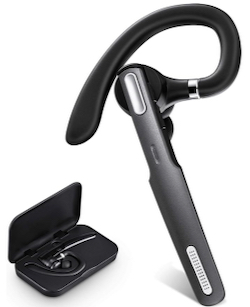
Universal Dashboard Windshield Suction Cup Holder for Smartphones
Wireless Bluetooth Earpiece V5.0 Hands-Free Earphones
Bluetooth Headset Wireless with Battery Display Charging Case
“A Deadly Wandering” Distracted Driving Book
(Amazon affiliate links/ads)
Distracted driving legislation (2021)
House Bill 1918: Would require curriculum for 10th students at public schools to include instruction on the dangers of distracted driving and speeding, to be developed by the Department of Education. Approved by the education committee Jan. 25. Approved by the full House on Jan. 27. (Mugler)
Distracted driving notes (2021)
State Police said they wrote about 250 citations in the first month under the handheld cell phone law. Fines range from $125 to $250 under the new law.
2020 distracted driving notes
Gov. Ralph Northam hosted a virtual and ceremonial signing July 8 for the state’s new handheld cell phone law, officially approved in March. Enforcement begins Jan. 1, 2021. Distracted driving measure sponsors Delegate Jeff Bourne and Sen. Scott Surovell were part of the ceremony. Northam said the law will “make Virginia’s roads safer by requiring drivers to put their phones down while driving.” It includes “several provisions to help ensure it is enforced fairly and does not result in disparate enforcement against people of color.”
The group Drive Smart Virginia hosted a rally in support of a hands-free law Jan. 21. SB 160 sponsor state Sen. Scott Surovell said the distracted driving problem is “completely out of control. It’s an epidemic. It’s been fixed in other states, and we need to do something about it before more people are killed.”
Sen. Surovell says the shift to a Democratic legislature should help a hands-free bill become law in 2020. Surovell introduced the legislation Dec. 23, accompanied by a mother who lost her 5-month-old son in a crash linked to distracted driving. The senator pointed the finger at “a handful of people who have been opposing it” in the capital on grounds of personal liberties.
Distracted driving legislation (2020)
House Bill 874: Prohibits holding of personal communications devices while driving. Fines $125 then $250. Mandatory fine of $250 in work zones. Effective Jan. 1, 2021. See SB 160, below. Amended and approved by Transportation in a 19-3 vote of Jan. 30. Approved by the full House in a 72-24 vote of Feb. 5. Approved by the Senate in a 29-9 vote of Feb. 18. Signed into law by the governor March 10. (Bourne)
Senate Bill 160: Seeks to outlaw use of handheld communications devices while driving in Virginia. Fines $125 to $250. Mandatory fine of $250 in work zones. Racial profiling provisions. Amended and approved by Transportation in a 12-3 vote of Jan. 23. Approved by the full Senate in a 32-7 vote of Jan. 29. To the House. Approved by the governor. See HB 874, above. (Surovell)
SB 932: Would add school zones to prohibition of using handheld cell phones in work zones. Approved by Transportation in a 12-3 vote of Jan. 23. (Kiggans)
SB 136: Handheld cell phone bill. Incorporated into SB 160, above. (Stuart)
SB 890: General transportation bill that includes handheld cell phone ban for drivers. Approved by the Senate in a 23-17 vote of Feb. 11. (Saslaw)
SB 944: Handheld cell phone bill. Incorporated into SB 160, above. (Saslaw)
House Bill 1414: Would prohibit use of handheld communications devices while driving. Part of general transportation package. Approved by Transportation in a 13-8 vote of Jan. 28. Approved by the House in a 56-42 vote of Feb. 10. (Filler-Corn)
HB 377: Handheld cell phone bill. Incorporated into HB 874, above. (Willett)
HB 387: Would add school zones to prohibition of using handheld cell phones in work zones. Incorporated into HB 874, above. (Edmunds)
HB 512: Handheld cell phone bill. Incorporated into HB 874, above. (Bulova)
HB 1414: General transportation bill that includes handheld cell phone ban for drivers. (Filler-Corn)
HB 1672: Handheld cell phone bill. Incorporated into HB 874, above. (Ware)
2019 distracted driving legislation
Senate Bill 1768: Would bar drivers from holding a handheld personal communications device while in a highway work zone. Class 1 misdemeanor. Approved by Senate in a 31-9 vote of Feb. 4. Amended and approved by House in an 82-16 vote of Feb. 20. Conference committee version OK’d by both Houses on Feb. 23. Senate votes for adoption in 35-5 vote of Feb. 23. House votes for adoption in 77-20 vote of Feb. 23. Expanded to a handheld cell phone ban by the governor on March 26. Senate approves governor’s changes in a 33-4 vote of April 4. House speaker rejects governor’s changes. Signed into law (as work-zone ban) by the governor April 29. Went into effect July 1. (Mason)
SB 1341: Would outlaw use of handheld communications devices while driving. See HB 1811, above. Approved by the Courts of Justice Committee in a 13-2 vote of Jan. 30. Approved by the full Senate in a 34-6 vote of Feb. 5. Substituted and approved by House Courts subcommittee in unanimous vote of Feb. 13. Failed to pass in Senate. Dead. (Stuart)
House Bill 1811: Would require drivers to use hands-free mode of personal communications devices. GPS must be mounted to vehicle. Fines: $125 then $250; if in work zone, $250. Approved by the Courts of Justice Committee in a 14-3 vote of Feb. 1. Approved by the House in a 69-27 vote of Feb. 5. Amended and approved by the Senate Courts of Justice Committee in a unanimous vote of Feb. 13. Amended version approved by Senate in 36-4 vote of Feb. 18. House rejects Senate amendment via 1-95 vote of Feb. 19. Senate approves conference report in a 37-3 vote of Feb. 23. House rejects final version in a 45-50 vote of Feb. 23. Dead. (Collins)
2019 distracted driving notes
Gov. Ralph Northam signed into law a measure barring handheld cell phone use by drivers in work zones. It went into effect midyear 2019 with mandatory $250 fines.
“Too many families have lost loved ones as a result of a driver paying more attention to their phone than to their surroundings,” Gov. Northam said in announcing his amendment to the work-zone bill March 26. Northam amended the bill to apply to all drivers, but those changes were rejected. The Senate OK’d the governor’s plan, but the House speaker ruled the changes were too far afield from the original measure. Bans on handheld cell phone use by all drivers were approved by the Virginia House and Senate in 2019, but again the bodies could not agree on a final version. Both of the original hands-free bills were approved Feb. 5, but the House later rejected Senate changes to its bill that would have permitted holding a phone during a conversation — essentially gutting the plan. Delegate Chris Collins says he’ll try again for a hands-free law in 2020, if re-elected.
State Sen. Monty Mason said he was “proud to be a part of a safety measure that will undoubtedly save the lives of many Virginians.” His SB 1768 was amended by the governor, expanding it into a statewide handheld cell phone ban. That change was rejected in the House, however. “Virginia’s traffic fatalities have risen every year since 2014,” Mason said. “Distracted driving caused by cell phone use, whether it’s dialing, texting, or checking email, is clearly the reason.”
Delegate Chris Collins once again led the effort for a handheld cell phone ban. “It’s disappointing, but I look forward to continuing the conversation,” he said of the failed measure. His 2018 plan also was approved but failed to become law due to squabbling between the legislative houses.
State Sen. Mark Obenshain was a key player in the Senate’s gutting of the 2019 handheld cell phone ban. “Talking on your phone is functionally no different than eating a hamburger in your car,” he said. Black lawmakers said the permitting of simple holding of the cell phone, as the Senate proposed, would make traffic stops too subjective — and subject to racial profiling.
Delegate Marcus Simon said the Senate’s rewrite of the handheld cell phone plan was “a hands-free bill that’s not.”
State Sen. Richard Stuart, sponsor of SB 1341, said he hasn’t been a fan of distracted driving laws, but “it has come to the point where people are so totally engrossed in their phones that they are almost oblivious to the world around them.”
Virginia officials say about a third of the state’s fatalities involve some form of driver distraction. In 2018, there were 208 fatalities linked to distractions. In 2017, nearly 28,000 crashes involved distractions and/or cell phone use.
Virginia drivers observed in a 2018 roadside survey were 57 percent more likely to be manipulating a cellphone than drivers in a 2014 survey. The percentage of drivers observed manipulating a phone rose from 2.3 percent in 2014 to 3.4 percent in 2018, according to the study from the Insurance Institute for Highway Safety. But drivers were less likely to be seen simply holding a cellphone or talking on a hand-held phone than in the prior survey. Observers staked out 12 locations in four Northern Virginia communities in March 2018 and the results were unveiled in late January 2019. Researchers said people were “using their phones in riskier ways” and that they expect “a continued shift in the way people interact with the devices as the technology evolves.”
2018 distracted driving notes
Both bodies of the General Assembly approved distracted driving legislation, but time elapsed without agreement. Lawmakers did approve in 2018, without fuss, an increase in fines for texting or using email with a handheld device while driving in a work zone. The law went into effect July 1.
School bus crashes and deaths are on the rise in Virginia. AAA Mid-Atlantic says distracted driving is the No. 1 reason for the crashes. Between 2013 and 2017, 14 people died in state crashes involving school buses
Distracted driving was linked to 26,123 crashes in the year 2017, state records show. That’s about a fifth of all crashes statewide. There were 208 fatalities blamed on distraction, the most since DMV records were kept on the activity.
State Sen. Scott Surovell suffered another defeat in 2018 with his plan to bar drivers from use of handheld communications devices. His similar 2017 distracted driving measure went down to defeat in the Senate Transportation Committee, but that same panel OK’d his latest plan Jan. 17. It then died in the Courts of Justice Committee. “I will try again next year,” said Surovell, who was making his third attempt at a handheld cell phone ban since 2013.
A police investigator told the Virginia Distracted Driving Summit that the state’s distracted driving law “has so little bite” that it can barely be enforced. D.J. Pointer of the Newport News Police Department said officers use reckless driving charges when cell phones are linked to crashes because of the ambiguous wording of the texting & driving law.
2018 distracted driving legislation
House Bill 181: Would create offense of driving while distracted by a handheld personal communications device. Fines up to $500. Minimum fine $250 if in a work zone. Approved by Courts of Justice in a 15-3 vote of Feb. 5 and an 11-6 vote of Feb. 9. Approved by the full House in a 50-47 vote of Feb. 13 (rejected, then reconsidered). Amended and approved by the Senate in a 29-11 vote of March 6. Senate version rejected by the House on March 8. See below. (Collins)
House Bill 181 (Senate version): Would outlaw handheld use of electronic devices while driving. Fines: $125 then $250. Racial tracking of traffic stops required. Also requires legislative appropriation for profile tracking. Approved by the full Senate in a 29-11 vote of March 6. Rejected by the House in a unanimous vote of March 8. (Surovell)
HB 1525: Imposes fine of $250 for use of a handheld personal communications device for reading emails or texting while driving in a highway work zone when workers are present. Approved by the House in a unanimous vote of Feb. 9. OK’d by the Senate Transportation Committee in a unanimous vote of Feb. 14. Approved by the full Senate in a 29-10 vote of March 5. Approved by the governor March 30. Took effect July 1, 2018.
Senate Bill 74: Would prohibit use of handheld personal communications devices while driving. Specifies that GPS and audio functions are permitted if the device is attached to the vehicle. Approved by the Transportation Committee in a 9-4 vote of Jan. 17. Killed by the Courts of Justice Committee in a 4-11 vote of Jan. 24. (Surovell)
SB 97: Prohibits driving with animal in lap or otherwise allowing animal to distract motorist. (Marsden)
SB 87: Would create offense of harming vulnerable road user (pedestrian, bicyclist, skateboarder, etc.) while distracted or otherwise careless. Defeated in Transportation in a 6-7 vote of Jan. 17. (Surovell)
SB 441: Would bar use of handheld personal communications devices while driving through active school zones. Marked as incorporated into SB 74 on Jan. 17. (Wexton)
HB 181: Seeks to establish that offense of “improper driving” includes using a handheld personal communications device in a manner that distracts motorist. Approved by the Courts of Justice Committee in a 15-3 vote of Feb. 5 and an 11-6 vote of Feb. 9. (Collins)
HB 115: Would expand definition of reckless driving to include failure to devote “proper time and attention” to driving. (Webert)
HB 116: Would allow local governing bodies to adopt ordinances against failing to devote “proper time and attention” to driving. Fines capped at $300. (Webert)
HB 177: Would bar holding personal communications devices while driving. Also prohibits driving with an animal in lap. Rejected by a Courts of Justice subcommittee in a unanimous vote of Feb. 2. (Bell)
HB 180: Would expand the prohibition on manually entering multiple letters or text in a handheld communications device to include multiple icons. Bans reading of handheld device. Rejected by a Courts of Justice subcommittee in a unanimous vote of Feb. 2. (Collins)
(text continues)
2017 distracted driving notes
State Sen. Scott Surovell’s planned expansion of the texting & driving ban — to include almost all uses of handheld communications devices — went down to defeat in the Transportation Committee. SB 860 also envisions use of reckless driving laws for prosecution of distracted drivers who cause accidents while using handheld electronics such as smartphones. Delegate Rich Anderson returns with a plan to bar a variety of handheld smartphone functions triggered by use of icons.
Del. Rich Anderson says the idea behind his HB 1834 (above) is to shut down distracted driver behaviors “that are still technically legal, such as watching YouTube, posting on Facebook, playing video games, that sort of thing.” Anderson has been trying to expand on his texting & driving law for several years, without success.
2017 distracted driving legislation
Senate Bill 860: Would make illegal all uses of handheld personal communications devices while driving. If accident results, violations are punishable as reckless driving. Permits navigation and audio uses if device is mounted to vehicle. “Passed by indefinitely” in the Transportation Committee in a 7-6 vote of Jan. 18. (Surovell)
House Bill 1606: Would prohibit drivers from using handheld personal communications devices while in a highway work zone if workers are present. (Villanueva)
HB 1834: Would tighten existing law to bar use of multiple icons on wireless communications devices. Bars drivers from reading handheld device with exception of GPS text. Removes exemption from vehicles temporarily stopped in traffic. (Anderson)
HB 1763: Would allow sale of special license plates for supporters of highway safety, “including awareness of distracted driving.” (Greason)
2016 distracted driving notes
The fourth Virginia Distracted Driving Summit attracted more than 300 people to Newport News in late September.
An emotional Manassas police officer testified Feb. 8 in favor of bill seeking to crack down on social media use of smartphones. Heather Munsterman suffered brain damage after being hit in an accident blamed on a driver who was text messaging. Four days later, House Bill 461 was “continued to 2017” by the House Transportation Committee.
Del. John O’Bannon proposed a doubling of the state’s fines for texting while driving. He says the idea for 2016’s House Bill 73 came from a trio of high school students. O’Bannon says he doesn’t see “any reduction in texting while driving” in Virginia. Del. Richard Anderson and Sen. George Barker have filed legislation seeking to broaden the state texting restrictions to include social media (below).
Del. Richard Anderson says his HB 461 focuses on drivers who use social media. In subcommittee testimony, questions were raised about what is meant by banning use of “multiple icons” on cell phones. Panel chairman Scott Garrett said he voted against the plan Feb. 8 because of this wording. The bill advanced to the full Transportation Committee, regardless.
2016 distracted driving legislation
Senate Bill 778: Would add the manipulation of multiple icons to current ban on entering text. Expands current texting law to include uses of devices when driver is not communicating. Would outlaw reading of any information on device except for phone numbers and GPS info. Approved by the Transportation Committee in a 10-3 vote of Feb. 3. (Barker)
House Bill 73: Would increase the fine for texting while driving from $125 to $250 for a first offense and from $250 to $500 for subsequent offenses. (O’Bannon)
HB 461: Targets social media use by seeking to add to current texting ban the manipulation of “multiple icons.” Expands current texting law to include uses of devices when driver is not communicating. Removes exemption for when drivers are stopped in traffic. Approved by Transportation subcommittee No. 1 in a 6-1 vote of Feb. 8. “Continued to 2017” by the House Transportation Committee on Feb. 12. (Anderson)
2015 distracted driving notes
The second full year of primary enforcement of Virginia’s texting & driving law produced about 1,700 convictions, state records show. Fairfax County continues to post the most convictions in the commonwealth, with 276 in 2015 (fiscal year) vs. 341 in 2014. The upgrade in enforcement and increase in fines have produced a quadrupling of convictions for texting, according to state records and a distracted driving analysis by Capital News Service.
In the first half of 2015, 68 people died in crashes blamed on distracted driving, the DMV says.
Del. Richard Anderson’s 2015 legislation that would have banned use of handheld cell phones by all drivers is dead for the year. Anderson, who sponsored the bill that made texting & driving a primary offense in 2013, says police aren’t making many distracted driving stops because it’s difficult to tell what a driver is doing while holding a wireless device. Anderson says he pledged to victims’ families to continue the fight in future sessions: “I intend to continue to devote energy (to the ban) each year, and someday we will see it become law,” he said.
Anderson made his case for a handheld cell phone ban before a Militia, Police and Public Safety subcommittee on Jan. 22, to no avail. “I’m disappointed, but I also know that diverse opinions exist here in the General Assembly and that every bill has another day,” he told the Richmond Times-Dispatch. “I feel strongly enough about this, having looked in the faces of mothers, fathers, grandmothers who have lost family members. This has a real human cause.”
A public safety subcommittee rejected Anderson’s House Bill 1926 on a voice vote Jan. 22. Committee chairman Benjamin Cline said the handheld cell phone ban went “too far too fast” for Virginia’s pace and suggested a general distracted driving statute. A similar bill requiring hands-free use of cell phones from state Sen. Jennifer Wexton stalled in the Senate.
2015 distracted driving legislation
Senate Bill 1279: Would prohibit use of handheld communications devices while driving. Fines: $125 (first offense), then $250. Class 1 misdemeanor (reckless driving) if accident results or if driver violates any traffic offense punishable as a misdemeanor or a felony at same time. “Passed by indefinitely” by Senate Transportation Committee in an 8-7 vote of Jan. 28. (Wexton)
House Bill 1274: Would bar searches of cell phones without a warrant. (Includes tablets, PCs, etc.) Also HB 1349. Rejected by criminal law subcommittee in voice vote of Feb. 4. (Farrell)
HB 1926: Would have prohibited drivers’ use of personal communications device while operating a motor vehicle. Hands free OK. Rejected by Militia, Police and Public Safety subcommittee on Jan. 22. (Anderson, Rust)
2014 distracted driving notes
In the first 10 months of primary enforcement, 1,427 convictions for texting & driving were reported by the DMV. Fairfax County continues to post the most convictions, with 318. Primary enforcement allows police to stop and cite motorists for that offense alone. Fines have also significantly increased as of July 1, 2013, from the old $20 to $125 (first offense) and from the previous $50 to $250 for subsequent offenses. There also is a $250 minimum fine for reckless drivers who are texting at the time of the offense.
Del. Richard Anderson, a Republican from Prince William County, says manipulating a smartphone while behind the wheel is about as safe as drunken driving: “We may as well make it legal to drive down the road and have an open bottle of Jim Beam, sipping on it at the wheel,” he told a distracted driving conference. Anderson has been pushing, unsuccessfully, for a handheld cell phone ban.
State Police said 131 people died in 2013 because of “a driver failing to pay attention.”
2014 distracted driving legislation
Senate Bill 139: Would make use of a wireless telecommunications device by the holder of a provisional driver’s license a primary offense. Includes hands-free cell phone use. Cleared by the Transportation Committee in an 11-3 vote of Jan. 15. Approved by the Senate in a 19-19 vote of Jan. 21. Rejected by a House subcommittee (Public Safety) in a 3-5 vote of Feb. 20. Dead. (Barker)
House Bill 212: Would outlaw driving a motor vehicle while holding a pet. Never considered by Transportation Committee. Dead. (Marshall)
Distracted driving notes (2014):
Drivers with learner’s permits would have been subject to primary enforcement for cell phone violations under a bill passed by the Senate in late January, but the plan was shot down in a House subcommittee. The legislation, Senate Bill 139, was from state Sen. George Barker.
Fairfax County drivers racked up the most convictions for texting under the new primary enforcement law, the DMV said in its report on the first six months under the strengthened law. Fairfax County had 168 out of the state’s total of 725, while Virginia Beach City logged 71. Other top areas were Prince William County (62) and Arlington County (41), the DMV said in late January. The totals reflect convictions from July 1 through Dec. 31, 2013.
2013 distracted driving notes:
Virginia State Police say they’ve cited 328 drivers for text messaging since the offense became subject to primary enforcement. The citations were written between July 1 and Sept. 28, police said in late October 2013. The Fairfax division of Northern Virginia issued the most citations, 171.
“Keep in mind that this data does not provide an exact account of the problem that exists concerning texting while driving on Virginia’s highways,” State Police superintendent W. Steven Flaherty said. “Drivers can also be cited for reckless driving and, therefore, (the offense would not be) included as a texting-while-driving violation.”
A group charged with distracted driving education says it’s seeking an opinion from the state attorney general about the legality of using social media while behind the wheel. The issue is whether posting to social media sites such as Facebook constitutes texting.
The primary enforcement law barely made into the books when the Washington Post declared it “all but toothless.” The Post’s reporter noted that drivers who are pulled over for texting on handheld cell phones need only say they were talking on the phone or getting directions via a GPS app.
The program Drive SMART Virginia is trying to get commercial truckers in line with the federal regulations regarding use of cell phones and other handheld electronic devices. The “Phone Down, Just Drive” campaign is largely educational, but deputies have been busy in May writing tickets for cell phone and seat belt violations — about 100 in a three-week period in New Kent County. The DOT regulations are backed up by primary enforcement.
The massive construction project along I-95 around Dale City hasn’t made much of an impact on distracted drivers. AAA and construction firm Transurban say more than half of the drivers who come through the zone use their cell phones, and a fifth admit to text messaging in the area. (The numbers are based on a survey of 1,000 drivers.) About 1,500 workers are in the corridor each day. The project’s safety initiative is called “Orange Cones, No Phones.”
The twin bills that toughened enforcement of the Virginia texting & driving law were approved during the 2013 legislative session by the governor and General Assembly.
The legislation’s increased fines were too high for Gov. Bob McDonnell, whose proposal to halve them was accepted by both houses of the General Assembly on April 3.
State Sen. Janet Howell, D-Fairfax, vice chair of the Virginia Crime Commission, said a complete ban on driving while texting — making it a primary offense — was the priority distracted driving legislation for 2013. Mission accomplished April 3, when the governor and lawmakers agreed on a tougher distracted driver plan.
Howell filed SB 981, which would bar drivers from use of all handheld communications devices in school dropoff zones. Fines would be $250, she said. That plan was incorporated into catch-all driving & texting legislation, above.
The 2013 General Assembly measures was kept busy by a swarm of similar distracted driving bills filed as the state’s texting law came under heavy fire:
A judge, prosecutor and lawmakers had been highly critical of Virginia’s text messaging law after the court had to throw out a reckless-driving charge against a driver who allegedly was texting when he hit and killed a college student.
Texting was at the time a minor traffic infraction in Virginia subject to secondary enforcement. In the widely publicized case, the driver, from Alexandria, hit and killed the student in 2011, prosecutors said. “The law needs to be changed,” the Spotsylvania commonwealth attorney said.
Virginia issued about 63,000 tickets for texting & driving in the five years ending in fiscal 2011, the Washington Post reported.
2013 distracted driving legislation
House Bill 1907: Would make text messaging while driving a primary offense. Seeks to increase fines to $200 and then $500 for subsequent offenses. Would establish a $500 minimum fine for reckless driving while texting. See SB 1222, below. Approved by the House in a 92-4 vote of Feb. 5. Approved by the Senate Courts Committee in a 9-6 vote of Feb. 15. Approved by the Senate on Feb. 29 in 28-12 vote. Final General Assembly sign-off Feb. 23. Governor proposes halving of proposed fines. Latest legislative action: General Assembly approves governor’s amendments April 3. The final House vote was 86-8. The Senate vote was 36-4. HB 1907 is identical to SB 1222, below. (Anderson)
HB 1907 incorporates HB 1357, HB 1360, HB 1495, HB 1540, HB 1848 and HB 1883.)
Senate Bill 1222: Seeks primary enforcement of state texting & driving law. Increases fines. Sets minimum fine for reckless driving while texting. See HB 1907, above. Approved by the Senate in a 24-15 vote of Feb. 5. Latest legislative action: Approved by the House Courts Committee in a 16-1 vote of Feb. 15. Approved by the House in a 91-6 vote of Feb. 22. OK’d by the Senate in a 27-12 vote Feb. 21. Final General Assembly sign-off Feb. 23. Governor proposes halving of proposed fines. Latest legislative action: General Assembly approves governor’s amendments April 3. The final House vote was 86-8. The Senate vote was 36-4. Identical to HB 1907, above. (Norment)
SB 1222 incorporated elements of SB 1160, SB 981 and SB 1238)
House Bill 1360: Would make non-phone call use of handheld communications while driving a primary offense, punishable as reckless driving. Would repeal current texting law, which has secondary enforcement. See HB 1907, above. (Cline)
HB 1357: Seeks primary enforcement status for violations of state’s texting & driving ban. (Rust)
2012 distracted driving notes:
The House Militia, Police and Public Safety Committee has been a burial ground for distracted driving legislation during the past three sessions. In 2012, it wasted no time in shooting down at least 10 distracted driving bills. Sen. George Barker’s plan to make text messaging while driving subject to primary enforcement (SB 219) was approved by the full Senate in February, 2012. Barker’s bill that would apply primary enforcement for junior drivers suffered the same fate.
Of the 10 distracted driving measures filed for the 2012 legislative session, three sought to prohibit use of handheld cell phones and five would have given primary enforcement status to the text messaging law. One unusual bill included a ban on personal grooming and reaching for objects not within an arm’s distance. Another would have created a blanket offense of doing something other than driving safely.
Del. Bobby Orrock filed a bill that would make most forms of distracted driving subject to primary enforcement. “We need to look at it in the full context,” said Orrock, R-Caroline, who cites “texting, putting on makeup, snarfing down a cheeseburger, whatever” as examples of distracted driving. His legislation, HB 532, failed to make it out of committee. Del. Vivian Watts, D-Fairfax, filed a similar but more specific plan, HB 415, that also failed to advance. (Both bills below.)
A subcommittee of the House Militia, Police and Public Safety Committee took up eight distracted driving bills on Jan. 26, but reported out (advanced) none of them. By the end of the session all 10 distracted driving bills in the Legislature were rejected by the panel. This was a rerun of the past two legislative sessions. Subcommittee chairman Del. Ben Cline said he preferred to see distracted driving enforced under existing reckless driving statutes. “We need to refocus the attention of law enforcement and our judges” on reckless driving behaviors, said Cline. Four of the five subcommittee members are Republicans.
2012 distracted driving legislation:
Senate Bill 219: Would make text messaging while driving a primary offense. Approved by the Senate Transportation Committee on Jan. 18 in an 8-5-1 vote. Approved by the Courts of Justice Committee on Feb. 6 in a 10-4 vote. Approved by the full Senate in a 28-12 vote of Feb. 12. Died in the House’s Militia, Police and Public Safety Committee in March. (Barker)
SB 210: Would apply primary enforcement to the existing offense of texting or use of a cell phone by a provisional driver. Currently secondary enforcement. Approved by the Senate Transportation Committee in an 11-3 vote on Jan. 18. Approved by the Senate on Jan. 26 in a 30-10 vote. Died in the House’s Public Safety Committee in March. (Barker)
House Bill 394: Would ban use of handheld personal communications devices while driving, notably cell phones. Includes bicycle riders. Primary enforcement. Fine: $20 then $50. Considered but not advanced by a House Militia, Police and Public Safety subcommittee on Jan. 26. Died in the House’s Militia, Police and Public Safety Committee in February. (Algie Howell)
HB 404: Restricts use of handheld personal communications devices to making and receiving cell phone calls. Secondary enforcement. Fines: $20 then $50.Considered but not advanced by a House Militia, Police and Public Safety subcommittee on Jan. 26. Died in the House’s Public Safety Committee in February. (Torian)
HB 415: Would require use of hands-free devices in order to make or receive cell phone calls or to read text messages while driving. Would bar drivers from searching for items that are not “immediate arm’s reach.” Would prohibit attending to personal hygiene or grooming while driving. Secondary enforcement. Fines: $40 then $100. Considered but not advanced by a House Militia, Police and Public Safety subcommittee on Jan. 26. (Watts)
HB 497: Would ban use of handheld personal communications devices while driving, notably cell phones. Includes bicycle riders. Primary enforcement. Fine: $20 then $50. Similar to HB 394, above. Considered but not advanced by a House Militia, Police and Public Safety subcommittee on Jan. 26. Dead. (Dance)
HB 532: Would create offense of “operation of a motor vehicle while engaged in other activities” that impair the ability to drive safely. Primary enforcement. Considered but not advanced by a House Militia, Police and Public Safety subcommittee on Jan. 26. Died in the House’s Public Safety Committee in February. (Orrock)
HB 652: Would remove secondary enforcement limits on Virginia’s existing ban on text messaging while driving. Police would be able to stop and cite offenders for that reason alone. Considered but not advanced by a House Militia, Police and Public Safety subcommittee on Jan. 26. Died in the House’s Public Safety Committee in February. (Kory, Albo, Bulova, Watts)
HB 874: Would make text messaging while driving a primary offense. Considered but not advanced by a House Militia, Police and Public Safety subcommittee on Jan. 26. Died in the House’s Public Safety Committee in February. (Rust)
HB 1053: Would make texting and driving a primary offense. Considered but not advanced by a House Militia, Police and Public Safety subcommittee on Jan. 26. Died in the House’s Public Safety Committee in February. (Anderson)
2011 distracted driving notes:
All efforts to put teeth in Virginia’s distracted driving laws failed in 2011 as no bill made it beyond the House and Senate committees. The House Committee on Militia, Police and Public Safety has rejected numerous distracted driving measures.
Fairfax County’s nine-month crackdown on distracted driving netted almost a 50 percent increase in citations vs. the same period a year ago. The sweep, which ran concurrent with the school year, yielded about 6,900 tickets in 2010-11, compared with 4,670 in 2009-2010. Police camped out in “unorthodox” locations seeking distracted driving offenders.
Fairfax police, “frustrated by a toothless (texting and driving) law that the Virginia legislature passed (in 2009),” are instead attacking distracted driving under an older law against failure to pay attention while behind the wheel.
Also, the Fairfax County police are conducting an online survey about distracted driving, seeking information on public attitudes and behaviors.
Legislation failures: “It’s a great disappointment and it’s a blow to traffic safety in the state of Virginia,” AAA Mid-Atlantic rep John Townsend said upon hearing that all distracted driving bills in Virginia have been rejected in 2011.
The House’s Militia, Police and Public Safety Committee has been a burial ground for distracted driving legislation during the past two sessions. This year’s crop of bills from representatives and senators all failed to advance beyond that panel. The Senate bills mirrored its 2010 legislation, also killed by the committee.
The Daily Press of Newport News commented that the House committee ” — filled with libertarian, ‘government-hands-off’ politicians — has been the killing field for lots of public safety bills over the years.”
Martha Meade, a spokeswoman for AAA Virginia, knew that getting distracted driving legislation through the General Assembly would be “quite an uphill battle.”
The Senate’s 2011 bills sought to toughen the existing distracted driving laws by making them subject to primary enforcement. One would have outlawed use of handheld cell phones while operating a motor vehicle.
At least seven bills targeting distracted driving were in the hopper in the House of Delegates, but all died. Two sought to ban handheld cell phone use by drivers (in addition to text messaging). Three planned to upgrade the existing Virginia text messaging law to primary enforcement, meaning police can stop and cite motorists for that reason alone.
More than 100 Virginia businesses have vowed to observed the “Orange Cones. No Phones.” employer safety pledge developed by Transurban-Fluor and AAA Mid-Atlantic. The campaign seeks to protect workers on the Capital Beltway HOT Lanes Project and the Dulles Metrorail Project.
2011 distracted driving legislation (dead):
Senate Bill 1042: Would make text messaging while driving a primary offense. Approved by the Virginia Senate on Feb. 8, in a 28-11 vote. Latest action: Rejected by the Committee on Militia, Police and Public Safety on Feb. 17. (Barker)
SB 1047: Seeks primary enforcement status for current law that prohibits drivers under the age of 18 from using cell phones or text messaging. Approved by the state Senate on Feb. 8, in a 33-7 vote. Latest action: Rejected by the Committee on Militia, Police and Public Safety on Feb. 17. (Barker)
SB 1351: Would outlaw use of handheld cell phones by all drivers. Hands-free OK. Seeks primary enforcement for use of wireless communications devices while driving. Fines: $100 then $200 with possible points against license. (Would apply to current penalties for text messaging.) Latest actions: OK’d by the Senate on Feb. 8, 2011, in a 26-13 vote. “Laid on the table” (killed) by the Committee on Militia, Police and Public Safety on Feb. 17. (Norment)
Virginia House Bill 1489: Would upgrade existing text messaging ban to primary enforcement status. Identical to HB 1546, below. Left on table in Militia, Police and Public Safety Committee on Feb. 8. (Spruill)
HB 1404: Seeks to extend Virginia’s text messaging ban to bicycles, mopeds. Would make violations subject to primary enforcement. Dead in committee as of Feb. 8. (Howell) View bicycles & distracted driving page.
HB 1424: Would prohibit the use of handheld cell phones by all drivers. Dead in committee as of Feb. 8. (Dance)
HB 1546: Would toughen existing text messaging ban with change from secondary to primary enforcement status. Identical to HB 1489, above. Dead in committee as of Feb. 8. (Kory)
HB 1630: Would ban cell phone use by all drivers as well as “other wireless telecommunications devices.” No provision for hands-free operation. Deletes current fine system for text messaging in favor of making violations Class C misdemeanors. Secondary enforcement. Latest action: On Jan. 20, a House subcommittee recommended no action be taken on the bill. Dead in committee as of Feb. 8. (Watts)
HJ 621: Calls for Virginia Tech Transportation Institute to study and report on “disincentives” for use of cell phones will driving. Would include primary vs. secondary enforcement and an analysis of current state laws. “Left on table” in Rules Committee as of Feb. 8. (May)
HB 2307: Doubles fines for use of handheld portable electronics if vehicle is in a highway work zone with workers present. “Left” in Militia, Police and Public Safety Committee as of Feb. 8. (Sickles)
Virginia cell phone, texting legislation notes (2010):
Fairfax County police reported that they ticketed more than 9,000 people for inattentive driving during 2010. That’s a 24 percent jump from 2009′s numbers. Fewer than 50 citations for driving and texting were written in the county last year due to the state law’s loopholes and its “secondary” enforcement status.
Text messaging continues to distract more drivers on the Capital Beltway, a survey released in mid-November 2010 found. The number of texting-distracted drivers increased by 47 percent in the past year, said AAA, which did the survey with a highway construction company. A majority of the Beltway motorists said they drove while distracted, with 53 percent talking on cell phones and 13 percent texting.
The House Committee on Militia, Police and Public Safety effectively killed all distracted driving legislation proposed for the 2010 session. The transportation committee spent most of its time on license plate issues.
Del. David Bulova, D-Fairfax, who introduced HB 212, says this about distracted driving enforcement: “It really does send mixed signals about whether we’re serious about enforcing this if you make it a secondary offense.” The current text messaging law “does hamstring our police officers.”
2010 legislation (dead)
Virginia Senate Bill 517: Adds use of handheld cell phones to existing texting law and upgrades enforcement to primary status. Fines from $100 to $200. Approved by the Senate on Feb. 2 but tabled by the House subcommittee on Militia, Police and Public Safety on Feb. 24. Bill dead for the year. (Norment)
Virginia House Bill 22: Would outlaw the use of any handheld personal communications device while operating a motor vehicle, bicycle, moped, etc. Fines from $20-$50. This legislation would make text messaging and related activities a primary offense, meaning law officers could pull over a driver for that reason alone (current law calls for secondary enforcement). Assigned to public safety committee, where it was “left on the table” as of Feb. 16. (Howell)
HB 58: Would add use of handheld cell phones to current law prohibiting text message. Drivers would be prohibited from using mobile phones unless a hands-free device is employed. Fines from $20-$50. Secondary enforcement. Assigned to public safety committee, where it was “left on the table” as of Feb. 16. (Dance)
HB 212: Would remove current text messaging law from secondary enforcement status. Assigned to public safety committee, where it was “left on the table” as of Feb. 16. (Bulova)
HB 221: Would make drivers using handheld cell phones guilty of careless driving if they commit another offense at the time. “Left on the table” in public safety committee on Feb. 16. (Watts)
HB 783: Would extend current text messaging law to include use of handheld cell phones. Retains secondary enforcement. If accident results, violation would be a Class 3 misdemeanor. “Left on the table” in public safety committee on Feb. 16. (LeMunyon)
Virginia Senate Bill 10: Would extend current sanctions on drivers’ use of wireless devices to include handheld cell phones. Secondary enforcement would remain. Incorporated into SB 517 (above). (Blevins)
SB 574: Would extend ban on on drivers’ use of wireless devices to include handheld cell phones. Retains secondary enforcement. Incorporated into SB 517 (above). (Ticer)
2009 legislation:
HB 1876: Prohibits text messaging while operating a motor vehicle. Took effect July 1. Approved by the House and Senate and signed into law by Gov. Tim Kaine on March 30.
SB 1227: Would ban drivers with provisional licenses from talking or texting on cell phones, regardless of whether a hands-free device is employed. Makes violations a primary offense. Tabled by a House subcommitee on Feb. 19 after being approved by the full Senate on Feb. 9.
SB 874 — Would require that drivers use hands-free accessories when making cell phone calls. Passed by the Senate Transportation Committee on Jan. 22, 2009, in amended form, but then defeated in the Courts of Justice on a tight vote. Incorporated SB 996.
HB 1615 — Delegate Algie Howell, D-Norfolk, has prefiled legislation to the 2009 General Assembly that would ban text messaging while driving. The ban would extend to bicycles and mopeds. Incorporated into HB 1876, above.
HB 1659 — Would prohibit use of wireless telecommunications devices while operating a motor vehicle, including bicycles and mopeds, whether handheld or not. Also from Howell. Died in committee on Feb. 10.
HB 1955: Would outlaw motorists’ use of handheld phones. Tabled in committee.
HB 1769: Drivers would be banned from using cell phones unless a hands-free device is employed. Tabled in committee.
Virginia cell phone, texting legislation notes (archived):
Delegate John Cosgrove, R-Chesapeake, is the author of the text messaging legislation HB 1876. Fines for those who drive and text will be $20 and then $50 for subsequent offenses. It assumes negligence on the part of violators if an accident occurs.
A spokesman for AAA told the Examiner that the secondary status of the new texting law — meaning police would have to have another, primary reason for pulling over drivers — makes it “tantamount to telling people you can do it.” Still, he called it a “moral victory.”
Sen. Patricia Ticer, D-Alexandria, saw her cell phone legislation clear committee on a 9-6 vote before losing in the Courts of Justice on a 7-6 vote. Ticer’s bill was combined with SB 966 from Sen. Harry B. Blevins, R-Chesapeake.
Delegate Bobby Mathieson, D-Virginia Beach, a veteran of the cell phone wars, saw his HB 1955 die in committee on Feb. 10, 2009. His past efforts included HB 904.
The 2009 Regular Session convened Jan. 14, 2009. The short session ended the next month.
The younger-driver prohibitions went into effect in 2007. The prohibitions on school bus drivers became effective July 1, 2008.
“I believe this is a common-sense restriction on those new drivers who may be tempted to pay more attention to phone calls and text messages than the road, endangering themselves and other drivers,” Gov. Tim Kaine said of the 2007 law.
Virginia’s school bus cell phone/ texting law results in a primary offense; the teen driver law is a secondary offense.
The local AAA backed the 2007 legislation; some conservatives opposed the teen driving plan, saying parents should make the rules for their kids.


So who is going to enforce this new law with the police in Richmond area? This whole past weekend I saw everyone we passed going to town on their phones.
Wrong again. There are things done in the “privacy” of your car that are regulated by the “nanny” state. Examples: at least one hand on the wheel — sorry, you’re not allowed to steer with your elbows or knees even if you think you can. You must wear a seat belt even if you don’t want to. You must use your mirrors and turn your head to make safe lane changes, even if you’re too lazy to do so.
You talk about logic? You’re using public roadways, dammit. You don’t have the right to drive distracted and possibly injure of kill someone because of your unfounded personal freedom to do so. Driving is a full time job. It requires your undivided attention. And if you’re going to tell me that you’re one of the few who can chew gum and walk at the same time, I have news for you. Every driver who ever crashed felt the same way. They all think they’re in control until something bad happens and then, if they survive, realize that they were not so ambidextrous.
That is not a logical progression of my point. You are leaping from something done in the privacy of my car to violating laws that control the flow of traffic. Distracted driving is not the same thing as purposely running a red light. Personal freedom and personal responsibility should be important as well. There needs to be a balance. All I am saying is that there are many, many things that distract a driver and outlawing specific things is an infringement on personal liberty. If I do something stupid, like get into an argument with a passenger and run a red light, I should get a ticket for running the red light. But if I am distracted but still follow the traffic laws, I should be left alone.
So let’s take your argument to the other extreme. Should I be allowed to run red lights? How about stop signs? And why can’t I speed if I want to? Ooh, the nanny state is so restrictive.
Yes, there should be laws against all forms of distracted driving. I’ve said many times that the laws that are being passed are hypocritical. They’re designed to just fool the public into thinking that the State cares about safety. It doesn’t!
Al, as I said, tyranny will creep into society on the backs of people like you. You think that we can make a law to protect people from irresponsible behavior. I disagree. People do stupid things all the time. A baby in the back seat of my car is a serious distraction. When it wants something, I may turn to take care of it. That is endangering my life, my baby’s life and the lives of others on the road. When I take a bite of my Big Mac while flying down I95, that is endangering others as well. When I look at the radio to change the station, that is endangering others as well. Where do you draw the line on government laws? Are you willing to outlaw everything that you do in your car that is not directly related to driving the car? Is there any limit to the laws you would support?
The key phrase in your argument is “if you are responsible.” And that’s my point. Too many, if not most, drivers are irresponsible. Stupid, if you will. That’s why we need speed bumps, red light cameras, school crossing guards, railroad crossing gates….and….cell phone laws!
Al, we don’t need “nanny” laws because we value our individual freedom. I have no problem stopping my conversation whether I am on the phone or whether I am talking to my wife in the passenger seat. Are you suggesting we should criminalize all use of a cell phone or just criminalize using one without a “hands free” setup? It is not rational to suggest that stopping a phone conversation is any more rude than stopping a personal conversation. Besides, if you are responsible, you will stop when you need to regardless of whether or not it is rude. I have. It is easy to explain and apologize. The bottom line is that you want to control how I live my life. Tyranny will creep into our society on the backs of people like you. Give me my freedom to be responsible. Don’t support laws that criminalize everything you don’t like.
To Julie who posted on January 8, 2011:”I can talk on my phone and drive safely.”
I am willing to bet that every driver who ever crashed uttered those same words…..just before the crash. Think about it.
Some have called these “nanny” laws “stupid.” Well, unfortunately we need “stupid” laws because so many drivers out there are stupid.
Mike, let me explain the difference between talking on a phone and talking to passengers. While talking to passengers, if a situation develops that requires your undivided attention you will stop talking to your passengers and deal with the situation. And they will understand because they see what you’re dealing with. The same goes for listening to the radio. You will just tune it out when a situation arises.
However, when talking on a phone you simply cannot stop talking or listening because that would be rude. The person on the other end might not know that you’re driving so you have to pay attention and keep up your end of the conversation and to hell with the traffic situation. Any questions?
I am glad they have not passed any more nanny state laws such as those being discussed here. What about talking to a passenger? Are they going to outlaw that next? What happened to personal responsibility? Are we going to outlaw all behavior that might hurt others? Do we value individual liberty or not?
There should be no texting while driving — for any age.
There shoujld be no cell phone use unless there is an emergency — and it should be recorded.
Each and every day I drive home heading west using the Dulles Toll Road and then the Greenway. Not only do I have the joy of paying $5.55 to do so one way, I am able to watch people swerving into other lanes, speeding up and then slamming on brakes, or not braking at all and whipping around other cars. Safe driving? I don’t think so.
WHAT ARE WE DOING TO OURSELVES?? I thought the rule was do only one thing at a time, and do it right. I have to say, if driving isn’t a number one priority with all the millions of drivers on the road, then I don’t know what is.
We are killing ourselves by things meant, supposedly, to make our lives easier. It does not make sense at all and young and old alike are dying.
What does it take? A relative in everyone’s family to be fatally killed before laws are enacted? Haven’t we seen enoujgh trajedy doing it this way?
If you can’t wait until you get home, then it must not be inportant enogh to pull over and make a call back to them. The same way texting is a life worth it. You can not do driving, and talking on cell phone,or texting at the same time!!!!!!!
Will somebody please explain to me, why the legislation banning texting and cellphone use was NOT passed in Virginia?
I drive a SCHOOL BUS for FCPS. Cell phone use is PROHIBITED while driving! Why would we allow the population as a whole jeopridize themselves and others while on the phone? What message are we sending our children?
Daily I see accidents caused by DISTRACTED DRIVING. Much of this could be stopped. How many innocents must die before the OLD DOMINION gets a brain?
From the Virginia Baptist Church Sign:
“HONK IF YOU LOVE JESUS
TEXT WHILE DRIVING IF
YOU WANT TO MEET HIM”
I think it’s a great idea TO NOT TEXT OR USE YOUR CELL PHONE WHILE DRIVING! But is it against the law, yet? I understand it is for teens but how about adults?
Linda: There is no Virginia law against adults using cell phones while driving.
Distracted driving laws are already in place in Virginia (“The Washington Post reported that Fairfax police were … using an older law against failure to pay attention while driving” –see above).
The danger of texting or talking on a phone is losing the necessary concentration to safely operate a vehicle, not the inherent act of using a phone. There are millions of Americans who safely text and talk on the roads everyday. Those who become distracted to the point that they are unsafe indeed deserve a ticket, and can be issued one under the current distracted driving law.
To say that any texting or talking is categorically unsafe is the kind of over-simplification sought by weaker intellects; perhaps those very people who lack the ability to safely multi-task.
If a driver is not operating their vehicle safely, they deserve a ticket, regardless of the source of their distraction. Conversely, if a driver is able to operate their vehicle safely, it should not matter what else they are doing. Every driver has a responsibility to be safe, and those that fail to meet that responsibility can, and should be punished under existing laws.
you all stupid if you think using cell phones in cars are cool if you need directions or crap just pull over and ask someone for them, and if you can’t do that you can always put the phone on speaker, boo hoo so its a little fizzy, i think you can put up with it for a little while. also gps systems tell you when to turn, you don’t have to look at it constantly. peace out!
Some people can drive and talk on cell phones safely–not many mind you, but some can.
NO ONE can text and drive safely. I see more and more of this insane behaviour. Texting and driving should carry identical penaties to drunk driving.
Driving on public roads is a privilege, not a right. How many people need to be killed and maimed before we recognize this irresponsible behaviour for what it is: criminal recklessness.
Bob is the sort of ignorant, self centered person that this law really should apply to. I agree with an earlier post that if there is a accident caused by someone on the phone, that a charge of attempted murder should be appplied. If you really have to text or talk, your time is so important that you can’t pull over for a minute? Some of you people are really clueless! And Bob, I hope that the only person you kill or injure is yourself.
this is bull**** what if people have to use navigation or even text people to find out how to get somewhere
I am looking for information on VA HB 1546 but don’t see it on this website.
Thanks for the tip, Anne. HB 1546 is identical to HB 1489. Both seek to upgrade the text messaging ban to primary enforcement. They’re listed above under “2011 distracted driving legislation.”
Ridiculous. Let’s not confuse safety with legislators trying to get re-elected. We are not children. I’ve been driving for 26 years. I can talk on my phone and drive safely.
i say it should be allowed to only hands free. i completely agree with Judy Russell .
I just want to know is it or is it not illegal in the state of Virginia to talk on a cell phone while driveing? My office is split 50/50 some say yes it is illegal if not hands free and some say it isn’t. I can’t find a straight answer.
What we have here on this discussion page is a spin off of the ever classic debate of rights v. duties.
I understand the focus on one’s rights as with the libertarian perspective: the fewer the laws the better; your body, your property, your decision to do with how you see fit, of course, without going so far as to infringe upon the rights of others.
On the flip side, what about the persons who strive for tougher laws to ensure road safety? As we drive down the road, we encounter countless vehicles, all with one thing in common: all have a single operator. Is it not the duty of each of those operators[drivers] to operate those vehicles in such a way that supports the system of transit, allowing the system to run smoothly?
Let’s use common sense here, folks. Before engaging in multiple activites while driving (i.e. radio channel surfing, talking on a cell phone, eating), there should be a question asked: Could this activity negatively impact my ability to operate this motor vehicle? This is a simple yes/no question that should never be answered with the assumption that one can, simply because one has done so before without negative consequence; an example would be driving under the influence of alcohol.
Let’s use common sense here, folks. The answer to this question may vary from driver to driver, situation to situation. What is good for one is not good for all. Some folks view the radio as a distraction; for others the radio is a source of tranquility with which they use to soothe their aggressive-driving tendencies.
I believe we should engage in activites that aid our ability to drive in a calm, focused manner. This will probably not be the same for every driver. Let’s use common sense here, folks. If listening to political commentators like Hannity and Colmes is something that provides you with a positive state of mind suitable for driving, by all means, good for you. If listening to that same Hannity and Colmes segment would cause you to become so aggitated that you pound on the steering wheel while yelling obscenities, then perhaps that is not the best driving situation for you. Should we talk on the phone while driving? Let’s use common sense here, folks. If you are in a heated argument with your baby-daddy about late child support, then no. Although, some calls can be completed without emotional uproar. I see no problem with those. But, again, let’s use common sense here, folks.
I believe folks are used to making decisions based on what is legal or illegal. This is an illogical method of decision making. I hope we can all agree, simply because something is not illegal, doesn’t mean it safe, nor does it mean it’s a good idea. Thus, we should use common sense to make decisions.
Many people talk on cell phones while driving, without using common sense. This has caused enough accidents to invoke legislation against such use. I believe the logic behind the hands-free effort is the notion that our attention lies within our hands and eyes; where our hands and eyes go, our minds follow. If we take our hands off the steering wheel, and our minds off the road, who is driving our vehicles? No one. That’s how accidents occur.
So, let’s use common sense here, folks. Our right to do what ever we want while driving is now being limited because many of us neglect to ask ourselves if what we want to do while driving can impare our ability to drive. Many of us have failed to meet our duties to society, even after being given statistics on cell phone use in relation to motor vehicle accidents. Personally, I gladly surrender my right to talk on my cell phone while driving, because my duty to be a safe driver is more important.
NO BODY is that important ..(.including you j.r who said you would do it no matter the law) . It is because of arrogant, irresponsible idiots like (your self ..j.r) that we ,the innoncet, have to mandate safety rules to ensure the safety of our families. As far as I am concerned…it should be Attemped murder. I have been behind you , beside you , in front of you who are talking on the phone. I see how you drive, where your attention is and mainly where it is NOT! And please remember driving in the us IS NOT YOUR CONSTITUTIONAL RIGHT …IT IS A PRIVILEGE.
I dont care what law passes if i want to talk on my cell phone i will. i see police on thier cell phones all the time. until they ban them from using them going down the road ill use mine any time i want too and ill kick anyones butt that trys to stop me. this country has gone to the dogs in a hand bag and they wonder why groups of people are poping up all over the place against the so called goverment. this is why. ill do what i want when i want to and dare them to try and stop me.
I completely support these laws and hope they are just the beginning. After seeing the consequences of distracted driving, I believe this issue needs to be tackled as soon as possible.
Guess it will be illegal to have a radio or change the station while driving. I want my country back!!!!
Having spent time in a Virginia traffic court (as a witness) and watching the judge dismiss almost every violation, I have to wonder if this isn’t something designed to keep the politicians employed and the give the masses the illusion of being “protected”.
When are these laws going to be enforced i see several people daily on cell phones and texting and cutting off traffic and effecting other drivers by not paying attention. Seriously this is a major problem and penalties need to be awarded and enforced.
Talking and texting while driving is fine! People could be trying to eat and almost hit a car. Guess we should ban eating while driving too huh?
All these stupid laws
Due to traffic building, all drivers should not talk on cell phones.
Should be required to use wireless earpiece If cannot afford.
talk when not driving This is any age.