Last updated: April 9, 2025
Cell phone, texting news: State Rep. Marcus Evans inspired a crackdown on drivers who video conference (via apps such as Zoom) on their commutes. The 2023 law (via House Bill 2431) brings fines from $75 to $150. The law also targets social media use while driving, for example X and Facebook. “Illinois has been a leader in cracking down on distracted driving, but we need to remain vigilant and continue to refine our laws as new technologies emerge,” Evans said in mid-March 2023.
 Penalties for causing bodily harm or death while using an electronic communications device have increased to $1,000 plus a one-year license suspension. Gov. J.B. Pritzker signed the act and it went into effect in July 2020. “People need to understand that this can lead to grievous injury and even death while driving,” says sponsor state Rep. Norine Hammond. A new ban on watching video while driving took effect Jan. 1, 2020. All offenses relating to electronic communications devices are now moving violations.
Current prohibitions:
- All drivers prohibited from text messaging and related activities such as emailing and Internet use. Also video.
- All drivers prohibited from use of handheld electronic communications devices.
- Drivers 18 and younger are prohibited from using wireless phones while driving — with or without hands-free devices.
- Motorists prohibited from use of cellular phones in school speed zones and construction/road maintenance zones.
- Within 500 feet of an emergency scene, cell phone use and taking of photos or videos on wireless devices prohibited.
Read the Illinois distracted driving law.
Illinois distracted driving fines: $75 (first offense), then $100/$125/$150.
Cell phone, text messaging legislation (2023):
House Bill 2431: Targets video conferencing while driving. Also social media sites. Approved by Transportation on March 8. Approved by the House on March 23. Approved by the Senate on May 10. Signed into law July 28. (Evans)
Distracted driving notes (2021):
The Illinois Move Over Task Force is recommending inclusion of distracted driving as an aggravating factor for violations of the Move Over Law. The panel met five times recently. The governor formed the task force after the roadside deaths of two state troopers.
(text continues)
Recommended Gear: Prevent distracted driving
Universal Dashboard Windshield Suction Cup Holder for Smartphones
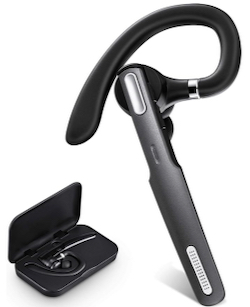
Wireless Bluetooth Earpiece V5.0 Hands-Free Earphones
Bluetooth Headset Wireless with Battery Display Charging Case
“A Deadly Wandering” Distracted Driving Book
(Amazon affiliate links/ads)
2019 cell phone, text messaging legislation:
House Bill 2386: Seeks tougher penalties for causing bodily harm or death while using an electronic communications device. One-year license suspension and $1,000 fine. Approved by Transportation on March 20. Approved by the House in an 82-24 vote of April 10. Approved by the Senate Transportation Committee in a unanimous vote of May 1. Approved by the Senate in a unanimous vote of May 16. Signed by the governor July 19. Took effect July 1, 2020. See Public Act 101-0090 (Hammond)
Senate Bill 86: Would expand ban on watching video while driving. Includes cell phones, tablets, etc. Defines “using an electronic device.” Amended and approved by Transportation on March 12. Approved by the Senate in a unanimous vote of March 27. Approved by House Transportation Committee in a unanimous vote of May 8. Approved by both houses May 31. Signed into law by the governor Aug. 9. Took effect Jan. 1, 2020. (Stadelman)
2019 distracted driving notes:
Despite a virus-related plunge in driving on Illinois roads and highways, fatalities as of midsummer 2020 are nearly identical to those of 2019. Distracted driving was one of the possible causes cited by Illinois State Police, as well as speeding on wider-open highways. Between Jan. 1 and early July, collisions killed 439 people in 2020.
State Rep. John D’Amico’s plan to make all offenses relating to electronic communications devices moving violations went into effect July 1. Previously, first offenders were spared black marks on their driving records — and reporting to insurance companies. Gov. Bruce Rauner signed the act Aug. 14, 2018. D’Amico sought to remove limits on distracted driving fines, but that provision was removed by a House panel.
State Rep. Norine Hammond says her HB 2386 was inspired by the case of a man who lost a leg in an accident caused by a texting driver. The distracted driver was fined $75. “It is my hope that the threat of an increased fine and a suspended driver’s license will make Illinoisans realize how serious the risk is when you don’t have your eyes on the road. It’s my intent to make people think twice before they pick up their phone.”
2018 cell phone, text messaging legislation:
House Bill 4846: Would classify all electronic distracted driving offenses as moving violations. Fines remain the same (per amendment). Amended and approved by the House Transportation Committee in a unanimous vote of April 10. Approved by the full House in a 96-15 vote of April 18. Approved by the Senate Transportation Committee on May 9. Approved by the full Senate in a 50-2 vote of May 29. Approved by the governor Aug. 14. Takes effect July 1, 2019. (D’Amico)
2018 distracted driving notes:
First-time offenders no longer get a break under the new Illinois distracted driving law that goes into effect July 1, 2019. All convictions will go on a driver’s record. Drivers convicted of three moving violations in a 12-month period will face license suspensions.
Illinois Secretary of State Jesse White’s Distracted Driving Task Force recommended the enhanced enforcement found in House Bill 4846. “This important legislation will make our roads safer and I urge the governor to sign it into law,” White said June 1. “No driver should be texting while driving.”
Illinois State Police wrote 5,078 tickets and warnings in 2017 for distracted driving on the tollway system.
2017 distracted driving notes:
Chicago police are being urged to consider adoption of the so-called Textalyzer device, which tells law officers if a motorist has been using a cell phone. A City Council safety panel voted for the study in mid-January and the full council is expected to back the move. Police have all but stopped issuing tickets for handheld cell phone use in the wake of a court order that they appear in court. An alderman who pushed through Chicago’s groundbreaking distracted-driving ordinance in 2008 says “this whole program is falling apart.”
Through mid-April, only 24 handheld cell phone tickets were handed out in Chicago. In 2016, the number was only 186. That compares with 2014, with 45,594 citations, police records show.
Deborah Hersman, head of the National Safety Council, said the plunge in Chicago distracted driving ticketing “should serve as a wake-up call” to the dropoff in enforcement across the nation. “It’s almost like (Chicago police have) completely abdicated any responsibility on this issue,” Hersman told the Chicago Tribune. The falloff is party due to a change in the city law, which now conforms to state requirements that police to attend traffic hearings for violators.
Chicago faces a lawsuit over its handling of distracted driving fines. The lawsuit, filed in early August, maintains that the city failed to share fines with the county and state. Plaintiffs claim the city ran its own “administrative justice system” in order to profit from distracted driving ticket revenues. (Chicago was a pioneer in distracted driving regulation and its cell phone laws predate the state laws.) The lawsuit seeks to have fines from 2010 through 2015 returned to violators who were routed to the private court system.
Chicago police say they are working on a distracted driving initiative as part of the international Vision Zero program.
2017 cell phone, text messaging legislation:
Senate Bill 13: General tax and education bill includes requirement that high school students receive instruction “on distracted driving as a major traffic safety issue.” (Radogno)
House Resolution 216: Establishes April 24-28 as first “Illinois Distracted Driving Awareness Week.” (Martwick)
2015 cell phone, text messaging legislation:
House Bill 3487: Would make aggravated use of an electronic communications device while driving a class 2 felony for drivers who kill. (Currently class 4.) Possible prison term. Minimum 480 hours of community service. Died in committee. (Martwick)
2015 distracted driving notes:
State Rep. Robert Martwick seeks prison terms for drivers who kill while using electronic communications devices. Martwick, a former prosecutor in Cook County, filed House Bill 3487 for the 2015 session, calling for class 2 felonies instead of class 4 felonies, which typically bring probation or short jail terms. He says the goal is to to “give the penalty more teeth” as with DUI laws. The bill failed to advance before session’s end.
State traffic deaths have increased so far in 2015, with 50 more fatalities compared with 2014. A University of Illinois safety analyst said distracted driving was likely one factor, along with the number of SUVs on the road and the increased number of drivers on the road. The increase mirrors a national increase in fatalities.
The Illinois Department of Transportation reports 910 traffic fatalities for 2014, using preliminary numbers. That’s down from 991 the year before. The DOT did not yet break out the number linked to distracted drivers.
2014 distracted driving notes:
House sponsor state Rep. John D’Amico told Hands Free Info it took so long to push through a hands-free law because, “To this day, there still are some who won’t accept that using a cell phone behind the wheel can be fatal.
“Hopefully, this law will bring increased attention to the issue.”
The changes brought by HB 1247 amend the existing Illinois text messaging & driving law to include handheld cell phones and similar devices. The final House vote of May 28 was 69-48, basically the same count as on first approval of March 1. The Senate vote of May 23 was 34-20.
House sponsor state Rep. John D’Amico did not oppose the Senate’s change stipulating that a first offense is not a moving violation. The bill was a rerun of D’Amico’s HB 3972 of 2012, which also cleared the House by a similar margin but faded in the Senate.
D’Amico said: “I’m very happy that House Bill 1247 passed. I believe this law will become an important tool in making our roadways safer.”
Gov. Pat Quinn signed the distracted driving legislation into law Aug. 16. “Too many Illinois families have suffered because of accidents that could have been prevented,” Quinn said. “Anyone driving a car should be careful, responsive and alert behind the wheel.”
Tickets under the handheld cell phone law were slow in coming the first few months, as patrol officers say they were overwhelmed with weather-related traffic incidents.
2014 cell phone, text messaging legislation:
Senate Bill 2632 Would outlaw driving while wearing a mobile computing headset such as Google Glass. Fine: $75 then $100/$125/$150. (Silverstein)
2013 cell phone, text messaging legislation:
HB 1247: Would prohibit driving while using a handheld electronic communications device. Fines: $75 (first offense), then $100/$125/$150 for subsequent offenses. Amends current texting law. Add exemptions such as single-button activation of cell phones and two-way radios. OK’d by the Transportation: Vehicles and Safety Committee on Feb. 20, in a 5-3 vote. Approved by the full House in a 64-46 vote March 1. Approved by the Senate Transportation Committee in a 12-3 vote of May 1. Senate Floor amendment stating that a first offense is not a moving violation approved by Transportation (May 15) and the Senate (May 16). Approved by the Senate in a 34-20 vote of May 23. Latest action: Final sign-off in the House in a 69-48 vote of May 28. Signed by the governor Aug. 16 as Public Act 098-0506. Takes effect Jan. 1, 2014. (D’Amico)
House Bill 2410: Would allow automated traffic photographs in construction or maintenance zones to be used as evidence that a driver violated the cell phone law. (Hoffman)
HB 2412: Would provide for assumption of reckless driving in cases of a death resulting from use of a cell phone in a school zone or construction area. Cleared by the Judiciary Committee on March 21. (Hoffman)
HB 2413: Would remove from cell phone laws the exemption allowing use of mobile phones with a single button press to initiate or terminate calls. Amended March 15 to exempt hands-free device built into the vehicle. Approved by the Transportation Committee in a 5-1 vote March 6. Amended to exempt in-dash voice-controlled operation (March 15). Consideration postponed in House on April 19. (Hoffman)
HB 1010 aka Patricia’s Law: Prohibits “court supervision” in cases where the defendant’s violation of traffic laws leads to death of another person. Amended to apply to drivers with previous serious traffic convictions. Inspired by a distracted driving fatality sentence. Approved by the Transportation Committee on Feb. 20. Approved unanimously by the House in a 94-17 vote of March 1. Amended and then approved unanimously by the Senate on May 21. Final House approval in a 114-3 vote of May 29. Signed by the governor Aug. 5 as Public Act 098-0169. Effective Jan. 1, 2014. (D’Amico)
2013 distracted driving notes:
Senate sponsor John Mulroe, D-Chicago, said to fellow senators during debate on the handheld device bill: “I don’t want you to end up under a semi-truck with your head cut off or you crashing into a tree or oncoming traffic.”
Opponents charged the bill was a loss of personal liberty: “This is just one more step toward us losing essential freedoms in the interest of safety,” state Sen. Matt Murphy said during Senate debate May 23. Sen. Dave Syverson charged: “It’s going to make a lot of criminals of individuals who are conscientious drivers.”
Highwood’s ban on use of handheld wireless devices while driving goes into effect Aug. 1, 2013. The Lake County municipality classified electronic distracted driving as a moving violation.
Sen. John Mulroe, D-Chicago, the Senate sponsor of the handheld cell phone bill, said crashes decreased by 17 percent in the Chicago suburb of Evanston after the city banned handheld cell phones for drivers.
State Rep. Kay Hatcher, R-Yorkville, opposes the ban on handheld cell phones because some people with hearing aides can’t use hands-free attachments. “I believe that it goes against the Americans with Disabilities Act and is prejudicing against folks with little means,” said Hatcher, who wears a hearing aid.
State Rep. Jay Hoffman has a trio of distracted driving bills before the House. They include a plan to allow automated photo systems installed in restricted zones to identify drivers violating cell phone & texting laws.
About 3,500 tickets were handed out for texting while driving in the law’s first three years, WLS reported in late February 2013.
Jan. 1, 2013, brought a few changes to the distracted driving landscape in Illinois.
One new law bars commercial drivers from texting or using handheld cell phones while driving, bringing the state into compliance with federal transport law.
Another adjusts current restrictions on cell phone use in school and roadway work zones. It expands the definition of highway work zones while allowing for voice-activated and one-button use of cell phones in school and roadway work zones.
A 2012 law prohibiting use of cell phones within 500 feet of an emergency scene went into effect immediately in July.
“Our goal is to drive zero fatalities to reality, and these new measures take us another step in the right direction,” said Illinois Transportation Secretary Ann Schneider.
All three measures were signed by Gov. Pat Quinn on July 20, 2012.
Hinsdale has adopted a general distracted driving ordinance. The village, located about 20 miles west of Chicago, will allow for a 6-month warning period. About 10 drivers had been warned as of mid-February. Distracted drivers cannot be cited unless they commit a related moving violation such as weaving. “We are not saying it is illegal to talk on a cell phone,” the police chief said. Distracted behaviors also include reading, writing, grooming and interacting with pets. Fine: $75, no report to the state. The Village Board vote of 4-2 came Dec. 11.
2012 cell phone/text messaging legislation:
House Bill 5101: Prohibits commercial drivers from using handheld mobile phones or engaging in texting while driving. Amends existing code to include texting or using a handheld cell phone as a “serious traffic violation.” Latest action: Signed into law July 20 and effective Jan. 1. (House: D’Amico) (Senate: Sandoval)
HB 5099: Prohibits use of cell phones within 500 feet of an emergency scene. Exempts reporting of the emergency. Adds “digital photo” and video to definition of electronic messages. Similar to SB 3663, below. Appears to be a repeat of 2011’s HB 1984. Approved by House Transportation Committee on Feb. 29. Approved by the House in a 62-38 vote taken March 9. Approved by the Senate in a 38-17 vote May 17. Final vote by House (84-30) on May 28. Signed into law July 20 and took effect immediately. Read the roadway cell phone law. (House: Costello) (Senate: Haine)
Senate Bill 2488: Expands definition of highway work zones. Adds exemptions to existing law barring the use of cell phones in school and roadway work zones. Allows for voice-activated and single-button cell phone use in these zones. Latest action: Signed into law July 20 and effective Jan. 1. (Senate: Garrett) (House: May).
House Bill 3972: Seeks to prohibit use of handheld electronic devices by drivers. Includes use of cell phones. Hands free and voice-operated OK. Fines: $75, then $100, then $125, then $150. Similar to HB 3970, above. Amended and approved by the Transportation: Vehicles and Safety Committee on Feb. 8 (voice vote). Amended by the House on Feb. 21 to specifically exempt two-way radio and citizens band. Approved by the House in a 62-53 vote of March 8. Died in the Senate. (House: D’Amico) (Senate: Mulroe)
HB 3970: Would outlaw use of handheld electronic communications devices while driving. Includes use of cell phones. Hands-free operation OK. (May)
HB 4009: Would change definition of highway work zones for purposes of the existing cell phone ban in those areas. (May)
HB 5325: Would punish drivers under 18 who violate the text messaging law with license or permit cancellation. No new license for six months, or until driver turns 18. (Eddy)
HB 5863: Would change prohibition against use of a cell phone in a construction or maintenance speed zone to apply only when workers are present. Allows for cell phone use while driver is in a traffic jam caused by the construction. Held by Transportation Committee on March 27. (Rose)
SB 3537: Seeks to create a general prohibition against distracted driving. Includes use of a “wireless telephone or other electronic communication device,” texting, grooming, eating. Violators must commit another offense while distracted. Moving violation with secondary enforcement. “Held” by Criminal Law Committee on March 27. (Millner)
SB 3663: Would bar use of cell phones within 500 feet of an emergency scene. Similar to HB 5099, above. Approved by the Criminal Law Committee on March 7. Approved by the Senate in a unanimous vote March 29. In the House. (Senate: Haine) (House: Mathias)
Distracted driving notes (2012):
The parents of a Downers Grove boy left in a vegetative state after a crash are campaigning for stricter distracted driving laws. The driver, Timothy J. Hagan, was convicted Nov. 15 of failure to yield to the 14-year-old the bicyclist. Hagan received a $1,500 fine and 300 hours of community service. Terra Ihde, the mother of the injured boy, said prosecutors weren’t allowed to use phone records to determine if a wireless device played a role in the accident.
The Evanston City Council was considering a total ban on use of cell phones and other portable electronic devices while driving — handheld or hands-free. A committee approved the plan in a 4-1 vote in March. The plan, if ever approved by the City Council, would be the nation’s most restrictive distracted driving law. In 2010, the Chicago suburb banned the use of handheld cell phones and text messaging while driving.
Rep. Jerry Costello II, D-Smithton, wrote his HB 5099 in order to protect law officers and other emergency workers. It would prohibit the use of handheld cell phones within 500 feet of an emergency zones. In February 2010, a state trooper making a stop was seriously injured by a motorist distracted by her cell phone call. “The Illinois State Police is pleading with the motoring public to please try to eliminate all the distractions in your vehicle, including electronic devices,” State Police said in response. Costello’s bill was approved by the House on March 9.
Rep. John D’Amico, D-Chicago, said of his plan for a handheld cell phone ban: “What we want to do is put some teeth into it and make it a ticketable offense” — as in a moving violation. Infractions of the state’s existing laws are now basically equipment violations. D’Amico and his Transportation: Vehicles and Safety Committee fine-tuned and approved his House Bill 3972 on Feb. 8. The House followed March 8.
D’Amico hopes his HB 3972 will unwrap the crazy quilt of handheld cell phone laws across the state: “You go from town to town, and you don’t know what the law is,” he said.
State Rep. Karen May says her hands-free bill (HB 3970) is not “slam dunk legislation, but I think it has a chance to pass. “I view this as just moving the ball down the court,” she told the St. Louis Post-Dispatch.
Sen. John Millner, R-West Chicago, says his general distracted driving bill is for “the people who can’t chew gum and walk.”
Senate President John Cullerton says “it might be inevitable” that Illinois will ban the use of cell phones by drivers.
“There’s not a big difference between whether you’re holding a phone or whether you’re not holding a phone,” Cullerton, D-Chicago, told the State Journal Register on Jan. 3, 2012. “It’s not what’s in your hand, it’s what’s in your head.”
Cullerton, who has sponsored several bills on highway safety, says he left the introduction of distracted driving legislation to other legislators. Sen. John Millner chimed in with a general distracted driving measure that includes grooming and eating.
About 4,100 traffic stops were made in 2011 for violations of Illinois’ prohibitions on texting while driving and using cell phones while driving through school zones and construction zones. Texting drivers received 839 tickets, while violators in the restricted zones piled up 1,880, state police said. The number of stops is almost half of those made in 2010.
The Secretary of State’s Advisory Committee on Traffic Safety was expected to meet in January in an effort to find ways to cut down on deaths and injuries from distracted driving and other causes. The panel was created by a legislative joint resolution in November.
Lake Forest is studying two plans targeting cell phone users and other distracted drivers. The City Council debated the proposed ordinances Jan. 3, 2012, but took no immediate action. The conversation is expected to continue Feb. 21. The police chief favors a straight ban on handheld cell phones, while the other proposal takes aim at a variety of distracted behaviors such as eating and grooming. Northern neighbor Lake Bluff has begun talks about similar laws with the backing of its police.
As the year began, Illinois State Police warned commercial truckers that they’ll be subject to citations under the new federal ban on handheld mobile devices. The state also adjusted its speed limit for trucks with the New Year.
An Evanston alderwoman says she’ll push for a total ban on cell phone use by drivers in the Chicago-area municipality. Jane Grover of the 7th District was behind the 2010 ordinance that banned handheld cell phone use by local drivers. “I’m just hoping that we have a really robust discussion about cognitive impairment and the dangers of driving while operating a cell phone — even if we aren’t successful in banning hands-free phone use,” she told the Daily Northwestern. A recent study of suburban ticketing found Illinois’ existing distracted driving laws were barely being enforced.
2011-12 cell phone/text messaging legislation (still pending):
House Bill 3849: Would apply laws regarding use of electronic communication devices while driving to bicyclists. Hands free OK. Bicyclists may use devices on shoulder of road. Approved by the Transportation Committee on Feb. 8, 2012. (Cassidy)
HJR 8: Calls on state, county and municipal law enforcement officers to log instances of cell phone involvement in vehicle crashes. Would create statewide study of that data starting in January 2012 (or 2013 per amendment). Latest legislative action: Resolution adopted by the House on May 31. (Bradley)
HB 865: Creates the Cellular Phone Use and Automobile Accidents Reporting Act, which would require state, county and local law enforcement officers to report on any cell phone involvement in a vehicle crash. Two-year study of the results would begin January 2013. Latest legislative action: Approved by the House on April 12, 2011. Sent to the Senate on May 11. No activity since. (D’Amico)
SB 2135: Would mandate teaching of distracted driving dangers — such as cell phone use and text messaging — by all commercial driver training schoolteachers. Stalled in Senate (Assignments) since July 23. (Garrett)
HB 2185: Earmarks $1.5 million for the Department of Transportation for distracted driving education. No activity since Feb. 22. (Madigan)
HJR 35: Created Secretary of State’s Advisory Committee on Traffic Safety. Resolution adopted by both houses on Nov. 9. (D’Amico)
2011 distracted driving notes:
At the end of 2011, Illinois State Police said they’ve issued 19,540 citations and written warnings since the state’s first distracted driving law took effect on Jan. 1, 2010.
Deerfield’s law against use of handheld cell phones while driving took effect Nov. 1. Highland Park’s ban on handheld cell phone use while driving went into effect June 1, 2011. Lake Forest is considering a similar law.
Bicyclists in Chicago are prohibited from using handheld cell phones and texting as of November. Alderman Marge Laurino’s plan sailed through the City Council on Oct. 5.
Laurino, who describes herself as “proponent of cycling,” said the idea was to “level the field” with motorists, who are banned from texting and talking in city limits.
Fines are $20 to $50 (first offense) up to $100 (third violation). They can hit $500 if an accident results. Bicyclists will be allowed to make cell phone calls if a hands-free device is used.
Chicago police issued almost 23,300 tickets in 2010 for use of handheld cell phones in city limits. That record number of citations is up 73 percent since 2006, the first full year of the ban, the Chicago Tribune reported in November.
Deerfield’s village board has approved an ordinance that would ban use of handheld cell phones. The law went into effect Nov. 1, with police issuing warnings for a couple of weeks. Fines: $120-$500. The Deerfield board voted unanimously to ban hand-held cell phones on Oct. 19.
Illinois Secretary of State Jesse White is reconvening his advisory committee on distracted driving. The focus will be on education and public safety campaigns. “No driver has any business text messaging while they are driving,” White said in early June.
Miss Illinois Hannah Smith is using her time in the spotlight to campaign against distracted driving. She’s making her away around the state talking with high school students about the too-often tragic results of texting and driving. Miss South Dakota, who lost her brother in a wreck linked to distracted driving, also lobbied for an end to texting & talking while driving.
A House resolution approved May 31 calls upon Illinois law enforcement to track cell phone involvement in vehicle crashes. The results would be part of a two-year study to determine the dangers of cell phone use while behind the wheel.
Distracted driving due to texting or cell phone calls caused or contributed to more than 1,000 vehicle crashes in Illinois during 2010, preliminary figures show.
A Chicago alderman has floated a proposal that would require all cell phones sold in the city to come equipped with software that would prevent their use while driving. “Parents don’t have the knowledge, they don’t have the ability” to install apps that shut down cell phones when a vehicle is in motion, Alderman Edward Burke said May 4.
FocusDriven, the Department of Transportation and the National Safety Council hosted the Illinois Distracted Driving Summit on April 21. DOT chief Ray LaHood opened the conference by citing a “tremendous grassroots groundswell against distracted driving.” FocusDriven co-founder Jennifer Smith said, “I challenge families and friends of distracted driving victims nationwide to hold their own state summits and demand action in their communities.” Smith is an Illinois resident. The summit was in the village of Addison, west of Chicago.
The state started 2011 with a new “Drive Now. Text Later” campaign. Organizers pointed to a survey suggesting that as many as 40 percent of motorists on the Illinois Tollway don’t know it is illegal to text while driving on state roads and highways. State Trooper Starlena Wilson is one of the campaign’s founders; she suffered a broken hip and fractured leg in a distracted driving accident in 2010.
Highland Park’s City Council voted Jan. 10 and then again on Jan. 24 to prohibit handheld cell phone use while driving, after flirting with an all-out ban on cell phones. The new law goes into effect June 1, with fines of up to $75.
Highland Park Mayor Michael Belsky and council members Scott Levenfeld and Steven Mandelout held out for a complete cell phone ban. “I strongly feel that the (state) Legislature is not doing their job here,” Belsky said. “They should be looking at these things statewide.”
Highland Park’s new law makes violations primary offenses, an upgrade from the secondary status assigned in the city’s existing negligent driving ordinance. An October 2010 survey of residents found that 80 percent wanted a hands-free law, while 47 percent were in favor of a total ban (support overlapped).
Illinois state police reported in late December that they’ve stopped 7,800 drivers for cell phone and texting violations in 2010. Texting and driving led to almost a thousand tickets. The construction and school zone laws resulting in 4,236 citations and 2,629 warnings for the year.
Illinois residents who lost loved ones in distracted driving-related accidents can post temporary highway memorials as of Jan. 1, 2011. The existing law allowed for memorials only when drunken drivers were to blame.
2010 distracted driving notes:
Plainfield, a suburb of Chicago, has enacted a law against distracted driving. Before getting a ticket, offenders must exhibit poor driving linked to activities such as use of a cell phone, texting, eating or putting on makeup. Fines $120, no points. A 30-day warning period began in mid-October 2010. The Plainfield police chief called the new law “mostly a public relations gimmick” to raise awareness of the dangers of distracted driving among teenagers.
Chicago’s City Council increased penalties for talking on a handheld cell phone while driving as of Feb. 21, 2010. The fine for driving and cell-phoning increased from $20 to $100. If an accident results, the fine jumps to $500.
2010 cell phone/text messaging legislation:
HB 4937: Would expand the Illinois ban on text messaging while driving to include talking on handheld cell phones. Operation with hands-free accessories OK. (Beaubien)
HB 5454: Seeks to amend the text messaging law to include a ban use of all non-standard electronic communications devices such as handheld cell phones, text messaging devices, PDAs. Hands-free allowed. (May)
SB 3199: Rewrites law related to school bus drivers to mandate they carry an active cell phone or have a working two-way radio while on the job, for purposes of communicating with school officials. Final legislative approval in late April. Became state law July 16, 2010. (Rose-Eddy) Similar: SB 3199 and HB 6073.
HJR 0097: Joint resolution that would direct state police to compile statistics on cell phone use and accidents, and asks police to note cell phone use while reporting accidents. (Bradley)
2010 cell phone/texting legislation notes:
Evanston’s City Council has approved a ban on the use of handheld cell phones and text messaging while driving. Fines $50-$200. The Feb. 8 council vote was unanimous. Alderman Jane Grover said Jan. 5, 2010, that the intent is “to make our ordinance more seamless with Chicago’s.” She added later: “I’ve been thinking about it for years. Every time I drive in Chicago I put the phone away,” she said.
Parents picking up kids are confused by the state’s new ban on use of handheld cell phones while driving in school zones, according to the Chicago Tribune. Schools have been notifying parents and police appear to be mostly issuing informal warnings. The city of Oregon announced a crackdown on Feb. 23.
The statewide ban on texting while driving has not yielded a citation in the counties of Morgan, Scott, Greene, Brown and Schuyler, the Journal Courier reported March 8. Prosecutors blamed the lack of a handheld cell phone ban because texting and entering a number on a cell phone look the same from outside a vehicle.
2009 legislation:
Illinois House Bill 71: Outlaws text messaging while driving. Texting permitted if the vehicle is stopped in traffic. Fines are $75. Approved by the Illinois House on April 1, 2009, and by the Senate on May 19. Sent to the governor after final House approval on May 28. Signed into law on Aug. 6 and took effect Jan. 1, 2010.
Illinois House Bill 72: Would ban drivers from using cell phones in school speed zones and construction/road maintenance zones. Approved by the Illinois House on April 1 and by the Senate on May 19 and again by the House on May 28. Signed into law on Aug. 6 and took effect Jan. 1, 2010.
HB 349: Provides for “the offense of distracted driving,” including text messaging, reading a newspaper or map, applying make-up, etc. Bill apparently has been withdrawn by sponsor after unfavorable hearing in the House on March 3.
SB 29: Would penalize drivers who text message behind the wheel.
SB 1299: Would create the offense of driving with a screen device operating. Applies to TVs, video monitors, portable computers that are in full view of the driver. (Silverstein)
2009 legislation notes:
Heard at the text messaging law signing: “It’s really bad that we have to legislate logic,” said Secretary of State Jesse White, a promoter of the measure. “Common sense would tell you that when your eyes are off the road, who’s driving?”
Park Ridge considered, and then dropped, plans for a city ban on the use of handheld cell phones while driving. Police told the City Council on Dec. 15, 2009, that it would be “bad public relations.”
The House legislation that would outlaw texting for Illinois motorists was approved 89-27 in the House and 45-6 in the Senate, which has a traffic safety-friendly president.
Rep. John D’Amico, D-Chicago, sponsor of HB 71 and 72, had predicted that distracted-driving legislation in Illinois would “get a lot of traction” this year.
“I think this is one small step toward eventually banning hand-held cell phones like they do in Chicago, I think that’s where we’re going,” D’Amico told the Chicago Tribune.
An unusual objection to Rep. Robert Pritchard’s distracted driving bill HB 349 was that police would use the law to pull over black drivers and harass them. Sen. Kwame Raoul, D-Chicago, raised the issue in committee and voted against the text-messaging bill when it came to the Senate floor, saying it was “an invitation for abuse.”
Fines for driving and using a handheld cell phone in Chicago were increased by the City Council panel on Feb. 11, 2009. The fine for talking without a hands-free device is $100, from $75. Drivers involved in crashes while holding cell phones will pay a fine of $500, up from $200. The new fines will “drastically reduce the use of cell phones,” Traffic Committee chief Patrick O’Connor said. The Chicago fines for cell phoning and driving take effect Feb. 21.
Rep. Robert Pritchard, R-Hinckley, of HB 349 told the State Journal-Register: “I think we need to do something to encourage people to be more attentive to the art of driving. It is not something that we can put on automatic pilot.”
SB 140, which prohibits young drivers and school bus drivers from using cell phones, went into effect Jan. 1, 2008.
Chicago’s ban on hand-held cell phone use by drivers took effect in the summer of 2005. The ban on text messaging while driving was added in October 2008. “Drivers need to keep their eye on the road, not the Internet,” said Alderman Edward Burke, author of the texting bill.
A legal challenge to Chicago’s ordinance was thrown out of court in July 2008. A lawyer sought to have all tickets voided and fines returned. The judge ruled city street safety justified the ordinance. Violations in Chicago bring $75 fines.
HB 4739, which would have required adult drivers in Illinios to use hands-free devices on cell phones, was tabled (killed) by sponsor Rep. William Black, R-Danfield, in March 2008.
In 2006, the House and Senate ordered a DOT study of cell phone distractions and their role in traffic accidents.
A hands-free bill also was tabled in the House in 2007.


New cars have identical buttons so close to each other they require attention to look down. To make matters worse you have defaults that are annoying to reset every time you restart the car. “Ancient” cars, all the way to the 1990’s had switches, sliding controls, twisting controls and knobs of all shapes and sizes. The smart engineers used what is called “tactile feedback” > YOU DIDN’T HAVE TO LOOK DOWN while you were changing something in a car. It made it safe! This new, cheap design, is going to get us all killed.
Smoking and driving was never safer then talking on a phone. You had a flammable cigarette in your hand that you can break off the flaming end and have it fall in the carpet to start a fire. This is never regulated and there was no politician frenzy of who will ban smoking and driving 1st.
If you can’t drive and talk on the phone, the driver is not that good in the 1st place and shouldnt be driving, Most near misses occur by maniac drivers who are not on their phones, just drive recklessly. Get the laws where the problems are, not where the politicians minds are, usually not for the betterment of anyone.
I am so glad that we have people with a common sense writing these comments!!! If only those people were passing laws, this country wouldn’t have to deal with so much nonsense! Are they going to prohibit a stick shift as well, because you have to take one hand of the steering wheel? Or, do you have to park your car before you could wipe your nose or change a radio station? I still have to push a button to use the Bluetooth on my radio! Honestly, it is more destructive than just answer the phone, because I have to look for the button. Nothing can be 100% hands-free!
Furthermore, there always will be people that choose to eat, smoke or even paint their fingernails (for fact, one of the fatal accident in Lake Zurich, IL) while driving! Banning cell phones is not the answer, because there are more hazardous things that people choose to do while driving and nobody pays attention to it! Wake up Congress, there are more important issues to take care off! Thanks to taxpayers you can hold your jobs, so serve us well!
“There’s not a big difference between whether you’re holding a phone or whether you’re not holding a phone,” Cullerton, D-Chicago, told the State Journal Register. “It’s not what’s in your hand, it’s what’s in your head.”
I’ve heard more idiotic things come out of Cullerton’s mouth than probably any politician in Illinois. Its whats in your head? Ok, then, they’ll have to ban conversation between driver and passengers in a car. They’ll have to ban radios because we’ll all be concentrating on the music, afterall, “its whats in our heads”.
While they are at it, they need to ban kids fighting in the back seat. They see kids fighting or crying in a car, its a distraction to the driver. Pull them over and give them a ticket.
Unreal.
Jim, the fatal flaw in your argument is that every driver whoever killed someone felt the same way you do. They all thought they had the ability to multitask. So what about the freedom of others are the road to drive in safety and arrive alive at their destination?
I’m thinking that if you ever find yourself in that situation, that is, killing or injuring someone because of your inattention, you wouldn’t be so bold to admit you were “mutitasking.” You would probably find a lawyer to lie for you and claim it wasn’t your fault.
I drive for a living. Over 2,000 miles a week. Not a trucker. Do I need the government to tell me that I can’t multi-task? Nope. Instead of taking my freedom away, how about devising a system to qualify people to use their phones? If you can’t talk and drive, then you put the phone down. I’ll decide for myself. That’s freedom.
Exactly. You are not a child. This is just another way for state Democrats to bilk the Illinois taxpayer. Just watch, they will create more laws that institute a fine in hopes of increasing revenue. If I could move out of Illinois I would.
I recently lost my 16 yr old niece from texting while driving and I don’t want another family to suffer. Therefore, I am doing some work in the community to bring awareness to distracted driving.
I complained to our school Principal that many PARENTS are using cell phones when driving into the school. He said he would look into it. Last week I saw the same Principal on his cell phone pulling out onto the road from the school. To clarify the school zones, I think it should state it doesn’t matter if school is in session or not. There are constant school activities before and after school.
read all the articles. agree with all them, however, about everyone i see driving has a phone stuck to their ear. any conversation is distracting their driving and law of using cell phone should strictley be enforced. i have a granddaughter who is a very bad offender of this, love her very much but i would hope to keep her and her baby around for many years.
Cell phone use should be banned while driving, drivers don’t pay attention to emergency vehicle’s as it is, I drive a motorcycle and must watch every driver around me while I’m driving, or at a complete stop. I usually get cut off by a car 6 times a week, In the past 12 years my car has been rear ended 4 times while at a complete stop. We dont need the cell phone to drive. We need to pay attention where we are driving.
I know there is a law, I understand it and follow it 99% of the time. I am not going to point the finger and say, “I only do it sometimes, or at least I am not texting.” I know I should never do it. BUT I don’t remember the last time I was driving and did not observe 50% of the people around me, playing with their cell phone on their laps, or texting with one hand and driving with the other, barely glancing up at traffic.
I’m an adult; if I willfully disobey a law and if I get a ticket, I deserve it and I will pay for it. I got a ticket recently because an Officer took offense that he saw me on the phone and I finished my call before putting my phone away — no hands free device. He told me I should have stopped when I saw him and he wouldn’t have stopped me. They should stop everyone they see, especially those people who drop their phones when they see a squad car. I also have a problem with the hypocrite police officers driving around the city on their cell phones, in their squad cars, on the job. Who tickets them?
DEVON: so true
Oh please,people you keep thinkin that every law is good until they catch you breaking it,then you will be upset.there taking away your rights dummies,its not about just safety its about controling your every move.
How about this. All we need is one law, car manufactures around the globe must add a sensors to the steering wheel that will make annoying sound (similar to seat belts) if you take one of your hands off the wheel for longer than 3-5 seconds. It will prevent you from doing many other distructive things besides texting and holding phone
Just imagine how much taxpayers money we will save.
this is just the latest craze…… come on people enforce the laws we have .. i am ham and gmrs radio licensed.. even if the state does outlaw two way radio it wont hold up in court.. i am federally licensed.. and i also use mine to report storm activity directly to National weather service in romeoville. now the idividual cities and such are passing laws ?? why?? enforce what is on the books and spend time [not money} on the laws we currently have……wasted time…… lets work on getting the thieves out of congress and get the state back to reality…..
My belief is if they outlaw hands free cell phone usage in cars, then they may as well outlaw having passengers riding in my/your car, because it is the same distraction your talking to them, right? My hands free is always worn while I am driving, it is my protection as a woman alone. All I have to do is press the button on my ear to connect with a call, or make a call verbally, i.e. call 911. No more distracting than drivers I see picking their noses, or scratching their head. Please don’t interpret this as my opinion on people using hand held or texting these should definitely be outlawed. Let’s stop government from ruling our lives completely. We need to have rights that they cannot take away.
Re: Evanston’s plan to ban all cell phone use, including hands-free: It’s about time. most drivers I see in Evanston are usually on their phones. I’m constantly on the alert. I dont have a vehicle, so I do a lot of walking. A day does not go by without a driver barely stopping at designated intersections while engaged with their cell phone.
I feel that we should stop the restrictions at the hands-free point. At some point the government is infringing on the rights of a citizen to just have a conversation. Making everyone abide to a hands-free law should be as far as they go. What is the difference between talking hands-free and having a conversation with someone, say your 7 year old, in the back seat? There is no difference. You have to occasionally look in the back seat just like you might at your phone. You may occasionally have to ask them to repeat themselves or listen more intently because the other person isn’t clear. What will be next for our legislature? No talking to anyone in your car while it is in motion? No transporting children without a second person riding with to address the children’s needs? At some point this gets ridiculous as the bottom line is driving is dangerous no matter what. We all need to do our share to be careful on our own without the government ruling that sucking on a tic tac is distracting. And if we screw up, then take responsibility for it and pay the consequences. More people die from bad nutrition choices or smoking than driving while talking on the phone. I don’t see that being banned yet…
It would be great for IL to pass a law that makes using a cell phone while driving illegal no matter what age. About 70 to 80% of cops that I see driving are talking on their cell phone. They should be setting an example.
Judy: In general, adult drivers are allowed to use cell phones in Illinois. See the various restrictions at the top of this post. Illinois officials recently put out a press release about enforcement of the new federal law banning handheld cell phone use by interstate truckers. That rule is the same in all states.
I’m trying to find out if regular (not texting) use of a cell phone in your vehicle is prohibited in Illinois in 2012? Also, is it prohibited or not for truck drivers?
This boils down to our driver’s education system. We need to teach kids to DRIVE, without any stupid distractions. Kids talk on the phone, text, eat, and do makeup while they drive and it is every bit as bad as drunk driving. We should revisit and reform the driver’s education system and also encourage the use of manual transmissions… Driving stick shift forces the driver to become wholly engaged with driving. It doesn’t allow for distractions as easily because both hands and feet are used when driving. It is also cheaper, faster, and more efficient.
I feel these current laws don’t go far enough. Even, “hands free”, cell phone usage still requires the driver to, “divide”, his or her attention from the primary purpose – DRIVING! I don’t believe there is any call so important that it can’t wait till you return home or at work. …
Even emergency calls should be made after the caller has pulled off the roadway and can give all attention to the problem. …
Accdents involving a driver using a cell phone, texting or other such mode of communication, should, from a legal standpoint, be fined or legally prosecuted just as severly as drunk driving. Cell phone usage, texting or drunk driving are all concious decisions made by the driver, any propeerty damage, personal injury or death as a result of any of these bad decisions shoul carry the same penalties!!!
People need to put on, “thier big boy/girl pants”, and start to take mature responsibility for thier actions. If they did, then maybe the government wouldn’t have to step in. …
Driving requires all your attention, it’s a very serious privelege. Every time we get behind the wheel of a vehicle, we are accepting responsibility, not just for ourselves, but for everyone else traveling near us. We just need to grow up!
Patti i feel your pain but i think this whole ticketing thing is just a way for the governement to make more money. They know they can’t fully stop texting and driving so they sort of “tax” it so to speak. they can’t put everyone in jail that does it because it is a law far to often broken and we don’t have enough space in correctional facilites to do that.
I dont understand why people just get ticketed for texting while driving. Texting while driving is just like drunk driving. When your drunk your at least kind of trying to pay attention, when your texting your looking down at your phone your not looking up at all. Yet a drunk driver gets arrested right away and revcieves a DUI. Thats crap. My family just lost someone very special in our family because some girl was texting while driving and all she got was 3 stupid tickets. My cousin spent a month in a coma and then past away. while she’s free to do what she pleases. No it isn’t fair. And things need to be changed.
I was pulled over on the south side of Chicago and the officer informed me he pulled me over for talking on the phone. I informed the officer that someone was calling and i checked to see who it was, i was not speaking on the phone. He asked for my license and registration, went backk to his car, and came back with a ticket. I said i told you i was not speaking on the phone why am I getting a ticket? He said just sign it, I saw you. I responded saying I wont sign it (which is well within my rights). the officer then got very upset and said if you dont sign it ill arrest you and take you to the police station. He then opened my car door and said let’s go. Of course after that I signed it. The ticket was for 100 dollars which I did not have so I could not pay. Now the ticket came in the mail today and it says I owe 540 dollars. Is there any way I can fight this ticket or bring to light the injustice of this scenario?
I agree that laws need to be in place to protect the public where texting is concerned; however, I disagree that holding a cell phone in your hand while driving causes any more accidents than looking in the rear view mirror.
I disagree with the Chicago Alderman who wants cell phones equipped with software to automatically turn off when a car is moving. This in itself is dangerous because if I’m abducted, I cannot use my cell phone. If I pick up my child from school and cannot find her/him, do you really think I’m not going to have my phone on talking with whomever I can to help me find my child. These examples may be extreme, but wait until you’re caught up in a situation and see how important a cell phone is to have working.
There are other scenaros where I might need my cell phone while the vehicle is moving and I think none of those issues are being raised. The entire focus is one sided.
With respect to Joseph Sroka, when you become a black person, living in a black environment and having to deal with police harassment on a constant basis, maybe you’d be better equipped to determine the difference between a race card and truth. Bringing up a race card is just non-black people’s way of taking the focus off of what they are doing against black people. You should follow your own advice and try to be smarter than a 5th grader.
Distraction of a Driver using a cellphone hand held or hands free is well established by various scientific researches . We have seen how many lives we have already lost and how many we are loosing everyday because of the indulgent drivers scanty respect for the Law which can not be enforced easily for you can not have policemen at every nook and corner nether you can have CCTV footage everywhere. It is only the implementation of the Techonolgy now available can stem this menace.
All governments have to pass the law to implement a safe technology so that no driver is able to speak on the cellphone or hands free incorporated with emergency conditions ,where a driver can call in such like situation . This is now a global menace where millions die and many more incapacitated due to talking on cellphones.
Sen. Kwame Raoul should try to save lives and not try to bring the race card into the picture. The Law is to protect and not to be negative…I think you get paid to pass Laws to protect.
Try to be smarter than a 5th grader.
I couldn’t agree with Jason’s comments any more. I do not think these bills are enough. I think that those who write our “Rules of the Road” need to look into writing rules for driving and using mobile devices. It should be part of the actual driving exam. They’re going to do it so people should be trained and tested.
I definitely believe that cell phone handset usage while driving is a serious issue. I was in the military, and was trained to communicate while performing various activities in my job. However, even I only use my cell phone with “hands-free” functionality. In my car, I have the Blue-Tooth feature and set it up to always connect to my phone while driving. If I’m in my wife’s car, I take my headset to ensure that I can talk while keeping both hands on the wheel. It is safer for me, my family, and any other drive on the road for me to do so. So, anyone that doesn’t have the mental training and discipline that I have, to communicate while performing other tasks which require significant concentration or focus, is truly dangerous if they are using their handset while they’re driving. They are putting themselves, their passengers, and every driver on the road around them in immediate danger.