Last updated: January 9, 2026
Distracted driving news:
State Sen. Erin Grall seeks to expand the state’s texing and driving prohibitions to include most uses of handheld devices such as cell phones. Fines would begin at $150 and 3 points vs. the driver’s license, with the option for traffic school. The 2026 legislation is SB 1152.
 Florida motorists may no longer hold their cell phones when traveling through school and work zones. Fines: $60 plus fees and three points vs. the driver’s license. As with the texting & driving law, enforcement is primary, meaning offenders are subject to being pulled over and cited for that violation alone. Florida’s texting & driving law took full effect July 1, 2019, making violators subject to primary enforcement. Fines remain the same, beginning at only $30.
Current distracted driving prohibitions:
- Text messaging while driving outlawed for all drivers. Fines: $30 to $60 plus court costs. DMV points against license for repeat offenses, texting in school zones and causing a crash. Primary enforcement.
Read the Florida texting & driving law | Read about Florida’s safety belt & child-restraint laws.
Distracted driving legislation (2026):
Senate Bill 1152: Would prohibit use of handheld electronic devices while driving. Allows for initiation or deactivation of device’s features. Fines: $150 and 3 points vs. license (first offense), then $250 then suspension. (Grall)
(text continues)
Recommended Gear to help prevent distracted driving
Universal Dashboard Windshield Suction Cup Holder for Smartphones
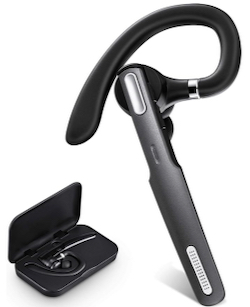
Wireless Bluetooth Earpiece V5.0 Hands-Free Earphones
Bluetooth Headset Wireless with Battery Display Charging Case
“A Deadly Wandering” Distracted Driving Book
(Amazon affiliate links/ads)
2025 distracted driving legislation:
Senate Bill 1318: Would prohibit drivers from using handheld wireless communications devices. OK’d by the Appropriations Committee on Transportation in a unanimous vote of March 26. Approved by the Rules Committee on April 1. To the full Senate.(Grall)
House Bill 501: Would outlaw use of handheld wireless communications devices while driving. (Tant)
2025 Florida distracted driving notes:
Saying “distracted driving is an increasing problem in our state,” Rep. Allison Tant is once again pushing fellow lawmakers to approve her hands-free House bill in 2025. “We’ve had a number of pedestrian deaths, as well as biking deaths, as well as other distracted driving deaths,” she has said.
SB 1318 is advancing, despite the usual personal liberties objections. “Stop and consider what we’re doing,” said Republican state Sen. Tom Leek. “We’re giving the ability of a government actor to pull you over for doing something that is entirely legal.”
2024 distracted driving legislation:
House Bill 1469: Would bar motorists from using handheld cell phones and similar devices while driving. Fines $30/$60. Approved by Transportation & Modals Subcommittee on Jan. 31. Approved by Infrastructure Strategies Committee in a unanimous vote of Feb. 15. (Tant)
Senate Bill 1408: Requires hands-free use of cell phones and similar devices while driving. Prohibits drivers’ viewing of videos. (Davis)
Both pieces of legislation aka the Anthony Branca and Anita Neal Act.
SB 1664: Seeks to ban hands-free use of electronic devices. (Rodriguez)
2023 distracted driving notes:
State Sen. Jason Pizzo returned in 2023 with his plan to add texting & driving as a violation of Florida “aggressive careless driving” laws. The plan died in Transportation in early May. The South Florida politician also tried in 2022 with Senate Bill 476.
A North Florida man has been sentenced to 30 years in prison for a distracted driving crash that killed a boy and seriously injured the child’s family. Gregory Andriotis, 40, reportedly was using the Excel application on his phone when he plowed into the family’s SUV in 2006. “I finally took a breath for the first time in seven years,” said Brooke Scherer, the mother of 9-year-old Logan. Andriotis, a father of two, was sentenced June 15 in in Hernando County.
2023 distracted driving legislation:
Senate Bill 544: Seeks to toughen aggressive driving rules. Includes text messaging as offense. Died in Transportation on May 5. (Pizzo)
2022 distracted driving notes:
Distracted driving crashes were linked to 333 fatalities in 2021, the Department of Highway Safety and Motor Vehicles reports. That’s the most recorded in Florida in almost a decade. There were more than 1,000 distracted driving crashes every week in the state that year, on average.
State Rep. Emily Slosberg-King, a longtime advocate of distracted driving curbs, will not run for a fourth term, she announced Feb. 7. She was the co-sponsor of the successful Florida texting & driving bill in 2019.
State Rep. Emily Slosberg-King is trying a different approach to reining in use of handheld wireless devices by drivers. Her HB 127 of 2022 seeks to prevent drivers’ use of the devices while first responders are active in the vicinity. “The texting while driving ban we passed during the 2019 legislative session was a great start, but it was just that — a start,” Slosberg-King has said. “We must do more to limit distracted driving and keep our roadways safe.” Her hands-free legislation for the 2020 and 2021 sessions died in subcommittee as the coronavirus emergency spread. She is leaving the House this year.
2022 distracted driving legislation
House Bill 127: Would prohibit use of handheld portable communications devices when first responders are active and in the vicinity. Also bars use while vehicles are pulled over to allow an emergency vehicle to pass. (Slosberg-King)
Senate Bill 476: Would add texting & driving to “aggressive careless driving” offense. Approved by Transportation in a unanimous vote of Feb. 8. (Pizzo)
2021 distracted driving notes:
Law officers wrote only 3,410 tickets under the texting & driving law in 2020, the first full year for the ban, according to state figures. The Highway Patrol handed out a third of those citations. In Miami-Dade County, there were fewer than 300 tickets. In Orange County, deputies issued 114. Several key counties, including Broward and Alachua, failed to report distracted driving citations, as required by the law. Six other counties reported no violations. Rep. Emily Slosberg said the numbers showed the need for her handheld cell phone ban.
2021 distracted driving legislation
House Bill 91: Would bar operation of motor vehicles while holding or otherwise touching wireless communications devices. Includes reporting of racial profiling data. (Slosberg)
2020 distracted driving notes:
The Florida Highway Patrol says time’s up for drivers who text & drive, but apparently the warning period is still on. FHP reported more than 1,400 stops for texting in the first full month under primary enforcement, but only 241 tickets. Handling a cell phone remains legal, and it is hard for officers to tell what a motorist was doing just before the stop, of course.
A distracted motorist who ran into a pack of bicyclists in late 2018, killing two of them, avoided jail time during sentencing in mid-January 2020. Police said Nicole Vanderweit was distracted by something inside her car. She pleaded no contest to careless driving in mid-January 2020. “It’s like the lives didn’t even matter,” said the son of one of the South Florida cyclists who died. “There was no justice.”
Distracted driving legislation (2020)
House Bill 249: Would prohibit holding or touching a wireless communications device while driving. Primary enforcement. Moving violation if a serial offense within five years. Includes reporting of racial profiling data. Died in Transportation & Infrastructure subcommittee. (Slosberg)
Distracted driving legislation (2019)
House Bill 107: Would outlaw use of handheld communications devices while driving. Hands free OK. Removes secondary enforcement cap on distracted driving laws. Requires police to note race of offenders as racial profiling barrier. Amended and approved by the Transportation Committee in a unanimous vote of March 26. Approved unanimously by the State Affairs Committee on April 4. Approved by the full House in a 104-9 vote of April 23. To the Senate, see below. See below. (Toledo and Slosberg)
CS for HB 107: Removes secondary enforcement cap on distracted driving laws. Prohibits use of handheld wireless communications devices in school zones and works zones. Approved by the Senate in a 33-5 vote of April 25. Approved by the House in a 108-7 vote of April 29. Signed into law by the governor May 17. Took effect July 1.
HB 45: Would prohibit operation of a motor vehicle while holding or touching a wireless communications device. Primary enforcement. Requires police to note race of offenders as racial profiling barrier. aka Hands Free Florida Law. Withdrawn prior to introduction. See HB 107, below. (Slosberg)
Senate Bill 76: Seeks to expand text messaging law to include “listening or talking” on handheld communications devices. Amended to address broader “distracted driving/inattentive operation of a motor vehicle” offense including handheld cell phone use. Removes secondary enforcement limitation of current texting law. Three points vs. license. Amendment: Adds personal grooming and “interacting with pets” as prohibited distracted behaviors. Also, data collection for racial profiling concerns. Amended and approved by the Infrastructure and Security Committee in a unanimous vote of Feb. 19. Approved by the Innovation, Industry, and Technology Committee in a unanimous vote of March 5. Approved by Judiciary in a 5-1 vote of March 25. Author amendment removing various committee changes approved by Rules on April 17. (Simpson)
Distracted driving legislation notes (2019 session):
Through Sept. 11, law officers statewide handed out 542 citations for violations of the new texting & driving law. Through Sept. 17, the Florida Highway Patrol reported issuing 438 warnings. FHP Chief Mark Brown told lawmakers Sept. 18: “We’ve encouraged (troopers) to write warnings until Dec. 31. Jan. 1, we will say do what you would normally do. We did the same thing with seat belts.”
The Senate upgraded the successful House Bill 107 to also prohibit use of handheld cell phones in school and work zones before returning it to the House on April 25. That provision goes into effect Oct. 1, with warnings to run through the end of the year.
Florida’s Gov. Ron DeSantis signed the measure elevating the state’s texting & driving law to primary enforcement. At the May 17 bill signing, DeSantis called texting & driving “one of the worst of all driving distractions.” The previous texting law was limited to secondary enforcement, meaning another offense must have been observed in order to stop and cite an offender. Police said they wrote few tickets because of this restriction.
State Sen. Wilton Simpson filed an amendment April 15 seeking to strike various committee changes to his SB 76 that diluted the legislation to the point where it only removed the secondary enforcement cap on the current texting law.
House Bill 45 is state Rep. Emily Slosberg’s third attempt at toughening the Sunshine State’s distracted driving laws. Her sister was killed by a distracted driver. Slosberg and Rep. Jackie Toledo initially filed separate distracted driving bills, but joined forces on HB 107.
State Rep. Jackie Toledo (HB 107) said upon filing her bill: “Distracted driving can have deadly consequences and it’s time we finally address this public safety crisis.” In 2018, Toledo teamed with Rep. Emily Slosberg on House Bill 33, which failed in the Senate.
The annual debate over Florida’s anemic distracted driving laws got an early start in late November, after a motorist who allegedly was distracted ran into a pack of bicyclists on State Road 84 near Davie. Two bicyclists died and several others were hospitalized. Police said Nicole Vanderweit was distracted by something inside her car. She pleaded no contest to careless driving and avoided jail time during sentencing in mid-January 2020.
2018 distracted driving legislation notes:
2018 legislation seeking to dump Florida’s secondary enforcement cap on its texting law was approved by the House but died in the Senate. Opponents cited the risk of racial profiling, even though both House and Senate versions required police to track the racial balance of their traffic stops under a revised texting law.
The failed primary enforcement plans of 2018 enjoyed the backing of House Speaker Richard Corcoran. The support was seen as key as no distracted driving legislation found success in 2017. House Bill 33 from state Reps. Emily Slosberg and Jackie Toledo sailed through all votes in the House. “The data is overwhelming and the need to act is equally compelling,” the House speaker said.
On March 1, the full House approved HB 33. With time running out on the 2018 session, however, Senate Appropriations Chairman Rob Bradley refused to let texting legislation appear before his panel.
State Rep. Emily Slosberg wrote to the secretary of state seeking a special-session revival of her HB 33. “Injuries are increasing. Fatalities are increasing. Our laws have to do something to address this,” Slosberg told Secretary of State Ken Detzer.
Opponents of strengthened enforcement of the texting & driving ban have clustered around concerns over racial profiling, apparently in lieu of the perennial personal freedoms argument. Rep. Jackie Toledo says tracking the racial identities of those stopped should address the problem. “Texting and driving doesn’t discriminate,” Toledo says. “Everyone does it.” A 2014 study by the ACLU, however, showed that black drivers were twice as likely as whites to be stopped for seat-belt violations in Florida.
State Rep. Emily Slosberg’s HB 33 advanced in its first committee vote despite concerns from a panel member over possible racial profiling. “There are a lot (of people in the state) that look like me that I want to ensure get a fair shake,” said State Rep. Wengay Newton, an African-American lawmaker. Newton and the rest of the Transportation & Infrastructure Subcommittee eventually voted for the distracted driving measure Jan. 9. It faces two more House committee votes.
Racial profiling also figured during committee debate over Senate Bill 90. Two members of the Senate Appropriations Subcommittee on Transportation, Tourism, and Economic Development voted against the measure Jan. 23 over fears that police would abuse the texting law. Sen. Bobby Powell voted no “because of who I am and what I’ve experienced.” The panel amended the bill to require police to keep track of the race of people ticketed for texting & driving.
State Rep. Emily Slosberg lobbied Florida cities and counties seeking resolutions backing her plan to make texting & driving a primary offense. She succeeded July 25 in Boca Raton, the city where her sister was killed by a distracted driver. “I have a lot of emotion with it because this is my hometown,” she said. Neither of her distracted driving bills received a hearing in 2017. She returned with HB 33 of 2018, which cleared the House Government Accountability Committee on Feb. 1. Senate Bill 90 also advanced in the opening weeks of the legislative session.
Sen. Keith Perry says he feels “pretty good” about the chances of his primary enforcement measure succeeding in the Senate. It cleared three committees as of mid-January and faces one more before a full Senate airing.
Slosberg says she looks forward “to an honest and open debate here in the House” over her primary enforcement measure, resurrected from the 2017 session. Her hopes were raised with a Senate panel’s approval of a similar plan.
2018 distracted driving legislation
Senate Bill 90: Would make texting and/or manually typing on a handheld device illegal while driving in Florida. Primary enforcement. Amended and approved by the Communications, Energy, and Public Utilities committee in a 7-1 vote of Oct. 24. Approved by Transportation Committee in a unanimous vote of Jan. 10. Approved by Appropriations Subcommittee on Transportation in an 8-2 vote of Jan. 23. Dead. (Perry)
House Bill 33: Would remove secondary enforcement cap on state texting & driving law. Approved by the Transportation & Infrastructure Subcommittee in a unanimous vote of Jan. 9. Approved by the Judiciary Committee in a 17-1 vote of Jan. 25. Approved by the Government Accountability Committee in a unanimous vote of Feb. 1. Approved by the full House in a 112-2 vote of March 1. Died in Senate Appropriations. (Toledo, Slosberg)
HB 121: Seeks to remove secondary enforcement cap on state texting & driving law. Doubles fines for texting offenses in school zones and crossings. Withdrawn Dec. 6, 2017. See HB 33 of 2018, above, and HB 47 of 2017, below. (Slosberg)
SB 72: Same as SB 90, above. Withdrawn by sponsor. (Garcia)
2017 distracted driving legislation
Senate Bill 144: Would enact primary enforcement of texting law for drivers 18 and younger. Amended and approved in a 6-1 vote of March 7 by subcommittee (now includes all drivers). Approved by Transportation in a unanimous vote of March 22. Died in Appropriations subcommittee May 5. (Garcia)
House Bill 47: Seeks to remove secondary enforcement cap on state texting & driving law. Doubles fines for texting offenses in school zones and crossings. Dead. (Stark, Emily Slosberg)
HB 69: Would establish primary enforcement for texting law for drivers 18 and younger. Dead. (Emily Slosberg)
HB 1742: Would strike secondary enforcement limitation from texting & driving law. Doubles fines for texting offenses in school zones and crossings. Contains anti-racial profiling wording. Dead. (Rodriguez)
2017 distracted driving notes:
Preliminary numbers show distracted driving injuries in Florida increased by 16 percent last year. Deaths were up 13 percent, the Department of Highway Safety and Motor Vehicles reported. There were more than 110,000 accident reports linking distracted driving to crashes in 2016, an increase of about 10 percent. Deaths were put at 233.
State Rep. Emily Slosberg continued a family tradition as she filed several distracted driving bills for the 2017 session. None received a hearing, however. In late July, her campaign for a primary law vs. texting & driving received the endorsement of the Boca Raton City Council. Slosberg knows the horrors that can result when drivers are distracted. Her twin sister was killed a decade ago in a crash in which four other teens died and the representative was herself a passenger. Her father, Irv, is a veteran of the House with a history of filing distracted driving legislation, most of it unsuccessful. (He left office in 2016.)
Emily Slosberg filed two distracted driving bills for 2017: One would have removed the state’s secondary enforcement limit on texting infractions. It also sought to double fines for violations in school zones. The other called for primary enforcement for drivers 18 and younger who are suspected of texting while behind the wheel. A similar plan was approved by the Senate Transportation Committee on March 22.
In addition to Boca Raton, Slosberg has found support for her distracted driving campaign in at least five counties — Manatee, Calhoun, Okeechobee, Marion and Franklin — as well as in Miami, Delray Beach, Boynton Beach, Pembroke Pines and Wellington. “I think going to Tallahassee with the amount of support statewide will be persuasive,” Slosberg said.
Distracted Florida: There were almost 50,000 crashes involving distracted driving in Florida during 2016, the Department of Highway Safety and Motor Vehicles said in April 2017. These distracted driving crashes accounted for more than 3,500 serious bodily injuries and 233 fatalities, the DHSMV said. Distracted driving crashes have increased 26 percent in the Sunshine State since 2013.
State Sen. Rene Garcia says her Senate Bill 144 appears to be “on life support” and is unlikely to advance.
Incoming House speaker Rep. Jose Oliva looms as a longtime obstacle to distracted driving legislation, political observers say. The Republican previously cited “civil liberties” as a reason to reject cell phone safety laws.
The Florida Police Chiefs Association backs an upgrade in enforcement for the texting & driving law. “The current Florida ban on texting laws is almost impossible to enforce, and the general public knows this,” Lake City Police Chief Argatha Gilmore told the Senate Transportation Committee on behalf of the group. The panel OK’d the upgrade. (text continues)
2016 distracted driving notes:
Distracted driving crashes killed 214 people on Florida’s roads in 2015, safety officials said as final numbers were reported in 2016. Injuries were put at 39,000. There were 45,740 crashes linked to distracted drivers last year, about 12 percent of the overall total, the Florida Department of Highway Safety and Motor Vehicles said. Crashes involving distractions are up by more than a third in the Sunshine State since 2012.
The Tampa Bay Times noted in late May that the state’s texting law is one of the weakest in the nation. Making the offense subject to primary enforcement “should be a priority for the Florida Legislature when it meets next spring,” the Times editorialized. “Lawmakers should continue those efforts and legislative leaders should support them.”
State Sen. Thad Altman said at the start of the 2016 legislative session that it was “beyond explanation” why someone would oppose his plan to remove enforcement limits from the texting law — yet Republicans in the House continued to do just that. Altman’s Senate Bill 328 died in committee.
State Rep. Rick Stark and Sen. Maria Sachs were back with 2016 legislation that would have cracked down on drivers who text in school zones or in school crossing areas. Both failed, as they did in 2015. House Bill 25 and Senate Bill 246 sought to double fines for violators, starting in October 2016. This year, however, their twin bills were not tied to removing Florida’s secondary enforcement restriction.
Almost 20,000 drivers under age 30 were involved in distracted driving crashes statewide in 2015, officials said. “The age group with the largest number of distracted driving crashes was 20–24 year-olds (17.8 percent), followed by 25–29 year-olds (14.3 percent) and then 15–19 year-olds (11.6 percent),” the Department of Highway Safety and Motor Vehicles reported in April 2016.
2016 distracted driving legislation
Senate Bill 328: Would amend current texting & driving law to remove secondary-enforcement limitation. See SB 192 of 2015, below. Died in Communications, Energy, and Public Utilities. (Altman)
SB 246: Seeks to double fines for texting & driving in a school zone or school crossing area. Effective Oct. 1, 2016. Died in committee. (Sachs)
House Bill 25: Would double fines for texting while driving in a school zone or school crossing area. Died in subcommittee. (Stark)
HB 251: Would bar texting and related activities while driving through school zones, school crossings or school district property. Primary enforcement; moving violation. Died in committee. (Slosberg)
HB 537: Would provide for primary enforcement of the state texting & driving law. Effective Oct. 1, 2016. Same as SB 328, above. Died in committee. (Perry)
SB 134: Same as HB 251, above. Died in committee. (Thompson)
2015 distracted driving notes:
Longtime distracted driving law advocate Rep. Irv Slosberg says “a couple of people in management of the House of Representatives” are to blame for the weakness of Florida’s texting law.
At least nine distracted driving measures failed in the 2015 session. State Rep. Rick Stark and others sought to end the “secondary enforcement” restriction on Florida’s texting & driving law, meaning police could stop and cite offenders for that reason alone. State Sen. Maria Sachs filed the same plan in the Senate. Sen. Todd Altman also proposed primary enforcement.
Sachs testified in support of her bill in late March: “We have given the secondary offense part of this a number of years to work. If it had worked as a secondary offense we’d keep it as a secondary offense.”
More than a year on, Florida’s texting & driving ban had produced as few as 1,500 citations. The low number is due to the distracted driving law’s limitation to secondary enforcement status, many law officers say.
“Texting kills our children,” State Sen. Maria Sachs told the Communications, Energy and Public Utilities panel March 31. “It kills other drivers and we need to do something about it.” The committee agreed, backing her SB 246 in a 5-3 vote. Transportation didn’t.
State Rep. Mia Jones and Sen. Audrey Gibson filed identical bills seeking a ban on drivers’ use of handheld cell phones. Their plan is limited was secondary enforcement. Rep. Irving Slosberg was back with a plan to bar use of cell phones by drivers on school district property. He also seeks felony charges for distracted drivers who kill. Slosberg says he’s rooting for Stark’s bill.
Stark says his plan to make texting & driving subject to primary enforcement has the support of “AAA, AT&T, Allstate and numerous law enforcement agencies.” Stark, D-Weston, says “real enforcement is making texting and driving at the same time a primary offense. … There is a study that claims that Florida is the sixth worst state to drive in, and the category that propels the Sunshine State is distracted and careless driving.”
State Sen. Nancy Detert, author of the often-debated texting law, says lawmakers should leave well enough alone: “Every single year people file the same bill to put in more restrictions or up the penalties,” Detert, a Republican, told ABC7 of Sarasota. “The idea of my (2013) bill was to change behavior, and … I think what we did has changed the behavior of people that were texting and driving.”
Most of the distracted driving measures filed for the 2015 session were repeats of 2014 legislation. Detert filed her texting bill repeatedly before finally finding success in 2013.
2015 distracted driving legislation
House Bill 1: Would make texting violations subject to primary enforcement. Seeks to double fines for texting violations in school zones and designated school crosswalks. Would take effect Oct. 1. See HB 333 of 2014, below. Died in Highway & Waterway Safety Subcommittee. (Stark)
HB 9: Would permit felony convictions of drivers who kill while using wireless communications devices. First-degree and second-degree felonies. Would take effect July 1. See HB 1253 of 2014, below. Died in Justice Appropriations Subcommittee. (Slosberg)
HB 17: Would bar use of cell phones by drivers on school district property, including school zones or school crossings. Would take effect July 1. See HB 645 of 2014, below. Died in Highway & Waterway Safety Subcommittee. (Slosberg)
HB 929: Would ban use of handheld communications devices such as cell phones while driving in Florida. Secondary enforcement. Requires public safety campaign to promote law. Died in Highway & Waterway Safety Subcommittee. (Jones, M.)
Senate Bill 192: Would remove secondary enforcement limitation on Florida’s texting & driving law. Approved by Communications, Energy and Public Utilities in a 5-3 vote of March 31. Died in Transportation. (Altman)
SB 246: Would remove secondary enforcement limitation on texting & driving law. Seeks to double fines for texting violations in school zones and designated school crosswalks. Similar to HB 1, above. Approved by Communications, Energy and Public Utilities in a 5-3 vote of March 31. Died in Transportation. (Sachs)
SB 270: Would have made causing a death while texting & driving a third-degree felony. Second degree if offender fails to give aid or provide information. Unfavorable vote of 3-5 by Communications, Energy and Public Utilities on March 31. “Left on table.” (Soto)
SB 492: Would bar use of cell phones by drivers in school zones or school crossings. Would take effect Oct. 1. Moving violation. Approved by Communications, Energy and Public Utilities in a 5-3 vote of March 31. Died in Transportation. (Thompson)
SB 1022: Would outlaw handheld communications device use by drivers. Same as HB 929, above. Approved by Communications, Energy and Public Utilities in a 7-1 vote of April 7. Died in Transportation. (Gibson)
2014 distracted driving notes:
The Orlando Sentinel editorialized in December that the state’s texting & driving law was “a joke.” The paper came out in support of House Bill 1, which would make texting subject to primary enforcement: “State lawmakers have a chance to put some teeth into the statute, and they must.”
A Bunnell woman reportedly has been awarded more than $4 million after a crash linked to texting & driving left her “totally disabled.” The Aug. 5 award, in Flagler County circuit court, totaled $4.3 million. The 2010 accident allegedly was caused by Joseph E. O’Guin, the boyfriend of Cacilia Carter, who troopers said ran a stop sign while texting and hit a truck. Carter was in a coma for several weeks and is “still impaired and permanently and totally disabled,” her attorney said.
At least 10 distracted driving bills greeted the Florida Legislature’s return in early April. The House’s 2014 crop of distracted driving bills died a quick death in the Transportation Committee. Many of the bills are expected to be refiled for the 2015 session.
Twin plans in the House and Senate sought to allow for imprisonment of distracted drivers who kill. Prison terms could be 15 years for those kill, while those who kill and fail to stop and assist at the crash site could get 30 years. The Senate version failed, but the House bill remains in the mix. Its sponsor is Rep. Irving Slosberg. A House committee approved the bill in late March but there has been no progress since.
State Sen. Maria Sachs filed legislation that would make violators of Florida’s new text messaging law subject to primary enforcement. She used the bully pulpit of day 1 of the texting law to propose the enforcement upgrade, which would allow police to stop and cite violators for that reason alone. It didn’t help. Sachs’ legislation, Senate Bill 322, died in committee in early May. The House version is HB 539.
Bills that would bar drivers under the age of 18 from using cell phones and computers while behind the wheel have been filed for the 2014 session. House Bill 5 is a repeat of unsuccessful legislation filed in 2013 and 2012 by state Rep. Irving Slosberg. Joseph Abruzzo has the Senate version, SB 352, which died. Slosberg, who filed several other distracted driving bills for 2014, lost a teenage daughter in a 1996 auto accident in which a young friend was behind the wheel.
Other 2014 bills seek to ban cell phone use in school zones.
2014 distracted driving legislation
House Bill 5: Would prohibit the use of mobile telecommunications devices by drivers under the age of 18. Includes computers and game devices. Billed as the “Minor Traffic Safety Act.” Non-moving violation. Would go into effect Jan. 1, 2015. Approved by the Transportation & Highway Safety Subcommittee on March 18. Approved by the Judiciary Committee on March 27 and sent to the full House. (Slosberg)
HB 333: Would double fines for texting violations in school zones and designated school crosswalks. (Stark)
HB 539: Seeks to repeal secondary enforcement limit on 2013 texting & driving law. (Slosberg)
HB 645: Would bar use of cell phones by drivers on school district property, including school zones or school crossings. Cites texting but does not appear limited to texting. (Slosberg)
HB 1253: Would permit felony convictions of drivers who kill while using wireless communications devices. Approved by a Criminal Justice Subcommittee on March 18. Approved by the Judiciary Committee in an 11-2 vote of March 27. To the full House. Same as SB 1078, below. (Slosberg)
Senate Bill 322: Seeks primary enforcement of Florida’s 2013 texting & driving law by allowing police to stop and cite offenders for that reason alone. “Died in Transportation” on May 2. (Sachs)
SB 352: Would prohibit a driver younger than 18 years of age from using a wireless communications device. Applies both to handheld and hands-free usage. “Died in Transportation” on May 2. (Abruzzo)
SB 442: Seeks to double fines for texting violations in school zones. See HB 333 above. “Died in Transportation” on May 2. (Ring)
SB 988: Would bar use of wireless communications device by drivers in a school zone, in a school crossing area or on school district property. “Withdrawn from consideration” April 23. (Margolis)
SB 1078: Would allow felony convictions of those who kill while driving and using wireless communications devices. Approved by the Communications, Energy and Public Utilities Committee in a unanimous vote of April 1. “Died in Transportation” on May 2. (Soto)
2013 distracted driving notes:
State Rep. Richard Stark has filed legislation for 2014 that would double fines for those who text message and drive in posted school zones and school crosswalks. “It seems that the only way for the Legislature to increase the penalties for texting while driving is to do it incrementally,” Stark told WFSU in December. He said the idea came from high school students in his district. State Sen. Jeremy Ring has the companion bill.
State Sen. Darren Soto plans to refile for 2014 his bill seeking felony charges for those who kill or seriously injure others while texting behind the wheel. Soto, D-Kissimmee, cites families “hoping for justice” after a death occurs but finding that only a ticket is possible for the offense — “a slap on the wrist.” A similar bill was filed in the House last year.
Statewide in 2012, 4,841 crashes were blamed on electronic distracted driving, the Florida Department of Highway Safety and Motor Vehicles reports.
In Brevard County, only six tickets were written in the first two months of the texting & driving law. All but one in Melbourne. A police spokesman said the new Florida texting law “has little to no teeth.”
Miami-Dade led the state in texting & driving citations in October, first month under the distracted driving law. Second-place Palm Beach County logged only 16 tickets.
Law officers in Southwest Florida reportedly issued only five texting & driving citations in the first month of the Florida distracted driving law. A Cape Coral police spokesman told WINK News that the text messaging law has several loopholes that work “in the driver’s favor and make it more difficult for the officer to write a citation and enforce the statute.” These include the secondary enforcement and the need to prove a driver was texting, not adjusting music on a cell phone or using its GPS app.
In Volusia and Flagler counties, two tickets were written in the first month, another media report said in November.
Media coverage of Florida’s new texting law has been substantial, but the public won’t be hearing much from the state itself. Gov. Rick Scott, who signed the texting legislation, vetoed about $1 million in state funding to get out the word about the new distracted driving law. Electronic message boards along Florida highways occasionally will display the message: “Don’t Text and Drive. It’s the Law.”
State Rep. Doug Holder, who had the main texting bill in the House, said: “I can’t tell you I’m not disappointed” that the educational funds were eliminated. But state Sen. Nancy Detert, author of the successful texting law, wasn’t overly concerned that the state backed off on promoting the new distracted driving law: “Everyone knows it’s passed.”
A Tampa area school bus driver has been suspended after a middle-schooler’s video showed the driver looking at her cell phone while driving with one hand. The Hillsborough County school district said in response to late September media coverage that texting was against its policy (even before the new state law): “That’s a dangerous distraction for any driver, but the potential danger is greater when you have a bus full of children.
A West Melbourne driver who hit and killed two fishermen while texting was sentenced to help build a memorial to his victims. A third fisherman was hurt when Vincent Worbington’s SUV hit the trio on a causeway bridge. The “extraordinarily despondent” driver was sentenced Sept. 9 to 120 hours of community service, some of which would be used to help the surviving families build memorials to the dead men. He lost his license for 10 years. A month before sentencing, one of the fishermen’s mothers said of potential punishments: “Now you’re going to get a ticket that says you killed two boys, shame on you? The law has to be changed.” Florida has no law limiting cell phone calls while driving.
Gov. Rick Scott said before the texting law’s May 28 signing at a Miami high school: “We must do everything we can at the state level to keep our teenagers and everyone on our roads safe.” Of the new texting law, he said: “This is going to save lives.”
After a few days of drama, the final May 2 Senate vote on the texting & driving bill was nearly unanimous. The measure cleared the House with a 110-6 vote the day before.
While personal liberty concerns repeatedly have doomed distracted driving legislation in Florida, not all opponents of the texting & driving bill actually opposed the concept. Some critics say pending law is just too watered down to make much difference on the streets.
The measure called for secondary enforcement, allowing police to stop drivers and issue tickets only in conjunction with another offense. It also allows texting at stop lights, which is banned in most states. And law officers say it’s too difficult to tell if a driver is texting or entering a phone number.
State Sen. Nancy Detert, author of the texting bill SB 52, said she was “relieved” to hear the governor was signing her bill. She spent four years trying to get a distracted driving ban through the Legislature.
“I’m just very pleased that it has finally passed and I’m doubly pleased that I don’t have to start over again next year,” Detert said after the Senate vote.
State Rep. Doug Holder, who had the main texting bill in the House (HB 13, replaced by SB 52), says weak enforcement makes the legislation more palatable to resistant lawmakers. His bill also called for secondary enforcement. Holder made five bids to get a texting bill through, and told the Miami Herald of the signing: “After five years, I wouldn’t miss it.”
On June 12, the governor also signed into law distracted driving restrictions on commercial drivers such as truckers and bus drivers. Use of handheld cell phones and texting are prohibited for the commercial drivers, and offenders are subject to primary enforcement. (This law comes under federal guidelines tied to funding and was part of a general transportation bill.)
At least eight distracted driving bills were before the 2013 legislative session.
The Sun Sentinel of South Florida editorialized May 29 about the texting law’s secondary status: “It’s unfortunate the ban has a gaping flaw. … But at least it’s a start. A ban on texting while driving is finally on the books. … In time, Florida will make texting while driving a primary offense.”
Supporters of the successful texting & driving bill thought it might not get through the Legislature before recess. Rep. Jose Oliva, R-Miami, succeeded in adding an amendment that specifies police could only use mobile phone records as evidence “in event of a crash resulting in death or personal injury” — not to pursue distracted driving convictions.
Detert, author of the texting bill, called the amendment’s timing “suspicious,” as the measure logged another day’s delay with the Friday adjournment looming.
The House has gotten in line with federal prohibitions against interstate truckers’ texting and using handheld cell phones. It approved an amendment to the Department of Highway Safety and Motor Vehicles bill spelling out the 2012 federal regulations affecting many commercial drivers. “Not only are we penalizing the drivers if they’re texting and driving, we’re penalizing the companies. And the companies are behind us,” says Rep. Irv Slosberg, a co-sponsor of the House bill that was amended to make state laws mirror the DOT regulations. Legislatures nationwide are quickly backing the federal policy in order to protect highway funding. Law officers would be able to stop and cite commercial drivers for that offense alone, a higher level of enforcement than what is envisioned in the statewide texting legislation.
More than 9 in 10 Floridians support legislation that would ban texting while driving, a University of Florida poll found in mid-March. “Public support for this legislation is remarkable,” a spokesman for UF’s Bob Graham Center for Public Service said, referring to HB 13 and SB 52. The pollsters said 95 percent of respondents were in favor of the “Florida Ban on Texting While Driving Law.” The phone poll of 371 Floridians did not include cell phone numbers.
“It’s been a very frustrating long trip from beginning to end,” state Sen. Nancy Detert, R-Venice, said as the 2013 version of her texting bill neared approval in the House. “It sounds like a five-minute bill, I never thought it was going to be a four-year bill,” she told the Orlando Sentinel on April 8. Detert’s SB 52 is a rerun of her texting legislation from 2012.
State Rep. Doug Holder, R-Venice, found support for his HB 13 in the House Civil Justice subcommittee, but was asked why his legislation wouldn’t allow police to stop and cite offenders for that reason alone. Holder said the bill had a better chance of making it through both houses with the watered-down (secondary) enforcement. The main Senate texting bill also calls for secondary enforcement.
Holder said as his bill headed to the House floor: “We’re losing people every single day because they’re texting while driving and they’re distracted while driving.”
Holder said he thought “the timing is right” for Florida’s first distracted driving law. “I think we are going to get something passed,” he said before the legislative session began.
State Sen. Thad Altman and Rep. Irving Slosberg are back with plans (SB 152, HB 61) to prohibit drivers under the age of 18 from using cell phones and other wireless communications devices. Both are billed as the Minor Traffic Safety Act.
For the full year 2012, about 4,850 crashes in the Sunshine State were blamed on drivers who were texting or using other wireless communications devices, the Department of Highway Safety and Motor Vehicles reports.
Distracted driving legislation (2013):
Senate Bill 52: Would outlaw texting, e-mailing and instant messaging for all drivers in Florida. Hands-free texting and use of devices for navigation permitted. Secondary enforcement. Fine $30. Non-moving violation. With subsequent convictions within a five-year period, fine $60 plus 3 points against license. Six points for causing crash while illegally using handheld communications device; two additional points for using handheld device in school zones. Billed as the Florida Ban on Texting While Driving Law. See SB 416 of 2012, below. Amended and approved by the Transportation Committee in a 9-0 vote Feb. 6. Approved by the Communications, Energy, and Public Utilities Committee in a unanimous vote of March 6. Approved by the Judiciary Committee in a unanimous vote of April 8. OK’d by the full Senate in a unanimous vote of April 16. Approved by the House in a 110-6 vote May 1. Latest legislative action: Final approval by the Senate in a 39-1 vote May 2. Signed by the governor May 28. Takes effect Oct. 1. (Detert)
House Bill 7125: General (omnibus) state transportation bill. Includes federally created restrictions on handheld wireless device use by commercial drivers. Primary enforcement of ban on texting and use of handheld devices. Fines for drivers from $500 to $2,750 and possible 120-day license suspension. Fines for companies up to $11,000. Approved by the House on April 25 and May 2. Approved by the Senate on May 2. Signed by the governor June 13. Takes effect July 1.
HB 13: Would ban text messaging for all drivers in Florida. Same as SB 52, above. Fine $30. Seeks 6-point penalty for causing a crash while unlawfully using a wireless communications device and two points for using handheld device in school zones. Amended and approved by the Transportation and Highway Safety Subcommittee in a unanimous vote of Feb. 7. Approved by the Civil Justice Subcommittee in a unanimous vote of March 13. Approved by Economic Affairs in a 16-1 vote of April 1. Latest legislative action: Substituted by SB 52 on April 30. (Holder)
SB 74: Would prohibit texting and use of handheld communications devices for all drivers. Six points against license for causing crash while illegally using handheld communications device; two points for using handheld device in school zones. Billed as the Florida Ban on Communicating While Driving Law. (Sachs)
SB 152: Would prohibit drivers under the age of 18 from using a cell phone or other wireless communications device. Violations would bring a 30-day license suspension. Bill includes several distracted driving education provisions. Also limits number of passengers allowable for novice drivers. Dubbed the Minor Traffic Safety Act. (Altman)
SB 396: Seeks to prohibit drivers under the age of 18 from using wireless handheld communications devices. No exemption for hands-free operation. (Abruzzo)
HB 61: Seeks to bar drivers under the age of 18 from texting or using a cell phone or other “mobile telecommunications devices.” Similar to SB 152, above. (Slosberg)
HB 849: Would allow vehicular homicide prosecution of drivers who text message and kill another person. (Slosberg)
SB 708: Vehicular homicide prosecution of drivers who kill while texting. Same as HB 849, above. (Soto)
2012 distracted driving notes:
Supporters of distracted driving laws had hopes that the incoming speaker of the House, Will Weatherford, would change the environment in Tallahassee, but a mid-November 2012 statement suggests the Republican leadership remains unenthusiastic about a texting ban: “Elected officials have a responsibility to consider the safety of Floridians and also ensure drivers are safe on the roadways,” said Weatherford, a Republican from the Tampa Bay area. “Equally as important as our safety are our individual rights, and in the case of texting while driving, there should be no exception.” A reporter from the Ocala Star-Banner sought clarification of Weatherford’s remarks, without success.
The Florida Distracted Driving Summit brought together more than 270 officials, safety advocates and law enforcement officers in Tampa. The Nov. 13 gathering heard from researchers, physicians and survivors of distracted driving victims.
U.S. Secretary of Transportation Ray LaHood, keynote speaker, said: “I appreciate and applaud the advocates who are working tirelessly here in Florida to remind drivers to keep their eyes on the road, their hands on the wheel and their focus on driving.”
Florida is one of the few states without a single distracted driving law. LaHood said it was “critical that this change, and I know some in the Florida State Legislature are working on it.”
“We have the power,” said Russell Hurd, whose daughter was killed by a texting driver near Orlando. “We must have a ban on texting while driving.”
Orlando Sentinel editors had this take on why Florida has no distracted driving prohibitions: “Up to now, lawmakers here have decided it’s more important to preserve the freedom to read and type messages on a cellphone while driving, even though it risks death or injury for drivers, their passengers, other motorists and pedestrians,” the Central Florida editorialized Nov. 14. “This calculation by lawmakers has almost certainly been influenced by lobbying and campaign contributions from the telecommunications industry.”
DOT chief Ray LaHood says it’s critical that the Sunshine State adopt distracted driving laws. Of the governor’s call for more studies, LaHood said: “The troopers of the (Florida Highway Patrol) and the pediatric surgeons at Shriners Hospitals have seen the evidence firsthand.” He attended the Florida Distracted Driving Summit on Nov. 13.
The first Florida Distracted Driving Summit was hosted by the Distraction Advocate Network, USAA insurance, the Florida Department of Transportation and Shriners Hospitals for Children.
Gov. Rick Scott has called for traffic safety officials to study texting & driving to determine if Florida needs to take action. The governor’s Oct. 23 comments came after a Department of Highway Safety report that Florida traffic fatalities are up 4 percent so far in 2012. Department director Julie Jones said states with texting laws aren’t seeing similar fatality increases, but did not offer specifics.
In response to Scott’s call for a Florida text messaging study, the Orlando Sentinel editorialized Nov. 14: “This is like studying whether smoking causes cancer.” In 2011, Scott vetoed a bill that would have required the DMV to provide education on the dangers of electronic distracted driving.
The Department of Highway Safety said its traffic fatality report of late 2012 doesn’t break out texting because the practice remains legal in Florida. Law officers aren’t required to include it in accident reports.
Florida’s Legislature once again adjourned without producing a single distracted driving law. The 2012 bill with the most traction was Sen. Nancy Detert’s plan to ban texting & driving, which advanced through four votes in the Senate.
Rep. Irv Slosberg, who has filed several unsuccessful pieces of distracted driving legislation, blames their failure on “powerful libertarians” among Florida’s lawmakers. Slosberg, D-Boca Raton, said he hopes the next House speaker, Will Weatherford, will be more open to a texting & driving ban. Weatherford indicated in mid-November that he would be open to discussing specific plans, but had concerns about “individual rights.”
The outgoing House speaker, Dean Cannon, had maintained there were several distracted behaviors at least as dangerous as text messaging while driving, and opposed “one more layer of prohibitive behavior” from state government. The House companion bill to Detert’s SB 416 was never considered.
2013 texting bill sponsor Rep. Doug Holder, R-Sarasota, said: “Generally conservatives are somewhat reluctant to let government have control. I am conservative but (distracted driving) has become an epidemic,” he told the Tampa Tribune in mid-December 2012.
State Sen. Ellyn Bogdanoff, who made headlines two years ago when she single-handedly killed a House texting and driving plan, cast the lone vote against Sen. Detert’s texting legislation in a budget subcommittee on Jan. 26, 2012. Bogdanoff, R-Fort Lauderdale, called texting legislation “intellectually dishonest” when she was in the House.
More than 70 percent of Florida voters support a statewide ban on text messaging while driving, a new survey shows. Democrats were more inclined to favor the distracted driving legislation, with 78 percent supportive vs. 66 percent of Republicans, the Miami Herald/Tampa Bay Herald survey of 800 voters found. Voters between the ages of 18 and 34 lagged the state average by 9 percent.
Sen. Detert’s SB 416 was marked for secondary enforcement in order to make it more palatable for long-resistant lawmakers. The plan was the same as the Republican’s SB 158 of 2011, which died in the Senate Transportation Committee.
Rep. Slosberg again filed a bill that would ban handheld electronics use by drivers 18 and younger. “Children shouldn’t be on their cellphones (while behind the wheel),” he says. Slosberg, who lost a teenage daughter in a crash, also is a co-sponsor of the (Pilon) text messaging bill.
In the first 10 months of 2011, electronic distractions led to 2,218 vehicle accidents in Florida, state records show. 145 were linked to texting & driving.
2012 cell phone, texting legislation (dead):
Senate Bill 416 (CS): Would prohibit text messaging while driving in Florida. (Also, email, IM.) Secondary offense. Allows use of wireless communications devices while stopped at a red light. Exempts navigation activities. First offense a non-moving violation with a $30 fine. Subsequent offenses with five years would be moving violations with a fine of $60 and 3 points against the driver’s license. Also adds causing an accident while using a wireless communications device as a 6-point offense. Potential loopholes: Permits receiving messages that are “related to the operation or navigation of the motor vehicle” as well as “safety information” and “weather alerts.” Approved by the Senate Transportation Committee in a unanimous vote Dec. 7. Approved by the Communications, Energy, and Public Utilities committee in a 12-1 vote on Jan. 12 (added 2 point penalty for school zone infraction). Approved by the Senate’s transportation budget subcommittee in a 14-1 vote on Jan. 26. Approved by the Budget Committee in a 20-1 vote taken Feb. 21. Latest legislative status: “Died on calendar.” Same as HB 299, below. (Detert)
SB 122: Would require driving schools to include course content on distracted driving risks. Approved and slightly amended by Transportation Committee on Dec. 7. Approved by the Education Pre-K Committee in a 12-5 vote Jan. 30. Died in Budget subcommittee on Transportation. (Sobel)
SB 930: Seeks to prohibit drivers 18 years old and younger from using handheld cellular telephones and related electronic communications devices. Secondary enforcement. Penalty: One-month suspension of driver’s license. Also would require driving schools to include course content on the dangers of distracted driving. Died in Transportation. (Altman)
House Bill 299: Seeks to outlaw text messaging while driving. Adds 6-point penalties for causing accident while using a wireless communications device. Same as SB 416, above. Never considered. Dead. (Pilon)
HB 187: Would ban use of handheld cellular telephones and related electronic communications devices by drivers 18 years old and younger. School bus drivers also prohibited from texting and talking while behind the wheel. Non-moving violation. Never considered. Dead. (Slosberg)
HB 39 Requires motorists cited for a traffic offense while using a handheld wireless communications device to appear in person before a “designated official.” Additional fines are $50 for using the electronic device, or $100 for using the device in a school zone (plus fees). Instructs officer who writes citation to note of the use of a mobile handheld device, as well as whether offense occurred in a school zone. Never considered. Dead. (Julien)
2011 distracted driving notes:
Rep. Irv Slosberg says chances of success for the text messaging legislation he’s co-sponsoring are “slim and none.” “Sooner or later we’ll get it out of the drawer,” Slosberg told the News-Press.
Sen. Nancy Detert is making her third attempt to outlaw text messaging while driving with SB 416. “It’s time that we caught up with the rest of the nation,” said Sen. Arthenia Joyner, D-Tampa, at the Transportation Committee’s hearing of Dec. 7.
Distracted driving (aka careless driving) is the No. 1 cause of fatal traffic accidents in Broward County, state numbers show.
In 2011, the Legislature rejected or ignored all bills that would limit drivers’ use of cell phones and text messaging devices.
Freshman Rep. Lori Berman, D-Delray Beach, said after the passage of her driver education measure HB 689: “We’ve been battling the texting while driving issue in this state for years, and up until now we have done very little to reduce the danger to drivers on the road. … Education is not the end of the road, but it certainly is the beginning.” The governor apparently disagreed and vetoed her bill.
Berman thanked Sen. Eleanor Sobe, who filed one of several bills that require the DMV to ensure drivers education courses and materials cover the risks of talking, texting and driving: “In my legislative career, I have seen attempts to ban cell phone use fail several times and that is why I want to take an educational and preventative approach to this dangerous issue,” said Sobe, D-Hollwood.
The Lake County Sheriff’s Office has barred its deputies from text messaging while driving. Violators would be subject to a letter of reprimand or suspension or termination. Volusia County’s deputies have similar restrictions.
Ellyn Bogdanoff, who single-handedly killed a House texting and driving plan in 2010, has since been elected to the state Senate. The ex-House Finance and Tax Council chairwoman says she’s glad she blocked HB 41, claiming the measure was “just accommodating a sound bite.”
HB 79 sponsor Rep. Ari Porth notes that “obstacles” in the House (including Bogdanoff) have been eliminated this year. Porth, D-Broward County, says the Sunshine State’s lack of distracted driving legislation is “shameful.”
The St. Petersburg Times reports that “Once again, the small-government political leanings that permeate the Florida Legislature could doom the (text messaging) proposals.”
A stretch of U.S. 41 has been named in honor of Heather Hurd, the Heather in Heather’s Law. The young woman was killed by a distracted trucker in Central Florida.
2011 cell phone, texting legislation (dead):
HB 689: Would require DMV to ensure that driver education programs cover the risks of using handheld electronic devices in a vehicle. Approved by the House in 94-16 vote on May 2. Approved by the Senate in a 28-9 vote on May 3. Governor vetoed the legislation. (Berman)
Senate Bill 80: Would prohibit drivers from texting and other forms of text-based communication such as email and instant messaging. Primary enforcement. Fine of $100. Died in the Senate Transportation Committee. (Lynn)
SB 158: Would outlaw text messaging while driving in Florida. Cites use of “non-voice interpersonal communication,” meaning cell phone calls would remain legal. Secondary enforcement. First offense non-moving violation; subsequent violations within five years are moving violations. Calls for 6 points against driver’s license if crash results from unlawful use of wireless communications device. Died in the Transportation Committee. (Detert)
SB 758: Would requiring driver education programs to address the dangers of using handheld electronic communication devices while behind the wheel. Approved by the Senate Transportation Committee on March 9 in a 6-0 vote. Died in education committee. See HB 689, above. (Sobel)
SB 1418: Would ban use of handheld cellular telephones and other handheld electronic communications devices by drivers under 18 years of age. Hands free operation OK. aka the Alex Brown Act. Moving violation. Repeat violations would result in a six-month license suspension. Identical to HB 835, below. Approved by the Senate Transportation Committee in a 6-0 vote on April 12. Died in Communications, Energy, and Public Utilities Committee. (Altman).
SB 1840: Would prohibit drivers younger than 18 years of age from operating a motor vehicle while using a wireless communications device or telephone. Secondary enforcement. 30-day license suspension. Also calls for driver education programs to address the risks of using handheld electronic communication devices while on the road. Cleared the Senate Transportation Committee in a 5-1 vote on April 12. Died in Budget Committee. (Altman)
House Bill 79: Creates “Florida Ban on Texting While Driving Law.” Identical to SB 158, above. Died in Transportation Committee. (Porth)
HB 833: Would prohibit use of handheld cellular telephones and other electronic communications devices by drivers under 18 years of age and drivers of school buses. Hands-free operation OK. Part of overall “Minor Traffic Safety Act.” Non-moving violation. If a death results, 120 hours of community service possible. Withdrawn after first reading. (Slosberg)
HB 835: Identical to SB 1418, above. Withdrawn after first reading. (Slosberg)
- Florida distracted driving archive: Reports from 2008, 2009 and 2010.


I totally agree that phones have become an epidemic while driving. People have become absolutely addicted to them. Which is why no law will stop it. NONE!! People will get fined, go to traffic school, and then still do it. The only positive is (or not) that cities, counties, and states will make a shitload of money. Sorry people, but if you think a law will fix it you may be high.
The cell phone should be ban while driving not just text! I am deaf and I see lot of careless driver and could have got into accident when they had the phone talking to someone. No text and talking on phone is same thing as distracted! It should be no phone, period. It upset me when more deaf people are limited compared to hearing people. It should be treated equal.
I am definitely for a law that bans cell phone use while driving. I am a truck driver. While driving my truck, glancing into cars or trucks passing me or I’m passing them, the amount of motorists using their phones is overwhelming. My friend’s life was drastically altered due to being broadsided by someone texting. Notice all the skid marks going off the roadway. There are far more than there used to be. Please pass a ban or severe penalty on phone usage while driving cars or trucks — and include laptops and tablets.
This should be a no brainer (of course we are talking about government with all their red tape, meetings, conferences etc just to “discuss” something.. FOR YEARS ).. talking on a hands free cell phone should be ok.. voice activated texting should be ok. But if you have to use your hand ( and some idiots will use both.. uhmmm what is steering their car, their knee???) to text or call then it should be AGAINST THE LAW period.. no ones life, even the STUPID driver texting is worth it!
It’s real simple, follow NY’s path with regards to the cell phone and texting laws. All ages no discriminating. This law is long over do; I can’t believe our Governor Scott sat on his behind doing nothing. Families of the victims involved in an accident due to texting or cell phone should post the photo of their loved one on Scotts front lawn, maybe he will then understand the since of urgency needed.
i heard lately a few people were walking and hit and killed in the past year by texting drivers. people are driving terrible in fl and i see numerous accidents and im on the road anywhere from 1-3 times a month
It is NOW dangerous to walk in my beautiful neighborhood because of all the texting and distracted drivers.
I moved to FL from NJ (where they have laws banning texting while driving AND talking on the cell phone while driving without a hands-free device). The driving here scares me so much. I can’t even begin to count the times I’ve nearly been side-swiped running errands because some idiot is looking down in their lap while texting.
Just yesterday, leaving the elementary school parking lot, another crazy barely missed hitting us head-on because she was holding the phone with one hand and changing it to the other hand (so NO hands were on the steering wheel).
If people see me talking on my Bluetooth headset, they look at me like I’m the crazy one. I plan on starting a petition to get some legislation passed to ban texting and talking without a hands-free while driving!!!
To AL Cinamon — Thank you I was writing the same thing to Todd when I saw your reply. I agree with you. And to Todd Does the driver that kills or maimes someone take the responsibility and pay for the funeral or hospital bills, No they leave that up to the insurance companies to step in and clean up their mess.
To Todd:
#1 Not only is texting and driving not a right. Driving is not a right. It’s a privilege that you earn to join the “club.” If you don’t like the rules, surrender your membership card!
#2 Drivers never take responsibility. After they hit someone or something, the first words out of their mouth is, “It’s not my fault.” And if they don’t say it, they get a liar — er, excuse me, — a lawyer to say it.
Todd, it is not a constitutional right. The bill of rights in the Constitution says nothing about texting and driving. We have had the same argument about seat belts and I am sure you wouldn’t think about driving with any little ones in the car and not strapping them in. Most people don’t start a big campaign just to take someone’s rights away. The statistics are frightening. Mixing cellphones and driving is deadly.
It’s a constitutional right to be able to use a cellphone while driving. I’m sorry, but the cellphone is not the problem. When driving the driver assumes all responsibility from the point the vehicles moves till it stops. The End.
Our florida governor and other politicians do not want a law to curve cellphone use while driving because it would lessen accidents, deaths, hospital, insurance, cellphone companies from profiting. Until something extreme happens to many of us we will probably not see a law passed in this state. An unjust law is no law at all!
I think congress is leaving this alone so they can thin out the population. Think about it. We here Florida cannot get a law passed on no text or talk unless it is a hands free unit. We need to do something is is dangerous to drive anymore for anyone. Not just young or old. Everyone is in danger.
I have been nearly hit on many occasions from people texting while driving resulting in their vehicle coming into my lane. Some even ran red lights. I agree with Mr. Pepe. Hire individuals that will go around writing tickets for these (proposed) infractions. Being a retired officer, I have even approached local police and asked them to provide me with a ticket book and I will take care of doing their job. Ban the cell phone for drivers. Florida, we need help!
If we are so worried about putting people into a job lets hire people that will drive around and ticket anyone they see with a cell phone in their hands. Stiff fines will do just fine. I bet it will get the public’s attention real quick. … Unless Legislation passes a law against talking and texting while driving our death rate of teenagers will soar.
I been riding a motorcycle in FL since ’06; have witnessed so many distracted/dangerous drivers. I’ve decided to videotape (as a passenger in a car) any and all distracted/dangerous drivers I come upon. Something needs to be done before more people get killed or injured.
I have lived in Florida for 24 years and the worst I have seen is mostly Women and a few Men Texting and driving. They drift into the lanes next to them, or they pull out in front of you like the person this morning and I almost hit them. This is every day. What did we ever do without cells phones in the past? As far as texting period I hate it.
NO ONE driving a car should have a phone in their hands … whether to text or dial … pull over to make your urgent call … HELLO!!!!
I am sick and tired of people risking my life and my children because they feel an urgency to text while driving. A few months ago my cousin was parked along the street of my house. She was side swiped by a teen driver. The teen didnt even realize she had hit her car. Luckily, the teen was lost and doubled back. I stopped her. She said “I didn’t even realize it because I was texting my friend to get the address.” I replied, “Nice, I will be sure to tell the officer you said that when he arrives.” Unfortunately for my cousin, the officer did nothing and said, “She is just a teen what do you expect?” Are you serious?????? Damage done to someone else’s car and nothing done because she was a teen.
I don’t see why a law like this is necessary at all. As others have mentioned, the Florida Handbook already says you must keep both hands on the wheel, and any sort of wreckless driving habits, such as failure to maintain, yeild, running red lights and stop signs are already offenses subject to citations. I’ve been cut off on the road by drivers with nothing but the wheel in their hands and eyes on the road, but they’re just oblivious. I’ve driven next to people on their cell phones who were able to stay completely within their lines. It would seem totally unfair to me if they were pulled over for the mere fact of having the phone in their hand, when they’re driving better than anyone else around me. I don’t consider us lagging behind the other states in this case, I consider the others need to catch up to logic.
Florida is a big joke around the country, so it’s no surprise they don’t ban texting. Good old fashion stupidity.
I cannot believe we pay wages to the senators, and house representativesm speakers to just sit around and do nothing about this law and many laws for that matter. No wonder our premiums are so high here for auto insurance. Please tell me what do you high mucks do all day? I would really like to know?????
It is a driver’s primary obligation to have eyes on the road and hands on the wheel at all times when a vehicle in in motion. If you are making a call, reading or answering a text message or just changing a radio station, you are potentially putting lives at risk. I doubt that enactment of laws will stop this behavior; however, imposing stiff penalties if convicted of breaking those laws might make an impact and make other people think twice before offending.
Driving and texting and/or talking with a phone in hand MUST be banned nationwide. Period. The least penalty – $500.
I agree with the statements about texting and talking or web surfing. Being a Business person I Have a hands free cell phone that plays through My car radio. I only Use the phone when absolutely necessary. My life is more important than some dang Text msg. I would love to see Florida pass this law. So many Times have i seen teens have one in their hands texting. and I seen many accidents or close ones by people on the dam phone.
I am a victim of texting and driving. May 7th 2012, at 7:05 pm my husband and I were on our way to our favorite Monday night spot. We never made it there. Instead we spent the evening in South Miami Hospital Emergency Room. At Ludlam and SW 124th St. we were driving west, there was a woman in a Denali looking at her cell phone coming at us at 35 mph. She ran the red light. Did not brake at all. She moved us thru the other side of the intersection and up 124th 5 car lengths. All I could say when she was about to crash into us was OMG. She never looked up. We were in our new Mercedez S550 thank god or we would have been murdered by her. I am sitting here with a broken leg, bruised pelvis, I have incontinence. I am in physical therapy 4 days a week. I have seen so many doctors and specialist. She had ruined my life. I have done nothing but try to heal. I was a very happy active woman that enjoyed all activities. Living in a community that golfs, plays tennis, have a boat to fish, go to lunch, swim, dive and snokel. I am lucking that I am alive, but she took all the pleasures away from me that I had before May 7th, 2012 at 7:04. I know who you are and wish you were in jail without a cell phone. Why ISN”T there a law against cell phone use in Florida…..it is absolutely insane that this is happening over and over again.
Florida needs a comprehensive, no talk, no text while driving law. The evidence in support of this safety measure is overwhelming. Get on with it.
We are in need of a LAWS TO BAN texting and talking on cell phones while driving. Everyday, not exaggerating, I nearly get hit by someone texting and talking on the phone. I have to lay on my horn and even go off the roadway or into another lane to avod them. Can you please look at all the accidents that have occured in the entire state of Florida so you can put this law into affect. WE THE CITIZENS are begging and demanding help from our representatives. You are put in office to do the right thing. If you fail to do this, you will suffer the loss of a loved one due to the violators of cell phones.
I recall numerous laws regarding being able to watch TV while driving. Actually being able t o see a TV from the drivers seat. As a race car driver I am asked if I drive better than most. Generally I am too agressive but the fact is I am overly aware of what is going on around me, that is a huge difference. When I get out of a race car it is like I was in a different world due to the intense concentration required.
Distractions to drivers is a major problem and the law should be able to ticket the obviously distracted drivers. It is a horrible thing to ignore.
How many people need to die before Legislation passes the Distraction Laws? I was in an accident in January, 2012 and the person was on the her cell phone. Since it was a rear end accident, she was not charged or held responsible for her actions!
I have reached my limit with these dangerous texters. I know people that do it and have witnessed countless close calls on the road, which has impressed me that there really are defensive drivers out there. I have a friend who launched a no texting application for mobile devices (you can visit them at phonegueard.com) I found out from them that you are 6 times mor likely to get in an accident texting and driving than drunk driving. but I have come up with an idea. Why not make texting and driving a DUI of technology, and make cell phones a privilege and not a right and and simply suspend the use from their provider, then 3 strikes their out not allowed to have a cell phone.
The USA with all it’s modern advances is still a yahoo wild west show. Everyone hollers about my freedom and nanny state, Well what about my freedom to drive, walk, bicycle down the road and not get run over by someone texting lol, omg or other really important crap. I was driving through Atlanta on a wet slick downhill road at rush hour traffic moving 75-80 +mph there was some woman behind me in a mini van about six feet off my bumper texting away, call me paranoid I slowed down flashers on until this crazy woman switched lanes and terrorized some other soul.
A quick comment on the previous posters note. The oft heard phrase “… attempt to take away our rights” is overused and not appropriate in this discourse because:
1. No one it taking away your rights to use any of these portable devices. Pull off the road or get your messages at the next convenient stop. The currently permitted use of hand held devices is a priviledge not a right (BIG difference).
2. In this more and more self-centric country we live in, much argument has its roots in the perspective of “what’s in it for ME” vs “what would be best for greater good”.
3. I would ask anyone who uses the previous poster’s assertions to answer how they would respond to the next victim’s family when asked “Was my son/daughter/wife/husband’s RIGHT to live less important than your PRIVILEDGE to text or chat on a hand held cell while driving?”
4. Statistics often drive what acts/behaviors need to be addressed through legislation. If someone can show me that glancing at the speedometer or punching a button on the radio is statistically as bad as the text/cell issue, then I concede – rather than go back to horse and buggy, we’ll just let the insurance industry continue to jack their rates to cover this casualty. I’ll leave the numbers jousting to the professionals who track this stuff!
Bob, I am in complete agreement with you about the never ending growth of legislation that is strangling this country and I don’t want any more laws added UNNECESSARILY to the books. But, when a priviledge (not a RIGHT) is abused to the extent that statistically the public is endangered (e.g. DUI), you’ve got to ask “shouldn’t there be a law against this?” Sorry if anything I wrote offends anyone – I just see this lousy texting/cell behavior every day along with the accidents and near accidents that result. Peace.
This is just another attempt to take away our rights. You’re just going to be pulled over for looking down for a second and that’s good enough. Maybe we should ban radio’s because changing the station distracts you or maybe the music!?
I too agree we are a society plagued with government overeach, but if drunk driving is considered a threat and we see so many public service announcements on it or the watch twice for motorcyclist announcements, and yet these bozos in our legislature can’t see the true threat to public safety texting while driving presents, then they prove they are there for their own interests and could give a rat’s ass when it comes to truly having the citizens they supposedly represent’s interests in mind. I guess it would only take a bunch more like Rep. Slosberg’s daughter’s tragedy to shake these neanderthals out of their stupors!
Florida has become such a pussified state, we need to stop worrying about what others think and do it already. Over 80 percent of the fatal accidents in this state are caused by distracted driving. Its time people start using their head and think before you put yourself or someone else in danger. You are driving a vehicle that can be difficult to stop on a dime.
I don’t think that everyone should get punished for other ppl stupidity if all ppl lose the rights I think police and emergency transportation should also lose there rights too they are also the ones driving at an excessive speed just because they have a badge or are medical there still drivers, like the rest off us too they take our rights lets make it equal too works on everyone no favorites laws are made to be fallow not to be broken I have seen our own law enforcement breaking the same laws that we have to obey
I can understand some kind of law if someone is texting and maybe even talking on a handheld device. The bluetooth device is a good plan as well as systems that are in cars that allow communication. However, if the law that bans cell phone use completely is passed, it would be a big mistake. The main concern of this issue seems to be a distraction for the driver. I happen to know of a couple of instances when a driver was changing the dial on the radio and hit people walking across the street killing them both. Will this law include that you cannot adjust your radio? Will this law require that a driver cannot have a discussion with other passengers in the car? People have discussions, confront their children’s behaviors in the back seat while driving and these actions cause accidents as well. Again banning texting while driving I understand but putting a total ban on cell phone use doesn’t make any sense.
I don’t understand why our Florida legislators are so blind to passing serious anti-texting laws. The attitude they have been taking shows no common sense whatsoever.
I am almost surprised they have not legalized driving while under the influence. There are numerous studies determining that people driving barely over the legal alcohol limit are probably safer drivers than those texting and driving. What is wrong with this picture?
What can I do to help get this hands free only legislation passed?? I bike to work 30 minutes each day and can attest first hand to the deadly dangers of these nut jobs who are yapping on cell phones or punching in text messages. Just about EVERY weaving driver or one that fails to stop at intersections is working one of these devices!
This is not about infringing on your individual rights – it’s about protecting the masses from careless drivers. When the population is threatened by this behavior, laws need to be passed. Period. Nobody likes more laws on the books but I’m here to tell you that unless something is done, I’m most assuredly going to be killed by one of those drivers. And yes, I use a bike lane and drive EXTREMELY defensively. My life is more valuable that your cell phone or text message!
Heck, 15-20 years ago the world survived just fine without these devices and NO ONE can say things have changed today that warrant permitting this dangerous behavior. I Florida doesn’t see merit in protecting their citizens by passing protective legislation and backing it up with stiff enforcement, why the hell have drunk driving laws? There’s enough stats out there to prove the dangers in using handheld cell phones and texting! If I get killed by a texting moron, I hope some major highway will be named after me.
I am truly shocked to hear that our own governor vetoed a bill banning cell phone use or even the education to new drivers on the dangers of cell phone use. This is reminiscant of the seat belt laws and who can possibly argue today that seat belts don’t save lives of course they do! Mr Scott please do the research and Vote to Ban All electronics use for ALL ages – make Florida a Leader in Safety and not always catching up while we witness hundreds of tragic and unnecessary deaths espcially with our youth. You represent us pls do the Right Thing and Ban all electronics use thank you.
It is ridiculous, that we let our state stay behind on such urgent issues, it is an embarrassment for sure, lets keep trying to fight this issue fellow Floridians!!!! What are we thinking? Where do Floridians come from? Let’s show the rest of the country that we are smarter than that. I felt horrible when I was in California and they said, “What is going on with you guys, wake up already, and you are so slow”.We need a knick on our rears”. Don’t just read this, do something now…..now….now, before you or a loved one dies….dies….dies…..are you awake now???????????
I am from California and Hawaii, BOTH States have “Hands Free” Cell phone and NO Texting Laws in effect. The roads are much safer ,because of those laws.
I find that now that I am living in Miami, I have to risk my life when driving “hands free”, yes I use a Blue tooth ear device that is only activated when I receive a call ( I don’t make calls and I never text and drive). I see at least 5 accidents every day, I see people driving like they live in a 3rd world country and not the USA, all while driving and texting or driving with their cell phone to their ear. People do not pay attention to the road and drift into other lanes, run red lights and so on.
Why doesn’t Florida follow the lead of other States that have successfully passed and enforced cell phone laws? It would save many lives, reduce accidents and maybe just maybe Auto Insurance rates would finally come down. I hate driving in Florida, because the people here have no common sense, not to mention don’t even obey the speed limit laws — who does 65 in a 40 zone? Don’t even get me started on the J-Walkers
Viki, thanks for the comment on Florida’s lack of distracted driving legislation. I am originally from Florida and have lived in California for many years. Florida is an embarrassment on this issue. Driving in LA became so much better when the cell phone and texting laws went into effect. I was in Fla. for a long weekend recently and was surprised to not see a ton of people driving and cell phoning. Only a couple of clowns (but this was a limited sample). So it seems to me that the citizens have more sense than the state government.
Cell phone and texting exchanges while driving in Miami are reaching epidemic proportions. It is so unsafe to drive on I95 that it boggles the mind, even a simple walk to my local supermarket has become a matter of danger.
If the governor of Florida as well as the state legislature does not care about this crisis, then it is resolutely clear that they should held accountable for every casualty caused by cell abuse on the road. This has got to stop and urgently. I know Im making an extreme case here regarding this issue, but ask anyone in Miami, and you will simply hear horror stories regarding phones and driving.
I say teach the ignorant governor and legislature of Florida a lesson, empower yourselves, find the inner strength to join together with your family, friends and neighbors and plan a massive protest in your communities. It’s the only way, we must learn to be heard by our own government … If any one of these politicians in florida had any sense at all this issue we would have had a hand free cell law years ago. So please think about it, think hard, the only way is to be heard through peaceful protest, One million people take to the streets in Florida’s cities, and I assure you a law will be passed faster than one can blink an eye.
Shame on the governor of Florida and it’s legislature for not caring in the least about its populous!
I am in COMPLETE support of cell phone bans in motor vehicles. It is a HUGE distraction and causes many accidents. There are too many hands free and blue tooth options available, that there is no excuse for holding a phone to your ear.
My husband and I just moved to Florida after being stationed in Europe for six years. They are very strict on their cell phone laws and pull over and fine on the spot. You can even lose your license if you’re caught on the phone in a moving vehicle.
I had no issues learning German traffic laws and driving on the autobahn, but I am terrified to drive around Tampa. Not only do people pass on the right, sit in blind spots, speed up when you signal to change lanes, hang out in the left lane, change lanes w/o signaling, run red lights, crosswalks and stop signs…but every other driver has a cell phone in their hand! No wonder there are so many accidents and debris along all the roads.
To top off my total disbelief, today I witnessed a Hillsborough County Sheriff driving around on his cell phone! WOW! I also support raising the legal driving age to 18 and changing the drivers education programs to “mirror” those of European countries. They have it right, and we have a long way to go.
You people are missing the point!!! non hand held devices are just as dangerous because your concentrating on talking to someone or activating the voice command and you are still not watching the road or paying attention to your surroundings!! it is not hard to go to school or work with out being attached to a cell phone! for god sakes get a life…if you dont put the phone down you might not have one for long.
florida, what is WRONG with you? Yes, education is key, but the law makes it easier to enforce. Plus think of all the revenue that your state so badly needs should a ban be in place. You can ticket almost everyone on the road there. It’s AWFUL down there and the speed limit causes every one to drive 55-75 all the time. c’mon. be smart.
It’s a shame common sense doesn’t prevail when it comes to having a driver distraction law in this state ! I for 1 have nearly become a victim of several ” distracted drivers ” accidents. ( cell phone, texting, ect ) One of my biggest gripes is that EVEN the police do it ! I don’t know why I should bear the cost of exorbitant insurance premiums because of negligence. I could get real lengthy on this , but others have sited valid reasons why this SHOULD BE A LAW ! Sorry, but this is a NO BRAINER !! To let this kind of thing sit on our ” responsible ” governors desk without approval also points out the lack of ” do the right thing” leadership. nuff said !
I am a senior citizen,,for starters,,I ride a motorcycle,,not a little one ,,a GoldWing touring bike,,,Just today I was out on a few errands in downtown Ft.Lauderdale..I was almost run over by these idiots on there cell phones…I FOR ONE AM TIRED OF IT,,Thank GOD my reflexes are still intact,,as the 3 incindences would have landed me in the hospital for sure…These people on there phones are a DANGER to anyone who is out there on driving or on a Motorcycle for sure..
When i was working my shift was done at 1P.M…a 10 mile ride home on my bike was heart throbbing ,,I could pick out the morons on there phones,,they didn,t stay in there lanes they drove slow and were oblivious to their surroundings..IF anyone wants to dispute this,,I would be willing to take them for a ride,,They would have to sign a waver,,I would not be responsible for them,,,
Something has to be done about this problem,,,I believe in personal rights,,But when those rights encompass the safety of other people then something has to be done..Forget about the hands free as well..they are just as bad as hand on..
I truly hope that something is done about this serious problem,,
I wish i knew where to take this to,,??? The local police bikers have the same problem I am sure,,and why don’t they do anything about it I can’t understand..
Ride Safe
In the Florida drivers handbook it clearly states that you should drive with both hands on the wheel. So why is this not a law?
Hold your hand to your ear and let me know if you loose periferal vision when you drive.
The police were able to make it a policy in their department why not make it a policy throughout the government. Lead by example?
This is stupid we already have a law that says you must drive with both hands on the wheel. It very clearly states that in the “Floida Drivers Handbook” that If you have one hand on the wheeel and one doing anything else boom it’s a ticket.
All we have now are a bunch of political jerks jockying for position to put their name on a law that we really don’t need. Enforce the two hand rule and were done.
to all irresponsible incompetant selfish, conceited drivers! You have two choices:
before the laws are written for YOU:
1. drive normal, be responsible and concerned for others around you. OR:
2. get a ticket, be thrown in jail for murdering and taking someone elses life because of your irresponsible behavior.
Instead of putting an age limit on this, you should punish all equally who has been caught driving irresponsibly and recklessly..
All of these bills are waste of time. by time a text messaging bill gets approved, there will be new devices coming out and text messaging will be obsolete, The fact is, you can cause an accident from sneazing, passing a sippie cup to a baby, eating, drinking, smoking, conversing, whatever! What are we gonna do, ban everybody from moving in their vehicles at all? i do not approve of texting while driving, however, if a person is negligent and causes an acident, they are responsible. Why blame everyone that texts or talks on the phone? Can you imagine how much more empowered law enforcement will be if this were to happen? They harass teens enough as it is. Only protecting the community of course. Of course attorneys wanna push this through, they’re all blood suckers looking to suck some more money out of lawsuits involving texting. As a teen, i smoked plenty of pot while driving and I never hurt anyone. People driving, even a victim, has the responsibility to be aware of everything going on around them. end of story!
KILL THESE TEXTING BILLS FOREVER!
As a neurological therapist, absolutely against it! How can we help move these bills along? I have a few attorneys in area also willing to help.
I have to disagree with these bills, you as a parents should teach better driving habits to your children. Not all drivers that use these devises cause havoc as you claim. We have to many laws now, that you can’t keep up with them. This is something that should be voted on by the people and I can tell you right now, the (yes) for a law banding will not pass, people are getting tired of a few dictating to the masses.
It is time to write to our legislators or call and tell them to trash these bills, as they aren’t supported by the People.
David Keen
I fail to see why so much time and energy is spent on this issue. Those that are going to use their cell phone & text while driving will do so. There are not enough law enforecement officials on the planet to stop them and once an accident occurs it is too late. Consequences are not enough to prevent cell use while driving, same as seat belt usage. Those who use better sense will not use their cell while driving. It disturbs me so much time and money is spent on legislating this issue. It reminds me of the millions spent on the “55 stay alive” issue – now the issue is dead in the water and who is in debt?
I am writing an editiorial for school on Cell Phone Calls and Texting while Driving. And I am not finding anything here!
I don’t even know where to begin, but I am afraid that when I do I won’t know how to stop.
On my way to work the other morning I learned that a mother was killed by a young man texting on his cell phone while driving at a speed of 75mph. I am a mother of two and a grandmother of three. I could not imagine the Sheriff’s Dept. going to my children to let them know that their mother has been killed in an accident. In my opinion an accident that could have been avoided had the State of Florida put more energy and thought into passing a law forbidding the use of cell phones while driving a motor vehicle. No, they would rather put cameras up on intersections policing drivers and sending them tickets for hundred’s of dollars. Tell me, was that done for our protection on the city streets or was that a way to generate more money? I think we can all answer that one. Instead of worrying where you can make the next dollar maybe the State should put the value on a human life instead. Don’t get me wrong, I am not saying that accidents don’t happen at intersections. I am trying to understand how the State decides which issues are more important. How do they prioritize. How did they decide that installing the cameras were more important than stopping the use of cell phones. My sister lives in Ft Lauderdale and on her way to work she observed a bus driver using her cell phone while transporting children to school. Her employer recently saw a sheriff in uniform on a motorcycle using a cell phone. I have also witnessed people driving carelessly only to see that they were text messaging. More accidents happen from people using their cell phones while driving. A servey taken has shown that cell phone use while driving is equal to putting a drunk behind the wheel.
A child can get their drivers permit at the age of 15. At 16, they receive their drivers license. My granddaughter is 15 and my opinion is that she should not be driving a car at that age. She will be using her cell phone while driving, I can guarantee that. I am worried for these children. I don’t want you to wait until someone in your family gets killed before you act. Talking on your cell , text messaging or sending messages has been a silent but deadly killer.
Sincerely,
Kathleen Downey
FL roads are notorious for “bad drivers” and cell phone useage is making it worse! I spend a considerable amount of time on the road and am having a Parrot CK3100 installed in my vehicle as I write this. Not only do I not want to endanger my own life, but cannot fathom putting anyone else’s life in danger due to my negligence. Given the powerful changes that we are seeing in our political climate, it is time to speak out and protect ourselves and those we love from the inevitable and potentially devastating consequences that we will see with increasing use of hand held cell phones by Florida drivers.
It is time to write to our legislators in FL and demand that they do something about cell phone use by drivers. That we have no hands-free legislation due to “big business” influence is intolerable. Are we not in a prime position right now to see the effects of powerful “big business” influence on our entire country?! Sacrificing the majority to feed the pockets of greedy corporations is no longer going to be acceptable practice. If our legislators want to keep their jobs and get re-elected they are going to have to re-think their attitude and affilitations with “the good old boys”. I’d like to believe that era is on it’s way out. If we want to be safer on our roads it is going to be up to us to make it happen!
Sheri,
Though I applaud your desire for safety, It might be more rational and financially feasible to simply add a voice activated hands free bluetooth device to your existing vehicle. You can get a better system and not suffer the financial setback you will on the vehicle you just purchased…Parrot has some great systems that would work for you and cost pennies on the dollars…
This was the year that we bought new cars. To be exact, we bought them last month. First a 2008 Elantra and then a 2008 Mercedes R-320 with hands free communication that is voice activated. For the next year, my husband was going to drive the Elantra, then pass it down to our 16 year old when he gets his license.
We are so convinced that the hands free communication is so much safer than a regular blue tooth phone that we have decided after three weeks to trade this car in for a 2009 Sonata and have blue tooth hands free communication device factory added. We switch vehicles on Tuesday when it comes in to the dealership.
I believe this device is much safer. We already talk when we drive with other passengers in a car. If you are talking and have to slam on brakes or push on the horn, the device turns off and disconnects you. There are major improvements that could be made in all vehicles to keep us all safe. We would not be trading in this car after three weeks if we did not believe that this is safer for our family…. and yours.
Everyone benefits from us being responsible enough to pay for this major safety upgrade. In this day and age of technological advances, I put hands free communications on the same level as seat-belts, it is that important to us.
Sincerely,
Sheri Chase