Last updated: November 8, 2025
Cell phone, text messaging news: Arizona’s long-awaited ban on the holding of wireless communications devices went into effect in January 2021, after a warning period. Enforcement is primary. Fines from $75 to $250. Arizona’s chances of a statewide distracted driving law increased significantly in 2019, in the wake of a police officer’s death in a crash caused by a driver who admitted to texting. “Too many lives have been lost because of texting and driving,” Gov. Doug Ducey said as he signed the bill into law in 2019. State highway officers handed out more than 4,000 tickets in the law’s first six months.
 Arizona’s distracted driving law reduced handheld cell phone conversations but failed to rein in typing and scrolling on the devices, a 2025 study shows. Insurance Institute for Highway Safety researchers analyzed roadside observations and telematics data from insurers’ safe-driving apps from before and after the law went into effect. “Sustained, high-visibility enforcement efforts are likely needed to make drivers take the new law seriously,” study author Ian Reagan said.
Current prohibitions:
- Handheld cell phone use, texting and related activities barred for all drivers.
- Texting drivers might find themselves cited under the state’s law against driving at a speed that is not “reasonable and prudent.”
- School bus operators may not use cell phones while driving.
Distracted driving notes (2021):
Phoenix police say they handed out 984 citations in the first six months of the hands-free law. In Chandler, the six-month figure topped 700 citations.
Department of Public Safety officers wrote 1,637 tickets in the first 50 days of the hands-free law. In Phoenix, police said they cited 444.
(text continues)
Recommended Gear — Prevent distracted driving
Universal Dashboard Windshield Suction Cup Holder for Smartphones
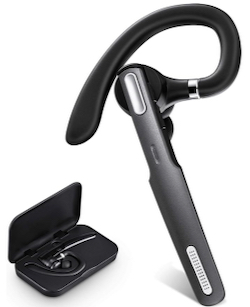
Wireless Bluetooth Earpiece V5.0 Hands-Free Earphones
Bluetooth Headset Wireless with Battery Display Charging Case
“A Deadly Wandering” Distracted Driving Book
(Amazon affiliate links/ads)
Distracted driving legislation (2019):
House Bill 2318: Seeks to prohibit drivers from holding wireless communications devices. GPS OK. Stop light use OK. Fines: $75 to $149 (first offense); then $150 to $250. Enhanced penalties and liabilities for causing serious bodily harm or death. (Bill originally addressed powers of DOT director.) Approved by the House in a 59-14 vote of Feb. 14. Approved by the Senate in a 20-9 vote of April 9. Approved by the House in a 44-16 vote of April 18. Signed into law by the governor on April 22. (Campbell)
Senate Bill 1141: Would create an offense of driving a motor vehicle while distracted. Must create a “hazard.” Approved by the Senate in a 16-13 vote of March 11. Approved by the House in a 31-29 vote of April 18. Vetoed by governor April 26. (Mesnard)
SB 1165: Seeks to ban the holding of wireless communications devices by all drivers. Single tap or swipe to turn on device OK. Adds distraction content to license test. Outlaws use of wireless communications devices by motorcyclists. Fines: $75-$149 first offense, then $150-$250. “Petty offense”; no insurance reporting. Amended and approved by Transportation and Public Safety Committee in a 7-1 vote of Feb. 20. Approved by the full Senate in a 20-10 vote of March 4. Approved by the House Transportation Committee in a 5-1 vote of March 13. Rejected by the House in a 24-36 vote of April 18. (McGee)
House Bill 2069: Seeks to outlaw texting for all drivers. Fines: $100 then $300. If a crash results, $500. If a death results, $10,000. Approved by Public Safety Committee in a 4-3 vote of Feb. 20. (Kavanagh)
HB 2165: Would add to reckless driving definition “participating in an activity that willfully distracts the person from safely operating the vehicle.” (Townsend)
HB 2531: Seeks to outlaw the holding of wireless communications devices by all Arizona drivers. Single tap or swipe to activate OK. Approved by Transportation Committee in a unanimous vote of Feb. 20. (Chavez)
Distracted driving notes (2019):
State Sen. Kate Brophy McGee was a key player in getting distracted driving legislation through in 2019. She introduced a handheld cell phone ban, which was approved by the Senate but ultimately set aside by the House. Another bill crossed the finish line. “Distracted driving is a public health crisis,” McGee said in response to the signing of HB 2318. “With this reform, Arizona is ensuring drivers stay focused on the road — not their phones — helping prevent countless tragedies from happening in the future.”
Glendale adopted its handheld cell phone ban before the state’s new law was approved. In June, the City Council voted to adopt the state law’s language, which has some slight differences, including permitting the use of cell phones at stop lights.
Gov. Doug Ducey vetoed state Sen. J.D. Mesnard’s general distracted driving bill, just after signing the hands-free bill into law. An angry Mesnard said he was “obviously beyond disappointed.” The governor said April 26 that he favored the handheld cell phone ban because it was “narrowly tailored to a specific behavior — using our mobile devices while driving.”
Gov. Doug Ducey credited the mother of police officer Clayton Townsend with winning over long-resistant lawmakers to a hands-free law. Townsend was killed by a driver who admitted to texting. “I think everyone just saw this as such an avoidable death,” Ducey said. “When someone comes down and speaks with the power and passion of a mom on behalf of a fallen son, how could they not deliver (a bill) to the governor’s desk?”
Payson’s handheld cell phone law went into effect in mid-May. Fine: $149 and up to $250 for serial offenses.
House Speaker Rusty Bowers says he’s trying to reach a compromise with fellow Republicans on a distracted driving bill. “We’ll try to put this together,” he said in mid-April. State Sen. Kate Brophy McGee says she won’t amend her handheld cell phone ban to accommodate those in the House pushing for secondary enforcement.
Tempe adopted full enforcement for its handheld cell phone ban Feb. 28, effective immediately. Police are able to stop and cite offenders solely for that reason. Fines: From $100 to $500. The mayor did propose a 30-day warning period to get out the word, although the activity already is illegal.
Glendale adopted a handheld cell phone ban in early January, noting that use of such devices “continues to increase.” Fine: $250 plus fees. The ban went into effect in early February with a six-month warning period. The night of the vote, a Phoenix-area police officer was killed by a driver who told investigators he was texting at the time. A key state legislator then signaled support for distracted driving legislation, changing her “personal freedoms” stance.
An Arizona poll funded in part by AAA found 86 percent of likely voters were in support of SB 1165, which seeks a ban on drivers’ holding of communications devices. The poll was conducted in mid-February.
Cottonwood’s ban on handheld cell phone use goes into effect in early March. Fines: $100 then $250 (repeat offense in same year). Primary enforcement.
The family of Salt River police officer Clayton Townsend joined state Sen. Kate Brophy McGee in unveiling her SB 1165 at the Capitol on Jan. 23. Townsend was killed Jan. 8 by a driver who admitted to texting. “We are at the point where everybody has reached the enough-is-enough point,” the senator has said.
State Rep. Kelly Townsend, who opposed previous distracted driving legislation on grounds of personal freedoms, appears to be changing her tune in the wake of a police officer’s death at the hands of an alleged texting driver. “I am more inclined to support legislation regarding distracted driving, and will be speaking with our leadership to discuss the direction that we might go,” she said in a statement released after the death of the Salt River police officer.
State Rep. John Kavanaugh, author of the texting proposal HB 2069, says “the tragic death of the Salt River Police officer shows that the consequences can be tragic.” He says his proposed texting ban should have a chance of succeeding in 2019 because it is “not overly restrictive.”
Kavanaugh’s plan for a statewide texting & driving ban is a fallback, of sorts. “At least we can get the more egregious and dangerous activity of actually typing stuff into your phone illegal,” he says. Kavanaugh supports a more restrictive distracted driving law, however.
Gov. Doug Ducey has said he would sign a texting & driving bill if it clears the Legislature. He signed off on the teen texting measure last session.
The town of Parker has adopted a handheld cell phone ban, which takes effect Feb. 1. Fines: $97 or $250 if a crash results from the distraction. The small town sits on the Colorado River, near the California border.
2018 distracted driving legislation:
Senate Bill 1261: Seeks to ban texting while driving. Fines: $25-$99 first offense; $100-$200 for serial offenses. If physical injury or death results, fine of up to $4,000. Bars novice/teen drivers from using wireless communications devices. Approved by the Transportation Committee in a unanimous vote of Feb. 6. (Farley)
SB 1116: Would prohibit drivers from operating a vehicle with an animal on the lap. Fine: $100. (Kavanagh)
2018 distracted driving notes:
The Phoenix suburb of El Mirage has adopted a handheld cell phone ban based on the one enacted in Surprise. It goes into effect Dec. 21. Glendale was expected to follow suit.
Yavapai County’s ban on driving while using handheld cell phones went into effect Nov. 2. The Yavapai Board of Supervisors is lobbying other counties to adopt similar bans. Three counties in Arizona now ban the practice. The Yavapai ordinance covers unincorporated areas of the county. Fines: $100 plus fees; $250 if an accident results.
The Phoenix suburb of Surprise has voted in a ban on handheld wireless devices by all drivers. “If our leaders in Phoenix are not going to act, we should act,” Councilman Roland Winters Jr. said before the Aug. 7 vote. Fine: Up to $250. Went into effect in early September.
House Speaker J.D. Mesnard said the 2018 texting & driving legislation was a “very poorly crafted bill.” He added, “Not everybody who texts is going to be a hazard on the road.” Mesnard intends to introduce a bill of his own in 2019.
In Fountain Hills, the Town Council approved a texting & driving ban in late April. The ordinance, which calls for primary enforcement, comes with $100 fines for first offenders, then $250, then $500. Mayor Linda Kavanagh said a statewide texting law would have been “the ideal situation.”
Tucson’s City Council finalized the local upgrade to primary enforcement for distracted driving offenses on Jan. 23. The 4-1 vote also reduced fines for first-time violators of the handheld cell phone ordinance. Heightened enforcement begins Feb. 1 but with warnings for the first month.
2017 distracted driving legislation:
Senate Bill 1080: Bars holders of instruction driver’s licenses from using wireless communications devices. For class G license holders, applies in first six months. Secondary enforcement. Effective July 1, 2018. Amended and approved by the Transportation Committee in a 6-1 vote of Jan. 24. Approved by the Senate Committee of the Whole on Feb. 9. Approved by the Senate in a 24-6 vote of Feb. 13. Approved by the House Transportation Committee in a 7-1 vote of Feb. 20. Approved by full House in a 32-24 vote of April 20. Signed into law by the governor. Went into effect July 1, 2018. (Fann)
SB 1049: Would outlaw text messaging while driving in Arizona. Fines: $100, then $300. If crash results, fine of $500. If death results, fine of $10,000. Police to note texting on accident forms. Stalled. (Kavanagh)
SB 1086: Would make texting and social media use by drivers an aggravating factor in felony sentencing cases. (Farley)
SB 1087: Would outlaw texting and related uses of wireless communications devices such as social media. Fines: $100, then $300. If crash results, $500. If death results, $10,000. (Farley)
SB 1088: Would add texting and social media use while driving as a moving violation if physical injury or death results. (Farley)
SB 1135: Would outlaw use of handheld communications devices while driving. Specifies cell phone use. Fines: $100, then $300, then $500. (Farley)
2017 distracted driving notes:
Tucson’s handheld cell phone ban went into effect in May 2017, but with the secondary enforcement limitation. Only 44 citations were handed out over the rest of the year, prompting one City Council member to call the local distracted driving law “virtually worthless.” In response, the council approved an upgrade to primary enforcement that went into effect March 1, 2018. In the following four months, police issued almost 1,350 tickets and more than 400 warnings.
Senate Bill 1080 looked to be dead in the House Rules Committee due to resistance from its former chairman, who agreed with opponents who charged that it was “the camel’s nose under the tent” that could lead to broader distracted driving laws. The final House vote of 32-24 came April 20.
The chairman of the state Senate Transportation Committee appears to have killed chances for a broad texting & driving law in Arizona. Sen. Bob Worsley would only hear the plan to outlaw use of wireless communications device by young drivers. Hopes had been relatively high for a texting & driving ban with the departure of longtime distracted driving law foe Andy Biggs, the Senate’s president, but now Worsely seems to be stepping into that resistant void; the Republican says the state lawmakers aren’t ready for a full ban.
Tucson’s handheld cell phone ban went into effect May 1. Fines: $250 then $500 (or if wreck results). Secondary enforcement. Law will have six-month review by City Council.
Pima County quickly expanded its distracted driving law to match Tucson’s restrictions. The Pima County law has primary enforcement, however. The change went into effect June 1 but with warnings for another month. Fines: $100 — $250 if an accident results.
Gov. Doug Ducey said in his signing statement for Sen. Karen Fann’s SB 1080 that he’d “be in favor of a law that goes further, banning texting while driving for all minors.” Fann worked for a teen distracted driving law for five years.
The House Rules Committee chairman, Rep. Phil Lovas, almost killed the 2017 distracted driving legislation targeting novice drivers, but he resigned to take a post with the Trump administration. The House speaker then resurrected the plan from Sen. Karen Fann.
Sen. John Kavanagh, a Republican, filed SB 1049, which would ban texting behind the wheel. Sen. Steve Farley, a Democrat, returned with a texting ban, a handheld cell phone ban and several related pieces of legislation.
Supporters of a distracted driving law gathered at the Arizona capital on Jan. 25. Safety advocates Candice Lightner, Brendon Lyons and Jennifer Smith were among those urging the Legislature to take action on a texting & driving law. Smith, who lost her mother in a distracted driving wreck, told lawmakers a teen law could could do more harm than good “by sending a message that it’s OK to text and drive after six months.”
State Sen. Juan Mendez cast the lone committee vote against SB 1080, saying it was an unacceptable substitute for a real distracted driving law.
Tucson’s City Council has approved a ban on use of handheld cell phones while driving, but concerns over racial profiling led the council to downgrade the law to secondary enforcement. The Jan. 10 approval came with only one dissenting vote. Staff are drafting the law for a final vote. Tucson, the second largest city in Arizona, has a texting & driving law, but enforcement is anemic.
Councilwoman Regina Romero managed to water down Tucson’s new handheld communications device ban for drivers, using the argument that Latinos and blacks could be singled out under the new law. Police will only be able to stop and cite violators if they’ve observed breaking another law.
State Sen. John Kavanagh says he considers texting & driving “extremely dangerous and just crazy.” His SB 1049 proposes fines ranging from $100 to $10,000 (above).
Distracted driving legislation (2016):
Senate Bill 1135: Would bar public transit drivers from using handheld communications devices for phone calls or texting. Bus and taxi drivers, etc. Session ended. (McGuire)
SB 1349: Would make texting and social media use by drivers an aggravating factor in felony sentencing cases. Session ended. (Farley)
House Bill 2241: Would bar holders of instruction driver’s licenses from using wireless communications devices. For class G license holders, applies in first six months. Secondary enforcement. Approved unanimously by the Transportation Committee on Feb. 9. To the full House. (Fann)
2016 distracted driving legislation notes:
Pima County, which includes Tucson, has enacted a ban on texting and related uses of handheld communications devices for drivers. Phone calls are allowed. The fine is $100, but climbs to at least $250 if a crash results. The law took full effect in mid-July. Only six tickets had been issued as of mid-September, the Tucson News reported. The legislation noted that the Legislature had taken no action on use of handheld electronic devices.
State Rep. Karen Fann returned for the fifth try with her plan to prohibit use of wireless communications devices by novice drivers. The Transportation Committee OK’d the plan Feb. 9 and sent it on to the full House, where it sat when the session ended.
Tucson has a texting & driving law, but enforcement is anemic. As of early fall 2016, 23 citations were written, along with 15 warnings. In 2015, the numbers were 29 citations and 19 warnings. 2014 saw the largest amount of enforcement activity since the law took effect in 2012: 32 citations and 24 written warnings.
State Sen. Steve Farley was back in 2016 with distracted driving legislation. This time, he sought to amend felony sentencing guidelines to add texting and social media use as aggravating factors. If you text and injure someone, “you could become a hard-time prisoner,” Farley says. The senator has made repeated attempts to legislate distracted driving over the years, and 2016 was another exercise in frustration.
The Department of Public Safety marked Distracted Driving Awareness Month by noting that 2,729 collisions on Arizona highways in 2015 were linked to distracted driving. That’s roughly 10 percent. Officials said April 13 that ADPS troopers handed out 4,218 citations and 3,282 warnings in 2015 for violations connected to distracted driving.
Yuma’s local law against use of handheld wireless devices while driving went into full effect early in 2016. The ordinance, approved Nov. 4, brings $100 fines or $250 if an accident results. The city provided for a warning/education period before tickets start flowing. Kingman, San Luis and Tempe also adopted distracted driving ordinances in recent months (below).
2015 distracted driving legislation:
Senate Bill 1102: Would prohibit text messaging while driving in Arizona. Revised by panel (Feb. 4) to restrict to manual writing of text messages — reading incoming texts OK. Fine: $100 (first offense), then $300. If accident results, fine is $500; in case of a death, fine of $10,000. Police to note texting on accident report. Amended and approved unanimously by Government Committee on Feb. 4. “Held in committees.” (Farley)
House Bill 2343: Would bar drivers with instruction permits from using wireless communications devices such as smartphones. Also applies to first six months under class G licenses. Limited to secondary enforcement, meaning police need another reason to stop and cite violators. “Held in Rules.” (Fann)
HB 2370: Would outlaw texting while driving in Arizona. Fine: $50; $200 if an accident results. Would be effective Dec. 31. aka No Texting While Driving Act. “Held in Rules.” (Steele)
2015 distracted driving legislation notes:
Tempe has adopted a distracted driving ordinance, but it appears to be one of the weakest in the country. The new law, which comes with fines starting at $100, allows for tickets only if a driver displays a distracted behavior, such as failure to stay in his lane. Texting and talking on a cell phone remain legal. Council member Lauren Kuby said “80 percent of our citizens want to see a distracted driving law because it saves lives.” The law went into effect Oct. 23.
Senate President Andy Biggs again in 2015 fended off distracted driving legislation in Arizona, one of the few remaining states allowing texting and driving. Biggs killed the bill by assigning it to four committees at the same time.
San Luis’ ban on use of handheld cell phones and texting & driving went into effect Sept. 28, following a six-month grace period. Fines: $100, $250 if an accident results. The ordinance actually went into effect in late March, but the fines don’t begin until late September. A police spokesman said the city wanted “to make sure drivers have both hands on the wheel and are focused on the road.”
The Kingman City Council voted unanimously Sept. 15 in favor of developing a local ban on drivers’ use of handheld communications devices such as cell phones. The proposed ban would come with primary enforcement. “This is serious,” said Mayor Richard Anderson said of the distracted driving problem. The council directed the city attorney to develop the legislation.
Tempe’s City Council split on a plan to fine drivers who exhibit distracted driving behaviors while using cell phones. The issue will be revisited in August. Councilman Kolby Granville, who pushed for the ordinance, said upcoming elections may have influenced the lawmakers who resisted the plan. Fines: $100-$250.
A Yuma truck driver was sentenced to six years in prison for killing a DPS officer while using his cell phone. Jorge Espinoza’s truck rammed into Department of Public Safety Officer Tim Huffman, who was investigating a crash at the time of the May 2013 crash. Huffman’s relatives have said they’re committed to lobbying for a statewide distracted driving law in Arizona, in his memory. Espinoza was was convicted of negligent homicide and sentenced July 8.
State Sen. Steve Farley attached the texting & driving ban found in his Senate Bill 1102 as an amendment to other legislation, but the strategy failed via an 11-5 committee vote.
“I believe it is important that the potential texting driver understand the risks he or she is taking when deciding to text and drive, and underlining the severity of the penalty can help there,” Farley told Hands Free Info.
Farley’s texting & driving plan cleared the the Senate Government Committee on Feb. 4, but it was revised to prohibit only the manual entry of a text message — allowing drivers to otherwise read texts while behind the wheel. Two other distracted driving bills also died in committee.
As in 2014, Farley proposed fines starting at $100 and topping out at $10,000 for texting drivers causing a death.
State Rep. Karen Fann returned with her plan to prohibit use of wireless communications devices by novice drivers. This was the fourth unsuccessful try for Fann’s legislation. In 2014, her bill made it through the House but died in the Senate.
Senate Government Committee chairman John Kavanagh supported a watered-down version of the 2015 texting bill in his committee, but later voted against the plan when it was attached to an unrelated bill as an amendment. “Around here, that’s hijacking a bill,” Kavanagh said. The chairman earlier said Sen. Steve Farley’s bill wouldn’t pass if it banned all texting.
Senate President Andy Biggs says of his continued opposition to a texting & driving ban: “There are many laws on the books that are designed to punish poor driving. Each of those laws deters a person who is texting while driving. … Laws specifically prohibiting texting while driving have little effect. Such laws are virtually unenforceable. It is the other driving laws that allow the police to pull a driver over while texting.”
The Senate Government Committee heard from the family of a DPS officer killed in a distracted driving crash linked to Facebook use. “We need this law, and I ask you as legislators, please, please keep your people safe,” said the widow of DPS Officer Timothy Huffman, who was killed in 2013.
San Luis is studying a plan to ban driving while texting or using handheld cell phones. Fine: $100, but $250 if cell phone use leads to an accident. The San Luis Police Department drafted the ordinance, saying that cell phone use often was linked to local crashes.
2014 distracted driving legislation notes:
Department of Public Safety officers made 19,800 traffic stops related to distracted driving in 2014, as of mid-September. About 2,400 collisions were linked to distracted driving, DPS reported. About 3,640 drivers were stopped for cell phone-related infractions, while a slightly smaller number were pulled over the “other occupant-related issues” that included electronic media use and texting. DPS vowed that its “Highway Patrol division will continue its intensive statewide patrol effort to target distracted drivers in Arizona through education and enforcement of existing state laws.”
Almost all of the 2014 bills were reruns of previously unsuccessful measures. State Sen. Steve Farley was back with his plan to outlaw texting for all drivers, but with notably harsher punishments for those who cause wrecks. The maximum fine under Farley’s 2014 plan was $10,000, which applies when a texting driver causes a death.
Tempe’s City Council is exploring options for a distracted driving ordinance that would address texting and/or handheld cell phone use. The matter was to be picked up at October’s meeting. Police said they see “hundreds if not thousands” of accidents related to texting & driving. Council member Corey Woods is pushing for the local law.
Flagstaff’s ban on text messaging while driving went into effect Aug. 15, to be followed by a six-month verbal-warning period. The ordinance, given final approval by the City Council on July 15, prohibits texting and interacting with “nonvoice” communications devices such as smartphones while operating a motor vehicle. Fines are $100 per infraction; $250 if an accident results. Also applies to bicyclists. The city decided not to go along with Coconino County’s handheld wireless device ban, which goes into full effect in November.
Sen. Steve Farley says the Department of Public Safety is targeting text messaging drivers under the state’s law against driving at a speed not reasonable or prudent — “because there is no speed but zero at which it is reasonable and prudent to text and drive.” Farley told Hands Free Info: “So we may not get an explicit texting statute, but due to the new enforcement strategy, we have effectively banned the practice statewide at last. I call that a huge victory.”
The Arizona Highway Patrol looked at distractions and vehicle crashes in the period of late November 2013 through April 1, 2014. Cell phones accounted for 127 crashes while “outside distractions” were blamed for 255 crashes and “reaching for objects” were linked to 130. Overall, distracted driving accounted for 11 percent of the total 10,166 crashes. The Highway Patrol said it “would continue to enforce existing laws,” which don’t include texting or handheld cell phone bans. “Highways don’t kill, but distracted driving will,” AHP said.
Tucson’s texting & driving ordinance resulted in only 50 tickets in the two-plus years since it went into effect in April 2012, the Daily Star reported in August 2014.
Coconino County has adopted a ban on handheld electronic devices while driving. A county supervisor pointed to state-level inaction: “It was important that we help lead that discussion since the state was unwilling to do that.” The law, approved April 22, took effect in May and goes into full effect in November, following a six-month warning period.
State Rep. Victoria Steele, whose bill was ignored in committee, backed Rep. Karen Fann’s plan to bar use of handheld devices by novice drivers as “a beginning.” The House agreed, but the Senate didn’t. Fann, who chairs the House Transportation Committee, called it “a good compromise.” The plan called for only secondary enforcement, meaning police would need to witness another offense before writing a texting ticket.
Sen. Farley has been filing texting & driving legislation since 2007. “I will never stop,” the senator said in late 2013. “Why shouldn’t we have a law?” Steele also said she would try next session.
The Department of Public Safety began cracking down on distracted drivers in January using a law against “speed not reasonable and prudent,” a spokesman says. Arizona has no law against texting & driving or using handheld cell phones, so officials are turning to a workaround.
“Any speed is not reasonable when you’re texting, because you’re not fully in control of your driving,” DPS spokesman Bart Graves said. The crackdown will be accompanied by an education effort, he told the AP in mid-November.
2014 distracted driving legislation:
HB 2359: Would bar drivers with instruction permits from using wireless communications devices such as mobile phones. Also applies to first six months under class G licenses. Limited to secondary enforcement. Approved unanimously by the Transportation Committee on Feb. 20. Approved by the full House in a 41-17 vote of March 3. “Held” in the Senate and dead. (Fann)
Senate Bill 1147: Seeks to ban text messaging while driving in Arizona. Fines: $100 for first offense, then $300. If a crash results, fine of $500. If a death results, fine of $10,0000. Requires police to note use of wireless device in any accident report. Not heard in committee by deadline. (Farley)
SB 1163: Would bar use of handheld communications devices while operating public transportation vehicles (buses, taxis, limos). Not heard in committee by deadline. (McGuire)
House Bill 2216: Would prohibit use of handheld communications devices while driving, including cell phones. Fines: $50 or $200 if a crash results. Requires police to note use of wireless device in any accident report. Includes one-month warning period. (Sherwood)
HB 2376: Would outlaw texting with a handheld device while driving. Fines: $50 or $200 if a crash results. aka No Texting While Driving Act. Includes one-month warning period. Not heard in committee by deadline. (Steele)
2013 distracted driving legislation notes:
The director of the Arizona Governor’s Office of Highway Safety says a texting law isn’t needed, but more education is. “In the state of Arizona there’s enough laws in the books” to handle distracted drivers, Alberto Gutier told Cronkite News Service in November.
A Yuma truck driver was viewing images of women on Facebook as he plowed into police cars and fire trucks, a local media report alleges. The DPS officer died in the May 6, 2013, wreck.
Jorge Espinoza of Yuma, the truck driver, is charged with second-degree murder. The Arizona Daily Star reported in early November that Espinoza was using his cell phone to view photos of “several women in provocative positions, wearing little clothing.” The newspaper printed a dashboard photo taken of the truck driver during the crash, showing the cell phone in the air.
Arizona does not prohibit use of the Internet while driving, but federal DOT regulations bar the use of handheld cell phones by most commercial truck drivers. State Sen. Steve Farley, who has sponsored a string of distracted driving bills, told the newspaper that the crash shows how “oblivious” drivers are when using smartphones, and highlights the need for a statewide law.
Arizona’s Legislature considered at least four unsuccessful distracted driving bills in 2013. They included proposals for a texting ban, and bans on use of portable communications devices by novice drivers and mass-transit drivers. All were “held in committee.”
The Arizona Senate rejected State Sen. Steve Farley’s proposed ban on text messaging while driving. The 2013 vote was along party lines, with Senate President Republican Andy Biggs leading the opposition. (The proposal was made in the form of an amendment to an unrelated bill.) Farley’s Senate Bill 1218 would have banned texting as well.
The Arizona Department of Transportation says distracted driving was a factor in more than 11,100 crashes in 2012. Of those crashes, at least 200 involved a wireless communications device such as a smartphone. There were 195,762 crashes reported in the state last year, the DOT said.
State legislative leaders “are not going to do something until somebody causes a catastrophic, wish-it-never-happened accident,” said 2012 texting & driving bill sponsor Rep. Steve Urie, R-Gilbert.
Tucson City Council member Steve Kozachik said he’s not disappointed that the city law against texting and driving resulted in few tickets in its first year. “This is more of an educational thing, quite frankly,” said Kozachik, who pushed for the ordinance.
Tucson’s law against texting and driving yielded about 26 tickets in its first year ending April 1, 2013. Violators paid fines of $100, except for four drivers who were involved in crashes while texting, and paid $250.
The Tucson law is based on Phoenix’s distracted driving ordinance, enacted in 2007. (Read the Tucson texting law)
2013 distracted driving legislation (dead):
Senate Bill 1218: Would prohibit text messaging while driving. Fines: $100 (first offense), then $300. If a crash results, fine of $300. Held in committee. (Farley)
SB 1241: Would prohibit use of wireless communications devices by drivers with learner’s permits and by those who have had their class G licenses for less than six months. Approved by the Transportation Committee (6-0 vote) and Public Safety Committee (3-1 vote) both on Feb. 5. Held in committee. (Melvin)
SB 1268: Would outlaw use of wireless communications devices by drivers with learner’s permits and by drivers with class G licenses for the first two years. Held in committee. (Farley, Tovar)
SB 1393: Seeks to prohibit use of wireless communication devices while operating a mass-transit vehicle. Approved by the Transportation Committee on Feb. 19. Held in committee. (McGuire)
2012 distracted driving legislation:
Senate Bill 1056: Would prohibit use of wireless communications devices by drivers with learner’s permits and drivers under 18 years old who have had their class G licenses for less than six months. Fines: $75 then $100 plus restriction extensions and possible license suspension. Secondary enforcement. See HB 2331 (below). Read SB 1056 fact sheet. Approved by the Senate Public Safety and Human Services Committee in a 4-0 vote on Jan. 18. Latest legislative action: Approved by the full Senate in a 23-6-1 vote Jan. 26 and transmitted to the House. (McComish)
House Bill 2125: Measure originally sought to make unrelated changes to accident reporting procedures, but a statewide texting ban was added to the bill March 2. Fines: $50 but $200 if driver is involved in accident. Latest legislative action: Approved by the House in a 45-15 vote March 5 but then reconsidered and rejected in a 28-31 vote. As many as 19 members didn’t realize vote was on texting as well as accident reporting. (Urie)
HB 2512: Would ban texting while driving. Primary enforcement, non-moving violation. Fines: $50 (no accident), $200 (accident). Approved by the Transportation Committee in a 6-2 vote of Jan. 26. (Urie)
HB 2311: Would prohibit use of wireless communications devices by drivers with learner’s permits as well as drivers under 18 years old who have had their class G licenses for less than six months. Fines: $75 then $100 plus restriction extensions and possible license suspension. For violations of cell phone/texting law, restrictions on offender’s license would be extended for six months or more. Secondary enforcement. (Farley, Hobbs, etc.)
HB 2312: Seeks to outlaw driving while distracted “in any manner.” Also, would require accident investigators to indicate whether distracted driving was a factor in a crash. (Farley, Tovar)
HB 2321: Would outlaw text messaging while driving in Arizona. Fines: $50 but $200 if driver is involved in accident. Held by Transportation Committee on Feb. 16. (Williams, Farley)
2012 distracted driving legislation notes:
At least five distracted driving bills were filed for the 2012 legislative session. State Rep. Steve Farley was listed as sponsor of three of them. No distracted driving legislation succeeded in 2011 or 2012.
The Arizona House briefly approved a statewide ban on text messaging March 5, but quickly back-pedaled with a re-vote after many members were surprised to learn that they had voted on texting. The bill was then defeated.
Rep. Steve Farley said during debate on a texting bill Jan. 26: “The types of things you do when you are texting are horrific — whether you’re running into the sides of moving trains, which has happened, or crossing over a center line and hitting a mom head-on, leaving her kids without a mom, which happened in this state in July 2007.” Farley, D–Tucson, has submitted distracted driving legislation in at least three years.
Sen. John McComish, R-Phoenix, says his SB 1056 would be an extension of the (novice driver) class G license restrictions that he pushed through the Legislature several years ago. “It gives parents another tool so they can say, ‘Hey, the law is you can’t use your cellphone,’ ” he told the Arizona Republic in January. HB 2311 is the House version.
State Rep. Steve Urie, R-Gilbert, added a texting ban to HB 2125 the Friday before the House vote, but as many as 19 lawmakers failed to note the amendment. The original bill dealt only with unrelated accident reporting. Urie had inserted the wording of his HB 2512, which was stuck in committee and most likely dead.
The head of the Governor’s Office of Highway Safety won’t back a ban on text messaging while driving because of enforcement concerns.
“How can you prove, from outside of a vehicle, if a person is text messaging or dialing a phone number?” highway safety director Alberto Gutier asked on KTAR radio. Gutier, a Republican, also dismissed the possibility of a handheld cell phone law, saying education could solve the problem.
The Tucson City Council unanimously approved a ban on texting while driving Feb. 23. Passage was expected, but debate centered on the issue of primary or secondary enforcement. Primary won out. Fines: $100-$250. The Tucson law is based on Phoenix’s distracted driving ordinance, enacted in 2007 with primary enforcement status.
A highway safety group rated Arizona’s traffic laws the second worst in the country, behind South Dakota. The lack of distracted driving laws contributed to Arizona’s “red” rating from the Advocates for Highway and Auto Safety. The director of the Governor’s Office of Highway Safety said he was “questioning the whole ranking and the whole report.”
AAA Arizona calls text messaging “the mother of all distractions.”
2011 distracted driving legislation notes:
As the year ended, Tucson commissioners were working toward an ordinance that would ban texting while driving. Passage is expected, but debate is expected center on the issue of primary or secondary enforcement. The draft law reportedly is based on Phoenix’s distracted driving ordinance, enacted in 2007 with primary enforcement status.
In 2011, the Arizona state Senate approved a bill that sought to ban texting. Sen. Al Melvin’s SB 1538 never advanced in the House, where it was “held” until session’s end. No other distracted driving legislation emerged from committees during the 2011 session.
Rep. Steve Farley returned in 2011 with a bill that would have banned use of handheld wireless devices by under-18-year-old drivers. He has supported distracted driving legislation since 2007, but none has become law. He discusses the bill in the video below: (text continues)
The AAA says of Farley’s SB 1538: “(We) wholeheartedly support this legislation, as it would save lives by banning the most dangerous distraction on the road.”
The Yuma Sun observed March 12: “Opponents of Sen. Al Melvin’s measure (SB 1538) point out that it does nothing to address talking on cell phones — something many consider distracting — or surfing the web, watching a movie or playing a game on a cell phone. The newer “smart” phones allow all of that to be done — yes, even while driving. … It is likely there is a lot more distracted driving involving cell phones than most of us imagine. … There are many forms of distraction and trying to address it one piece at a time — as texting laws do — makes no sense. Toughen laws against distracted driving in general.”
In the 2009 session, Melvin’s SB 1443 included a provision to ban use of handheld cell phones, but that was stripped out in order to get some kind of texting ban through. Even so, Melvin’s text messaging ban failed in 2009 and 2010.
2011 distracted driving legislation:
SB 1538: Would ban texting by all drivers. Fines: $50 or $200 if an accident results. One-year warning period. Amended by sponsor to allow for texting while halted in traffic. Marked as “do pass” by Senate Transportation Committee on March 10. Latest legislative action: Approved by the Senate in a 18-12 vote on March 15 and transmitted to the House, where it was “held” until time ran out on the session. (Melvin)
SB 1111: Seeks to outlaw use of handheld wireless devices while driving in Arizona. Fines: $100 (first offense), $250 plus community service (second) and $500 plus community service (third). Fines double if accident results. “Held” in committees. (Pierce)
HB 2426: Would prohibit drivers under the age of 18 (with Class G licenses) from cell phoning or text messaging while behind the wheel. Fine: Extension of restricted period for six months. “Held” in committee as of Feb. 10. (Farley)
2010 legislation notes:
Glendale has considered a ban on text messaging that’s modeled on the Phoenix ordinance. “This should be a statewide policy,” one councilman said. “But the Legislature has failed to do it.”
Sen. Al Melvin, R-Tucson, returned with legislation (SB 1334) calling for a ban on text messaging while driving on Arizona’s roads and highways. The texting bill was shot down in a tie vote on March 2. He asked for the Senate’s reconsideration since as many as eight senators were absent. The texting while driving bill was approved on March 22.
The Senate’s Republican president and its minority leader both oppose laws against texting while driving. Verizon, Sprint Nextel and AT&T are expected to support texting bans in Arizona.
Phoenix’s ban on texting while driving, enacted in 2007, has resulted in an average of 1.5 tickets per month, as of November 2009. Police claim enforcement of the texting ban is quite difficult.
Coconino County’s supervisors on Feb. 23 shot down a plan from the Board of Health that would have outlawed texting while driving. They backed state efforts to rein in texting while behind the wheel.
2010 cell phone, texting legislation (all dead):
SB 1334: Would outlaw texing by all drivers unless a hands-free device or voice-activated function is employed. Fine $50/$200 if an accident occurs. Approved on Feb. 15 by the Senate Committee on Natural Resources, Infrastructure and Public Debt. Defeated in the full Senate (due to tie vote) on March 2, but then approved on March 22 in a 19-10 vote. Bill “held” in the House until the legislature adjourned April 30. (Melvin-Farley)
HB 2656: Would prohibit restricted license holders under the age of 18 from using cell phones or wireless communications devices such as PDAs while driving. Violators would have restriction period extended by six months regardless of drivers’ age. (Farley)
SB 1067: Seeks to prohibit drivers from viewing video images — includes TV, DVD. Would outlaw installation of these devices where screen can be seen by driver. Approved by the Senate on March 1 and transmitted to the House, where it was approved by the transportation committee. (Nelson)
2009 legislation:
SB 1443: Would ban text messaging for all drivers in Arizona. (Previous version that cleared committee would have prohibited use of handheld mobile phones.) Rejected by the full Senate on a 15-14 vote held June 22.
HB 2492: Would prohibit text messaging while driving on Arizona roads.
HB 2590: Would outlaw use of handheld phones by drivers under the age of 18. Hands-free operation OK.
HB 2191: Seeks to ban driving and talking on cell phones, unless a hands-free accessory is utilized.
2009 legislation notes:
Sen. Al Melvin, R-Tucson, narrowed the scope of his Arizona Senate Bill 1443 to cover only text messaging but it wasn’t enough. The original handheld cell phone ban was approved by the Senate Committee on Public Safety and Human Services on June 17, 2009, but the full Senate rejected even the texting version on June 22.
“It seems hardly a week goes by that we don’t hear of a horrendous accident in the United States involving not just one but multiple loss of life, mostly because of the driver texting,” Melvin said prior to the Senate’s rejection. “That’s the sole motivation here, is to save lives.”
In 2007, a bill seeking to ban all cell phone use while driving failed to advance through the GOP-controlled Legislature. The sponsor was Rep. Tom Prezelski, D-Tucson. Also in 2007, Phoenix banned texting while driving.
2008 cell phone/texting bills
HB 2397: Would have required all drivers to use hands-free devices with cell phones.
HB 2396: Would have banned drivers from texting via a cell phone or PDA.
HB 2398: Would have prohibited drivers with learner’s permits from using cell phones.


BLESSED?
I have endured an L5-S1 spinal fusion, subdural hematoma, epidural hematoma and a skull fracture. Yet, I am so blessed. Why? Because I am still alive. In the last 6 years I have had six surgeries, several nerve ablations and epidurals, physical therapy, not to mention continuously dealing with the side effects that accompany pain medicine.
The moronic woman that broadsided my truck causing it to roll one and a half times was on her damn cell phone, paying absolutely no attention to what she SHOULD have been doing — DRIVING and not screwing with her phone. For the rest of my life I must pay for her stupidity.
My life has unalterably and forever changed because one self-absorbed idiotic woman felt her phone conversation, texting, or whatever were more important than my health, safety and my ability to provide for my family.
There must be some sort of intervention, similar to the reasonable requirement of seat belts, child seats to protect our children, and air bags. We also need law enforcement to start citing for distracted driving as it is an offense, whether an accident is caused or not.
I can’t drive one day of driving in Phoenix without having to perform some avoidance maneuver, and 7 out of 10 times it is because the driver is either texting or talking, INSTEAD OF PAYING ATTENTION TO TRAFFIC.
This is NOT a partisan issue! So Dems and Republicans, start honoring your oath to protect your constituents and support Sen. Steve Farley’s bill. Make sure the penalties are as stiff as those for drunk/impaired driving since the level of impairment is the same; this has been repeatedly and scientifically proven!
I am a recent resident of this state, having moved from NJ/ NY (both of which ban cellphone use unless hands free) and I am appalled by the poor driving habits, as well as the leniency in our laws that fail to dissuade drivers from talking on their mobile phones. I have been cut off by distracted drivers who never even think of signalling a turn. The only way to combat this is to impose very heavy fines and post signs reminding drivers to signal, look and generally drive responsibly.
When you lose a loved one to a text message, is that loss worth the LOL smilie face. Arizona and Texas need to realize that people cannot multitask. The cell phone is use is dangerous and people can die because someone had to use their phone to text a message. Where are you? (no response because they are dead) just drove into a 18 wheeler. LOL smilie face is it really worth it.
Ok enough of texting while driving. A person texting is like a person under the influence. You drive slow and you cannot stay in your own lane. I’m sorry but if a police officer sees you go a hair over the white line that is cause enough to pull you over. If a police officer sees your under the posted speed limit that is cause to pull you over.
I think the fine is ridiculous — your punishment should be the same as a drunk driver. Come on ARIZONA what the hell are you thinking. God forbid you politicians loose a loved one from an idiot that cant seem to put there dam phone down. Get with the program. Its a shame a dam shame.
Seriously, How did this bill get voted down. How many of you illegitimate politicians still don’t get it. If you all drove in rush hour everyday you would clearly see that we need these laws and more. How many more need to die before you idiots GET IT!!!! Do the job of the people or we the people will put in politicians who will. Jack holes …
You can be distracted by dropping your cigar on the floor, stabbing yourself in the eye with your milkshake straw, picking your nose, smelling your arm pit, looking for a good raido station, accidlently shooting yourself in the foot with your gun, looking for an address, whatever! Quit picking on cell phone users and just give the person a distracted driving ticket if they deserive it.
I find texting and driving absolutely dangerous!!! I wish it were illegal everywhere!
Driving to Phoenix from Tucson on jan. 2nd we observed several drivers on cell phones and texting. Most were obvious because there were signs like drifting and slowing down while driving in the faster lanes. The worst case was the woman doing 75 mph with no hands on the wheel while she texted away.
It’s amazing that our leaders in AZ haven’t figured out what most other jurisdictions have. That distracted drivers are a significant threat to everyone else on the road.
I walk a city square block in Mesa in the morning and observe some 70 % of commutors either texting or talking on cell phones and especially noticeable at street lights. The insurance companies can play a big part protecting us against such distractions by denying claims caused by such distraction.
I read that not only are police officers and public-safety workers exempt from this law, but so are city-council members “if they tell the officer the text is work-related.” WHAT? Why would city council members get a pass when it’s work related and not every other worker? NO one should be exempt! This is a deadly unnecessary habit!
Mardi: If that’s how the police and courts are interpreting this, it’s a very liberal interpretation of a “public safety worker.” The ordinance itself says nothing about public officials. (Link to the Tucson ordinance above).
There shall be no talking or texting while driving at any age in all of arizona. a hands free device such as blue tooth or onstar for example, would be rather quite rational. look up the state law for California’s talk and text restrictions while driving and adopt a similar law.Please pass a law such as mine stated!
In theory, this law sounds like a good idea, but texting is only one of the issues. If a person is not paying attention to the road enough to be in control of their vehicle, them that’s a problem. But how in the world would you enforce something like ‘no distracted driving’? it would be very challenging for me if cell phones in cars were banned – that’s my GPS that I use for work almost every day! It seems to me that education and awareness can help with this, but to try to pass laws that encroach on people’s rights, but don’t teach them anything about paying attention, taking responsibility for the 2 tons of steel they’re commandeering down the road, respecting the value of human life enough to wait until their destination (or at least a stop light) to check a text our email, how is this going to solve anything? Education works better than motivating with fear of punishment in the long run, and probably in the short run also.
i agree 100% with friedo. i just was in an accident. the other driver was distracted & hit me when i was making a left turn & i got the ticket for unsafe turn. how so? when everyone going in the other direction was stopped for a red light. so i signaled & safely & cautiously turned left in front of 3 lanes of stopped traffic & as i passed infront of her vehicle she just went & hit me & said “she didnt see me.” i thought ya you did. how could you not have seen me? i was only in front of your car before you gunned it & crashed into me. because she was distracted while driving & on her phone talking to her husband. now, i have to take a class/pay because i was turning left when safe to do so & paying attention to the road & not on a device. just because she had 3 witnesses in vehicle with her & i had none.
my vehicle suffered the most damage hers was only on the front of her vehicle where clearly she was able to see me plain as day but still did not because she was distracted & not paying attention to driving. i have to use my phone for my work all of the time for navigational purposes. i only use it when i have safely pulled over to use it.
I too have been guilty of texting and using my cell while driving. However I fully support a law that prohibits cell usage while driving unless a hands-free device is used. I have had a close call almost crossing into the opposite lane. That’s when I stopped using my cell while driving. Why does it take so many years and so many sessions for the state goverent to pass such a simple ordinance? It should be a no-brainer! How many more people have to die or become seriously wounded before we pass a law that makes sense!
To John who posted Feb. 24: When, someday not too far down the line, you are are burying your young child who was hit and killed by some piece of scum texting on his phone … remember when you are racing to get your litigation claim in that what he was doing in his car was none of your business, America is free and the Constitution firmly supports his right to drive in any manner he sees fit — whether or not it results in him killing your wife, or kid…
I wouldn’t say you are an idiot — you probably aren’t — but if you were working for me I’d definitely be sending you for a drug test …
Passing a law that says I cannot use a cell phone while driving is not going to get me to stop using my cell phone while I’m driving. It would just make me very upset if I got a ticket, which I would then fight it court. What I do while I’m driving is my buisness and I should not be pulled over or fined while using my cell phone in the car. This is America, we are supposed to be free. Not letting me use my cell phone while driving is restricting what I am free today. This law goes against what our Constitution stands for!
Cells used in cars.Well as my husband is a semi driver in Az and we were just told that semi drivers are 20 % the cause of accidents using cells we laugh as 20 % out of 100 = 80 % of cars are causing the accidents yet there is a 2700 fine if a semi driver is caught doing this. Lets see fine the 80% and gee maybe there would be a lot less accidents. Car drivers are the worst at driving while talking or texting. i think that unless there is a blue tooth or something similar the phonesshould not work when a car or semi is turned on. Legislation lets get the real problem the cars that seed the cars that follow to close , the cars that text while driving . make this whom the go after not the ones that have to drive to make a living.
Stop wasting time passing feel good laws. I’ve worked in law enforcement in several states, and we already have laws in every state that cover either careless, or inattentive driving.
Some people can do two things at once, others can’t. I don’t care if you’re making a phone call, tuning a radio, or putting on makeup, if your driving in a careless or inattentive manor, you need a ticket.
Police officers regularly drive at high speeds while clearing intersections and talking on the radio at the same time, and the majority of the time, they do it in a safe manor.
BUT, texting, or using a in-car computer while driving, are something no one can do safely.
Not long ago I was following a Police vehicle in Bullhead City. We were in a 45 MPH zone, and the police vehicle was all over the road, almost hitting the curb, and going over the center line. When I passed him, he was typing on this in-car computer.
I drive an average of 50 miles per day, at all times and all areas. I encounter a drifter, a swayer or literally someone crossing over the line into my lane daily while steering and texting! Actually holding the phone, texting on the steering wheel, not looking at what is in front of them or around them, but looking at their phone. To the guy w/the big gulp in his left hand and his phone, texting in the other, you or someone else will eventually become a statistic of a death/deaths or an accident victim because your neglect. Phones in the car should only be allowed w/hands-free devices. If my earpiece is not working, I do not use my phone in the vehicle. I do not want to become a statistic or be a negligent driver’s victim! Who do we contact to get this pushed through? God? Don’t think he can help get this law passed!
how many lives and limbs does it take to get our legislators to wake up reference use of cell phones in autos
I wish Arizona would just ban all cell use while driving
Both hands on the wheel, what a novel idea or perhaps a free hand which can now apply makeup or use an electric shaver. We can’t always believe that restricting something will make it safer, however there are several people out there who are to immature to be driving in the first place. My personal feeling is that we should ban the act of “nose picking while driving”. Those people are only focused on one thing, and it’s not keeping their hands on the wheel. I can just see it now; Bill HRxxxx1267, preventing nasal contact while the motor vehicle is in motion. Use of a hands free device is mandatory which prevents the use of fingers near the nasal cavity and promotes safe driving practices. Maybe they will think of Kleenex first!