Ontario: Distracted driving news
June 27, 2011
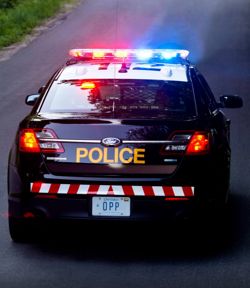
Ontario provincial police will be out in force Feb. 13-19 seeking violators of the handheld cell phone and texting law. This is the fourth and final sweep under the current “no excuses, no exceptions” distracted driving campaign.
OPP’s safety chief says that as of early February, eight people already have died in accidents linked to distractions. “We’re only five weeks into the new year and eight people have died already in distraction-related collisions on OPP patrolled roads — and that’s more than impaired driving and speeding fatalities combined,” said Chief Superintendent Don Bell.
Read the Ontario handheld cell phone, text messaging law. Fines are $155.
Results are far from scientific, but observational studies show distracted driving thrives in some of Candada’s major cities.
Students participating in an Allstate Insurance “Blow the Whistle” campaign counted more than 800 distracted drivers over the period of an hour at busy intersections in Moncton, Montreal and Toronto (one intersection per city). Insurance agents in Calgary, Edmonton, Sudbury, Ottawa, Windsor and Halifax spotted an additional 619 drivers. “All Canadian provinces now have distracted driving legislation in place, but it is not enough,” an Allstate spokesman said.
Eating and drinking were the most common distractions, while talking on a phone or texting made up 15 percent of all distraction citations, the report said.
Ottawa police said they wrote 227 tickets for distracted driving in November 2011. There was an emphasis on distracted driving that month under the city’s Selective Traffic Enforcement Program, which focuses on different problem areas each month.
Toronto police ticketed more than 700 motorists for violations of the province’s text messaging and cell phone laws during its mid-July 2011 road safety sweep.
Week 2 of Ontario’s distracted driving sweep ran July 11-17. Week one of the crackdown — tagged “Phone in One Hand, Ticket in the Other” — brought more than 1,600 citations (May 16-22). The fine for using handheld cell phones is $155 (CAN).
Ontario Provincial Police wrote more than 1,600 tickets for distracted driving over the 2011 Victoria Day weekend. Stepped-up enforcement was part of Canada Road Safety Week. OPP says fatalities on its patrolled roads are down 9 percent in 2011′s first quarter. The OPP wrote 8,522 citations in 2010, it said.
Toronto transit officials reportedly suspended 27 drivers for distracted driving violations in the first quarter of 2011. All but one got his job back, but the way is cleared for termination with a subsequent offense. The other driver was terminated. TTC riders filed 78 distracted driving complaints in February 2011 alone.
The Toronto Transit Commission says thanks but no thanks to riders’ photos and videos of bus drivers texting and talking on cell phones. Riders posted several pictures of drivers texting during the week of Jan. 23, 2011. Another rider sent the Toronto Star a shot of a driver reading a book while on the road.
“What we don’t want to see happen is people getting on board vehicles with their cameras rolling, taking pictures, it doesn’t help in our efforts to improve customer service,” a TTC representative said at the end of the week. “We don’t want this game of gotcha to be played out on the TTC.” Instead, the transit service asked for phone reports. The drivers union reportedly complained about the photos being taken.
In Toronto, police ran a one-day distracted driving sweep on Thursday, Nov. 24, yielding more than 70 tickets.
In Ontario, police handed out 45,975 tickets to distracted drivers in the period from from Feb. 1, 2010 (when active enforcement began), to Dec. 31, 2010. Fines of $155CAN didn’t kick in until Feb. 1.
A year after enforcement of the province’s handheld electronic devices ban, Toronto Police say they’re citing about 40 motorists a day.
Ontario’s law officers have cited more than 20,000 motorists for distracted driving infractions in the seven months since full enforcement of its law began in February 2010. Grace periods had been in effect since the law became official in late October 2009.
Ontario’s legislature voted unanimously on April 22, 2009, to ban motorists from text messaging, using handheld cell phones and other electronic devices connected with distracted driving. It went into effect Oct. 26. A previous plan to prohibit Ontario motorists from using cell phones without hands-free devices was shot down in October 2008.
The Ontario Medical Association had pushed for a ban on cell phone use in Canada while operating a vehicle, saying it is clear that any activity such as dialing, typing or reading a text message is unsafe for drivers and those around them.
New Brunswick: Distracted driving news
June 27, 2011
New Brunswick’s bans on text messaging and handheld cell phone use while driving took effect June 6 with no “grace” (warning) period. The fine for violating New Brunswick’s distracted driving regulations is $172.50 plus three points against the driver’s license. The law also prohibits the programming of GPS devices while driving.
“I know it will be an inconvenience for people early on, or at least some people will think it is,” New Brunswick Premier David Alward said on the eve of enactment. “But from a public safety perspective, it’s vitally important.” In 2009, only four MLAs backed a cell phone ban.
Bathurst police wrote 64 distracted driving tickets in the first eight months of the law.
(View the full Canadian distracted driving news report.)
RCMP officers say they’re seeing compliance, along with a fair number of scofflaws: “Officers are seeing people pulled over on the side of the road to talk on their cell phones and (are) seeing many people using hands-free technology,” said Sgt. Claude Tremblay of the J Division Traffic Section.
A RCMP spokesman said of the lack of a warning period: “We have been telling people (for a long time) that it’s coming, so be prepared for it. It’s almost like they had their grace period.” About 50 tickets were written in the two weeks after the law took effect, the Royal Canadian Mounted Police in New Brunswick reported.
New Brunswick’s distracted driving law was amended in April to allow for voice-command and one-touch operation of electronic communications devices, due to commercial lobbying and public feedback. Also allowed are use of in-dash operational screens and electronics needed by telecommunications workers.
New Brunswick Public Safety Minister Robert Trevors said: “These changes make the legislation stronger and more enforceable as handheld device manufacturers and the automotive industry adapt their products to be more safety conscious. … (The law now) allows for changing technology and for people who require communications devices for their jobs.” Most major car makers are selling or developing Internet-connected in-dash systems.
The New Brunswick distracted driving rules were approved by the legislature in late November 2010 and received a royal sign-off on Dec. 17. The New Brunswick talking & texting bans were expected to go into effect in May 2011, although it appears they will be delayed. They prohibit text messaging and cell phone use (unless a hands-free device is employed). Also banned is drivers’ viewing of portable entertainment devices such as DVD players and portable computers. GPS data entry prohibited while vehicle is moving. Fine of $172.50 plus three points. New Brunswick was the last province to ban texting and driving.
New Brunswick Public Safety Minister and Solicitor General Robert Trevors noted that “studies show that a significant percentage of collisions are the result of distracted driving. By introducing this legislation, our government is sending a message that distracted driving is not acceptable.”
Attention was focused on distracted driving again in September 2010, when a New Brunswick teenager died after running off the road while texting. The CBC quoted a city councilor, David Kelly of Fredericton, as asking: “What is it gonna take? “Is it gonna take a certain ration of accidents? What do we have to do here in New Brunswick? What else is it gonna take for us to go that next step?”
Photo: Jennifer Marr
Nevada nixes texting, driving
June 20, 2011
Nevada’s governor has approved legislation banning handheld cell phone use and text messaging for all drivers. The Assembly’s final vote came May 30 and the Senate signed off June 4.
Nevada is now the 34th state to ban texting while driving.
The measure, SB 140, has was approved by Gov. Brian Sandoval, who made it clear that he would support a statewide ban on text messaging while driving. The law will go into full effect Jan. 1 with warnings to be handed out in October. Fines are $50 then $100 and then $250.
Sen. Shirley Breeden was the bill’s author. Her texting bill of 2010 failed to get out of committee, but, undaunted, she added handheld cell phones to 2011 plan. “We’re going to go for the whole enchilada,” she said as the legislative year began.
DOT chief Ray LaHood issued the customary praise press release: “I commend Gov. Sandoval for signing legislation that will help save lives and put a stop to dangerous distracted driving behavior on Nevada roads.
“In a split second, the consequences of texting behind the wheel can be devastating. There’s no call or text so important that it can’t wait.”
Texting plan vetoed in Texas
June 17, 2011
Texas Gov. Rick Perry killed legislation Friday that would have banned texting while driving in Texas.
Perry cited “the overreach of House Bill 242″ and called it a “government effort to micromanage the behavior of adults.”
Texas already bans texting by teens. The bill would have extended that ban to all drivers. The veto means distracted driving legislation succeeded in 2011, although there were at least a dozen bills seeking to toughen the existing laws. There are numerous local laws against text messaging while in city limits.
The Republican governor suggested that backers of distracted driving legislation divert their efforts toward education.
“The keys to dissuading drivers of all ages from texting while driving are information and education,” Perry said in his veto statement. “I recommend additional education on this issue in driving safety and driver’s education courses, public service ads.”
The planned “intrusion into Texans’ lives,” as the governor put it, started life as a bill regarding the right to carry sidearms by retired law officers. The author was Rep. Tom Craddick, whose rejected distracted driving legislation HB 243 sought to ban text messaging while driving. The amendment to the firearms bill was sponsored by state Sen. Judith Zaffirini. It essentially revived her texting bill SB 46.
The Senate (28-3) and House (80-61) approved the amended HB 242 with relative ease, in votes taken May 29.
The amended bill would have prohibited a driver from reading, writing or sending a text-based communication while operating a motor vehicle, unless the vehicle is stopped. Opponents said drivers would be penalized for simply receiving a text message while behind the wheel.
“Texting while driving is reckless and irresponsible,” Perry said late Friday. “I support measures that make our roads safer for everyone, but House Bill 242 is a government effort to micromanage the behavior of adults.
“Current law already prohibits drivers under the age of 18 from texting or using a cell phone while driving. I believe there is a distinction between the overreach of House Bill 242 and the government’s legitimate role in establishing laws for teenage drivers who are more easily distracted and laws providing further protection to children in school zones.”
The governor wasn’t singling out distracted driving legislation for a veto. He killed another 22 bills Friday, with a personal best (or worst) of 83 bills vetoed in 2000, a record for Texas.
Perry’s name has been tossed around as a possible GOP candidate for president. Perry said he wouldn’t address the issue until the legislature adjourned, and is “certainly giving it the appropriate thought process.”
“Our country is in trouble,” he said.
Read the Texas distracted driving news page.
Disney, DOT push safety, ‘Cars 2′
June 15, 2011
Hey you out there, talking & texting while behind the wheel. You are now officially a Disney villain — just like that motoring maniac Cruella de Vil.
“In our world, only bad guys drive distracted,” the narrator says in the fast-moving “Cars 2″ PSA created by the Disney and Pixar in partnership with the Department of Transportation. (video below)
How to become a Disney hero, like Lightning McQueen? “No calling, no texting. Nothing that can take away your focus.”
DOT distracted driving czar Ray LaHood quipped: “I think you’ll agree that ‘Cars 2′s’ Lightning McQueen and Mater make pretty good spokes-vehicles.” They’re not bad at pushing the latest Disney-Pixar film, either: “Cars 2″ debuts June 24. The original took in $461 million dollars at the boxoffice.
The DOT’s National Highway Traffic Safety Administration worked with Disney on past PSA campaigns such as the original “Cars,” “A Christmas Carol,” “Enchanted,” Wall-E” and a home video rerelease of “Cinderella.”
Disney is making the video PSA available in about a dozen countries. (text continues)
One Internet commenter wasn’t all that impressed: “Awesome! This should keep my 3-year-old nephew from driving distracted.”
LaHood pleaded guilty to “instilling safe driving behavior among young people from an early age.”
Cuomo seeks tougher penalties
June 11, 2011
Saying that “current warnings, educational programs and driving laws aren’t working,” Gov. Andrew Cuomo has proposed legislation that would crack down on drivers using a variety of portable electronics.
The governor’s plan would make drivers’ use of any portable electronic device subject to primary enforcement, meaning police would not need another reason to stop and cite them. Handheld cell phone violations already are marked for primary enforcement in New York.
Cuomo’s plan also threatens repeat violators with loss of their driving privileges: The governor calls for an additional point against offenders’ licenses, making the demerits for texting or talking on handheld cell phones total three.
(Update: Gov. Cuomo said he would add the third point at an administrative level, after that plan failed in the legislature. He also signed legislation July 12 making texting a primary offense.)
“We need to impose a true deterrent to stop people from driving while using an electronic device and to keep our roads and citizens safe,” Cuomo said June 10.
Handheld cell phone violators in New York just began receiving two points in February, an action taken to make the penalty consistent with existing text messaging laws.
“Distracted driving is nothing less than a lethal activity for the driver themselves, other drivers on the road, and pedestrians,” Cuomo said.
The New York Senate already approved a plan giving primary enforcement status to the offense of text messaging while driving. The measure was sent to the Assembly on May 3 and is expected to pass in the coming days.
The governor’s plan is broader, covering numerous electronics devices, such as tablet computers and smartphones.
That bill’s sponsor, state Sen. Carl Marcellino, R-Long Island, told the New York Times he was concerned about the number of electronic devices outlawed under the governor’s plan: “I think we have to be careful because it’s a very expansive bill.”
The legislation would mandates that distracted driving be included in New York’s defensive driving courses and materials.
DOT chief Ray LaHood checked in after news of the Cuomo plan broke: “I commend Gov. Cuomo for introducing strong legislation that will help save lives and put a stop to dangerous distracted driving behavior on New York roads.”
Read more about New York’s distracted driving laws.
Maine outlaws texting & driving
June 3, 2011
Maine became the 33rd state to ban texting while driving as Gov. Paul LePage signed off on the safety legislation June 3.
Maine’s texting and driving law goes into effect in September 2011, 90 days after the legislature adjourns. Fines will be no less than $100, although higher penalties were not specified.
The distracted driving law calls for primary enforcement, meaning police can stop and cite motorists for the offense without further cause. Previously, police could not stop drivers solely because they were observed text messaging while behind the wheel.
Final approval of the bill came in the House and Senate on May 23.
Sen. Bill Diamond (pictured), D-Windham, was the author of LD 763. He also created Maine’s general distracted driving law of 2009, which penalized motorists who fail to have their vehicles under control due to wide range of behaviors.
Diamond said in August: “While Maine took a big step forward passing a distracted driver law in 2009, it is clear to me now that measure deals more with the effect.” Instead, he said, the new texting measure “deals better with the cause of the problem.”
The Maine Chiefs of Police Association supported the proposed texting law during legislative debate.
Maine prohibits drivers under the age of 18 from using cell phones while driving, but there are no restrictions on adults.
Texting & driving czar Ray LaHood did a drive-by press release: “Distracted driving kills thousands of people every year on our roads and injures hundreds of thousands more,” the DOT leader said. “By signing this tough texting ban into law today, Gov. LePage has taken a crucial step to improve safety and save lives on Maine roads.
USA Today added this comment while reporting on Maine’s new law: “It kind of makes you wonder about the 17 states that still don’t have them.”
BMW drives home texting & driving threat
June 3, 2011
BMW has made good on its promise to Transportation Secretary Ray LaHood that’ll help get out the word about the dangers of distracted driving.
Below find one of the distracted driving video PSAs created by BMW as part of its campaign “Don’t TXT & Drive — When the Engine Starts the Texting Stops.”
The German automaker and Department of Transportation chief Ray LaHood made nice in December, as concerns were mounting over interactive communications systems being placed in vehicles. The latest “Don’t TXT & Drive” campaign grew out of that meeting.
LaHood, meanwhile, gave the Wall Street Journal a juicy quote for its story this week on Internet-based auto gadgets: “There’s absolutely no reason for any person to download their Facebook into the car,” he said.
The BMW campaign features print ads as well. Dealerships will feature printed materials, hang-tags and decals for display in vehicles and showrooms throughout the summer. (text continues … )
Subaru, the other automaker to hear LaHood’s call, bought major TV airtime for its “Baby Driver” PSA, in which a little girl playing in a car morphs into a teen ready for her first solo drive. “Call me — but not when you’re driving,” her protective dad says.
LaHood said of BMW’s campaign: “I am grateful to BMW for their efforts to raise public awareness about distracted driving, and for urging drivers to put down their phones and focus on the road. I hope that other automakers will follow their lead.”